

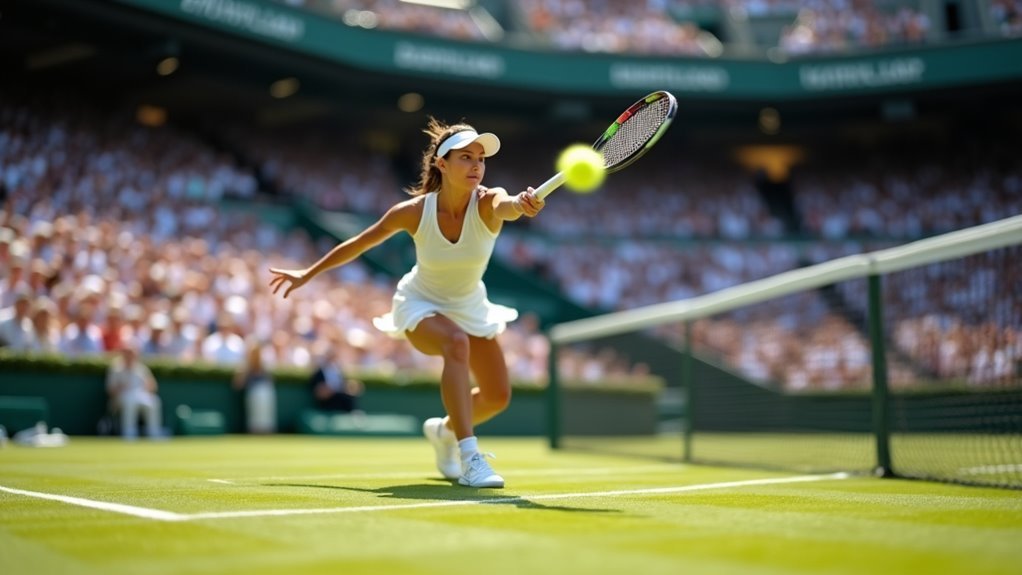

A Grand Slam in tennis refers to the four major tournaments: the Australian Open, French Open (Roland Garros), Wimbledon, and the US Open. These events award the most ranking points, prize money, and global prestige. They differ by court surface: hard, clay, grass, and hard again. Winning all four in a single calendar year is called a calendar Grand Slam and is extremely rare. Success at these tournaments often defines a player’s career and legacy.
What Is a Grand Slam in Tennis?
A Grand Slam in tennis is the sport’s biggest yearly prize, and it means winning all four major tournaments in the same calendar year. You earn it by beating elite players on every surface, so your tactical evolution has to keep moving. Grass asks for sharp angles, clay rewards patience, hard courts challenge balance, and you need mental resilience when matches swing fast.
Because the challenge spans a full season, you can’t rely on one hot week or one favorite court. Instead, you build trust in your game, adjust quickly, and stay calm when pressure rises. That’s why this achievement feels so special: it shows you belong among the sport’s best, not by luck, but by steady effort, courage, and heart.
The Four Grand Slam Tournaments
You’ll find four tournaments at the heart of tennis’s biggest stage: the Australian Open, French Open, Wimbledon, and US Open.
The Australian Open starts the year in Melbourne, while the French Open challenges you on clay at Roland Garros.
Wimbledon and the US Open finish the lineup, giving you grass-court tradition and hard-court intensity in one season.
Australian Open Overview
Shifting from the big image of the Grand Slam to its initial event, the Australian Open opens the tennis year with energy, heat, and a lot of pressure. You step into the Southern swing feeling the buzz of fans, bright courts, and fast-paced matches that ask for sharp focus from the inaugural point.
Because Melbourne can feel brutal, Heat management matters, so you pace yourself, stay hydrated, and trust your routine. That mix of rhythm and resilience helps you belong on court, even as the sun feels like an extra opponent.
You’ll see players adjust quickly, serve boldly, and fight through long rallies with calm confidence. This event sets the tone for the season, and it welcomes you into tennis’s biggest stage with clear excitement.
French Open Surface
The red clay at Roland Garros changes everything, and that’s why the French Open stands apart from the other Grand Slam tournaments.
You feel the ball slow down, and you have to trust your clay tactics from the opening point. Long rallies reward patience, balance, and smart shot placement, so you can’t rush the match. The surface also asks for careful court maintenance, because the clay must stay even and safe after every session.
Whenever you play here, you learn to slide, recover, and stay calm whenever points stretch out. That shared challenge gives you a special bond with every player on the court.
At Roland Garros, you earn each game the hard way, and that makes every small win feel personal and real.
Wimbledon And US Open
Wimbledon and the US Open finish the Grand Slam story with two very different moods, and that contrast is part of what makes tennis so gripping. At Wimbledon, you feel tradition on Centre Court, quiet respect, and grass that rewards clean timing. At the US Open, you meet bold energy, packed crowds, and Night Sessions that keep you awake with every big point. Together, they show you that a Grand Slam asks for more than talent; it asks for flexibility, nerve, and heart.
- Wimbledon asks you to stay calm.
- The US Open asks you to stay loud.
- You grow through handling both.
- You belong in the game whenever you respect each stage.
Why Grand Slams Matter Most
Once you win a Grand Slam, you don’t just claim a title, you earn lasting prestige that fans and players recall for years.
You also enhance your ranking and open the door to bigger rewards, which makes each match feel even more significant.
That’s why these wins carry so much weight in tennis, both on the court and in your career.
Prestige And Legacy
Prestige gives a Grand Slam its power, because it turns great tennis into history.
Whenever you follow this level of tennis, you join a group that fans recall for decades.
- You feel the legacy impact each time a champion lifts a trophy.
- You see cultural significance whenever people from many places share the same excitement.
- You notice how your respect grows for players who handle pressure and still shine.
- You understand that these wins help shape the sport’s story.
That’s why Grand Slams matter most: they give your favorite players a chance to belong to something bigger than one match. Their names stay alive because they earned trust, admiration, and esteem on the sport’s biggest stages.
Ranking And Rewards
A Grand Slam does more than fill a trophy case, because it can change how the whole tennis world sees a player. You climb the rankings faster, and you earn respect that feels personal, like you belong among the sport’s best. The prize distribution at these majors is strong, so every round can lift your season income. Then the bonus incentives from sponsors and tours can grow, too.
| Reward | Effect |
|---|---|
| Ranking points | Push you higher |
| Prize money | Increase your earnings |
| Bonus incentives | Add extra value |
| Seeding | Helps your draw |
| Status | Builds trust |
Because of that, one big win can open doors, calm pressure, and make your next match feel less alone.
How Grand Slam Matches Are Structured
Grand Slam matches follow a clear structure, and that helps the biggest tennis events feel fair and exciting from start to finish. You watch a draw built around seeding impacts, so top players spread out early and fans can settle in together. Match scheduling keeps courts moving, while umpire technology helps settle close calls fast. Whenever weather or darkness causes match interruptions, play pauses and restarts without losing the rhythm.
- You start with a large field.
- You advance through each round one match at a time.
- You rely on officials and review tools.
- You stay patient through delays, because everyone faces the same rules.
That shared structure gives you a place in the action, and it makes every point feel like it matters.
What Makes Each Grand Slam Unique
What sets each major apart is the way it assesses different parts of your game, your patience, and even your nerves. At the Australian Open, you often step into heat and speed that reward quick thinking.
At Roland Garros, clay court specialists can make you earn every point, so you must stay calm and trust your legs.
Wimbledon asks for sharp focus and quiet confidence, while the US Open brings a bold night session atmosphere that can lift you during moments you feel pressure.
Because each event feels different, you don’t just chase wins, you learn where you fit and grow with every round. That’s why these tournaments feel personal. Upon entering them, you join a shared trial that welcomes effort, grit, and heart.
How Surfaces Shape Grand Slam Tennis
From the initial bounce, the court surface shapes how each Grand Slam feels and plays, and you can see it in every point. On grass, the ball skids fast, so you need sharp feet and quick reactions.
On clay, the ball slows and bounces higher, which rewards patience and smart shot choice. Hard courts sit in the middle, so you must balance power and control.
Through surface science, you learn why your favorite player looks different from one major to the next.
- Grass asks for aggressive starts and clean volleys.
- Clay rewards steady defense and playstyle adaptation.
- Hard courts assess your all-around game.
- Surface changes help you feel the challenge, not just watch it.
How Ranking Points Work at Grand Slams
Although a match win gets your attention, ranking points at Grand Slams tell a bigger story about how far a player can go in the sport.
You earn more points as you move deeper, so each round feels like a real step with your name on it.
The point distribution usually starts small for initial losses and rises fast in the later rounds, which rewards steady nerve and strong play.
Should you qualify, your qualifying impact matters too, because those matches can add points before the main draw even begins.
That’s why every set can feel personal. You’re not just chasing a trophy; you’re building ranking strength, confidence, and a spot that helps you belong with the game’s best.
What Is a Calendar Grand Slam?
A Calendar Grand Slam means you win all four major tennis titles in the same year. That means you’ve taken the Australian Open, French Open, Wimbledon, and US Open in one season, which is a huge deal. It’s rare, but should you’re following tennis closely, this is the big one everyone talks about.
Calendar Grand Slam Meaning
Winning all four major tennis titles in one calendar year is what people mean through a Calendar Grand Slam. You’re talking about a rare run that shows you can stay sharp from January to September.
It asks for more than talent, because surface challenges examine you on hard courts, clay, and grass. It also demands mental stamina, since each event brings fresh pressure and new crowds.
- You must win the Australian Open, French Open, Wimbledon, and US Open.
- You need to adjust your game fast.
- You have to handle travel and pressure.
- You join a tiny group that tennis fans respect.
When you hear this term, you can feel why it matters. It signals excellence, grit, and belonging among the game’s best.
Winning All Four Majors
The real trial of greatness begins once one player tries to sweep all four majors in a single season. You’re chasing the Australian Open, French Open, Wimbledon, and US Open, and each one asks something different from you. On hard courts, clay, and grass, you need sharp skills, smart equipment choices, and mental toughness that holds up whenever pressure rises.
Because the season stretches long, you can’t rely on one hot streak. You have to stay healthy, adjust fast, and trust your team. Whenever you win all four, you earn a calendar Grand Slam, and that means you’ve done something very few players have ever touched. Should you be following that path, you’re not just competing. You’re joining tennis’s most rare and respected circle.
What Is a Career Grand Slam?
Even though the term sounds simple, a Career Grand Slam in tennis has a very specific meaning: you win all four major tournaments at least once over the course of your career, not all in the same year. That makes it one of your biggest career milestones, because it shows you can rise on every stage and adapt with real surface adaptability.
- You win the Australian Open, French Open, Wimbledon, and US Open.
- You prove you can handle hard courts, clay, and grass.
- You build trust in your own game over time.
- You join a rare group that many fans admire.
This achievement matters to you because it reflects patience, skill, and belonging at tennis’s highest level. It’s not about one perfect season. It’s about showing up, learning, and finishing the full set.
Grand Slam Records That Define Greatness
Whenever you look at Grand Slam records, you start to see why tennis fans talk about them with so much awe, because these numbers do more than fill a stat sheet. They show how you can stay sharp on clay, grass, and hard courts while carrying pressure that never lets up.
Upon seeing record runs, you see match fitness at its best, because every round asks your body to recover fast and your game to hold steady. You also see mental resilience, since one rough set can challenge you more than a whole week of practice.
These records matter because they feel personal. They remind you that greatness isn’t luck. It’s the calm you build, the work you trust, and the belief that you belong on the biggest stage.
Who Has Won the Most Grand Slams?
Assuming you’ve been tracking Grand Slam records, it’s natural to contemplate which players have stacked up the most titles, because that’s where tennis history gets really loud. You’ll see familiar names at the top, and that helps you feel part of the sport’s long story. In singles, Margaret Court and Novak Djokovic lead the race, while Serena Williams and Steffi Graf stay close behind. In doubles, the greatest doubles teams also built huge totals, which shows how teamwork can matter as much as power.
- You compare eras, not just scores.
- You notice dominant rivals pushing champions higher.
- You respect consistency across hard, clay, and grass.
- You understand why every title feels earned, not given.
Biggest Grand Slam Moments in History
Some of the biggest Grand Slam moments in history stick with you because they feel bigger than the score, and you can almost hear the tension in the stadium. You recollect the Epic comebacks that turned panic into joy, and you feel why fans across the world leaned in together.
You also see Cinderella runs, whenever a quiet player surprised everyone and earned a place in the spotlight. Those moments matter because they show you that tennis can lift any crowd.
Whenever a match swings wildly, you share the nerves, the hope, and the rush of belief. That’s why Grand Slam history feels personal. You’re not just watching winners; you’re watching people rise, chase something huge, and make the whole sport feel like home.
How Players Prepare for Grand Slam Tennis
Preparing for Grand Slam tennis takes more than a big serve and a strong backhand, because players have to get their bodies, minds, and routines ready for the toughest stages in the sport.
You can build that edge with smart mental conditioning, so pressure feels familiar, not scary.
Then, you shape nutrition planning around long matches, travel, and heat, because your energy has to last.
- You train with match simulation to copy real crowd noise and tight scorelines.
- You follow recovery protocols that protect sore muscles and keep you fresh.
- You study each surface, so you feel at home on clay, grass, and hard courts.
- You keep your team close, because belonging helps you stay calm whenever the draw gets fierce.
That’s how you show up ready to compete with heart.
Frequently Asked Questions
Can Mixed Doubles Win a Grand Slam Too?
Yes, mixed doubles can win a Grand Slam too, and you would see that trophy glow like a lighthouse. You can chase a Career slam across all four majors with different partners and still belong among champions.
Is a Grand Slam the Same as a Major Title?
No, you do not treat a Grand Slam as the same thing as a major title. You win one major within the tournament hierarchy; you earn a Grand Slam by sweeping all four, a rare professional milestone.
Why Is It Called a Grand Slam in Tennis?
You call it a grand slam because the term comes from bridge, where a bridge metaphor means you’ve won every trick. In tennis, it refers to winning all four majors in a single year and thus joining the sport’s elite champions.
Do Players Have to Win All Four in the Same Year?
No — you do not have to. You can win all four in one year for a true slam, or collect them across years as a career slam. Even consecutive slams across seasons still leave you chasing history.
Is a Non-Calendar-Year Grand Slam Officially Recognized?
Yes, you can call it a non calendar year Grand Slam, and tennis officially recognizes it as a separate achievement. You’ll often hear it in a consecutive major streak or career slam chase, too.
