

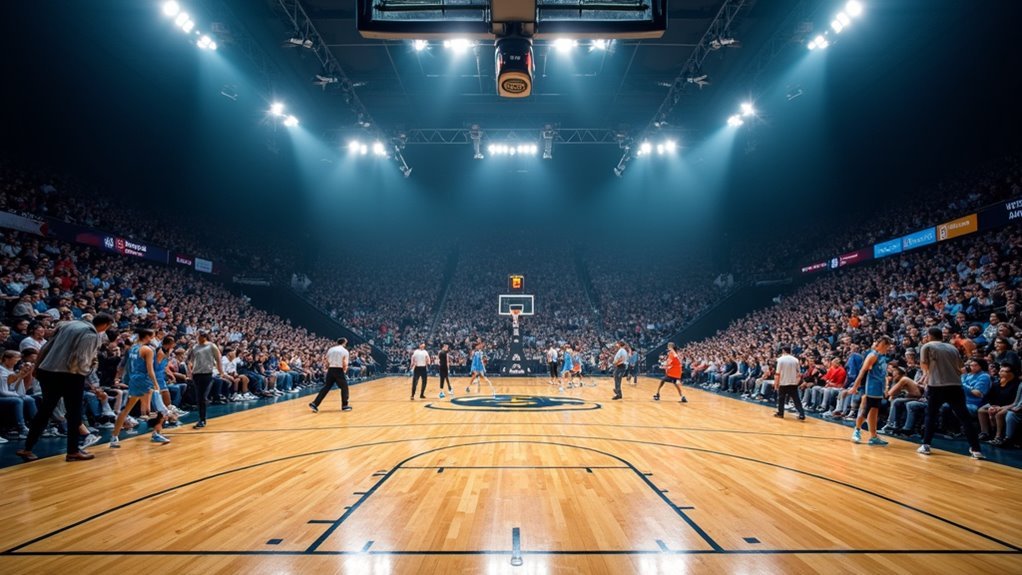

A basketball game’s scheduled length varies by league: the NBA plays 48 minutes, college and FIBA use 40, WNBA plays 40, and most U.S. high schools use 32. Clock stoppages, fouls, free throws, and television breaks extend actual elapsed time. Overtime adds 5 minutes in the NBA, 5 in college, and 5 in FIBA, prolonging the evening. Timeouts and reviews further stretch game duration. Expect most professional games to last about 2 to 2.5 hours from tip-off to final buzzer.
How Long Is a Basketball Game?
A basketball game usually lasts longer than the clock suggests, and that’s because the game keeps stopping for fouls, timeouts, halftime, reviews, and sometimes overtime. You usually spend about 1.5 to 2.5 hours watching, even though the game clock might show far less.
That extra time helps you feel the pace, hear the crowd, and stay connected with the action. It also evaluates player endurance, since athletes must reset, sprint, and focus again and again.
At the same time, fan engagement grows because each pause gives you a chance to react, cheer, and settle in with others. So whenever you plan for a game, consider beyond the clock. You’re not just watching minutes; you’re sharing a live experience that builds energy together.
NBA Game Length and Stop Time
Because the NBA moves at a faster, more stop-and-start pace than the clock suggests, you should expect a game to last much longer than 48 minutes. You get four 12-minute quarters, but the shot clock keeps play alive with quick possessions and constant pressure.
Then the game pauses for fouls, free throws, reviews, and timeouts, so the action rarely flows without breaks. Should a player needs help, an injury timeout can stretch things even more.
On TV, you’ll usually spend about 2 to 2.5 hours with the game, and playoff nights can run longer. So once you join in, plan for a full evening, not a short stop. That way, you can settle in, cheer comfortably, and enjoy the ride with everyone else.
How Long Is a College Basketball Game?
College basketball games usually last about 2 hours, even though the clock only runs for 40 minutes. You’ll feel the college pace right away, because both teams push hard, defend tightly, and keep moving.
The shot clock keeps possessions alive, but it also creates quick shots, fouls, and rebounds that slow the real-time flow. Halftime, timeouts, and reviews add more minutes, so the game can stretch while you’re still cheering with everyone else.
Should the score stay close, overtime can extend the night even more. That’s why you should expect a full experience, not just a short clock reading. Once you settle in, you’re joining a game that builds energy, tension, and fun from start to finish, together.
WNBA Game Length and Breaks
Whenever you watch a WNBA game, you’ll notice that 40 minutes of play can still take about two hours in real time.
The league uses four 10-minute quarters, so you get regular breaks that help the game flow in a steady rhythm.
Those pauses, plus timeouts and halftime, can stretch the night a bit, but they also give you natural moments to catch your breath.
WNBA Game Duration
A WNBA game usually gives you about 40 minutes of live game clock, but the real experience lasts longer, and that’s completely normal.
Whenever you follow the WNBA schedule, you’ll notice that player rotations and stoppages shape the pace from start to finish. Each quarter gives you a fresh rhythm, and free throws, fouls, and timeouts can stretch the night a bit.
That means you’re not just watching the clock, you’re sharing the flow with the crowd and the team.
Most games still finish in about two hours, so you can plan your evening without stress.
In case you’re new to the league, that steady pace helps you settle in, cheer louder, and feel like you belong with every possession.
Quarter Break Structure
WNBA quarter breaks shape the game in a way that feels steady and easy to follow, and that rhythm matters just as much as the action on the court. You get four 10-minute quarters, and each break gives you a quick reset before the next push.
The short pauses help you catch your breath, talk through the flow with friends, and settle back into the game without losing the moment. Between quarters, the arena ambiance shifts a little, and that keeps you connected to the crowd around you.
You’ll also notice broadcast rituals during these breaks, like highlights, analysis, and sponsor spots, which make the pauses feel part of the experience. This structure keeps the game moving while still giving you space to feel included.
How Long Is a High School Basketball Game?
Should you’re watching a high school basketball game, you can usually expect about 1.5 to 2 hours from start to finish. The clock only shows 32 minutes of play, but timeouts, fouls, and halftime can stretch the night a lot more than you’d suppose. And supposing the score is tied, overtime adds extra 5-minute periods that can keep you there a little longer.
High School Game Length
High school basketball games usually last about 1.5 to 2 hours, even though the actual clock only runs for 32 minutes. That extra time matters because you’re not just watching the score, you’re experiencing the game with your team.
For player development, the slower pace helps you learn spacing, defense, and calm decision-making. In local tournaments, the schedule can stretch a bit, so staying ready keeps you connected.
- Four 8-minute quarters keep the action moving.
- Timeouts give you chances to reset together.
- Fouls and free throws add stops that change rhythm.
- Halftime gives both teams a breather and a fresh start.
Overtime Rules Explained
Whenever a high school game goes to overtime, the clock stops feeling simple, and that can cause your nerves jump a little. You’re still in the same game, but now every possession feels heavier, and that’s normal. Most high school leagues use a 4-minute overtime period, so the extra wait is short, yet it can feel huge when the score is tied.
Should the game stay tied, teams keep playing extra periods until someone pulls ahead. Coaches might call timeouts, and fouls can stretch things out. Instant replays and clock malfunctions can also slow the night down in case officials need a closer look. Still, you’re not alone in the tension. Everyone in the gym feels it with you, and that shared suspense is part of what makes overtime memorable.
FIBA Game Length and International Rules
FIBA games move faster on the clock than NBA games, yet they still usually take about 1.5 to 2 hours in real life because stoppages add up quickly. In the FIBA ruleset, you play four 10-minute quarters, so the game feels tight and focused. That international timing helps you stay engaged, because every possession matters.
- You get less clock time than in the NBA.
- Quarters create a steady rhythm you can follow.
- Timeouts and fouls still stretch the night.
- The pace often feels cleaner and more shared.
When one watches, you’re part of a worldwide style that values flow and teamwork. It’s a great fit should you like games that move with purpose and keep you right there in the action, together with the crowd.
How Long Do Overtime Periods Last?
Whenever a game ends tied, you’ll usually watch a 5-minute overtime period, but the exact setup depends on the league.
In most leagues, you get another full overtime provided the score stays even, whereas some formats use sudden-death rules that end things faster. That means the extra wait can feel short or stretch on, but you’ll know the game isn’t over until the final basket counts.
Overtime Length By League
Although the game clock changes from league to league, overtime almost always gives both teams five extra minutes to settle the score. You can count on that in the NBA, NCAA, WNBA, FIBA, and most school games, so your extra timezones of excitement won’t feel strange.
Once the final horn sounds tied, the crowd leans in and your fan rituals matter more, from standing up to holding your breath.
- NBA: 5 minutes
- NCAA men: 5 minutes
- NCAA women and WNBA: 5 minutes
- FIBA and high school: usually 5 minutes
That extra stretch keeps you in the moment, but the full game still depends on fouls, timeouts, and game flow. So provided you’re with your crew, stay ready, because overtime can turn a close night into your favorite shared memory.
Sudden Death Rules
In most basketball leagues, overtime does not use sudden death, so the initial team to score doesn’t automatically win the game. You stay in the action until the full overtime clock runs out, usually 5 minutes. That means every possession still matters, and you can feel the tension build with each trip down the court.
Instead of a golden goal finish, both teams keep fighting for every basket, stop, and rebound. Should the score be still tied, another overtime starts. Instant replay can slow things down a bit, but it helps keep the call fair for everyone.
What Extends a Basketball Game?
A basketball game often lasts longer than the clock suggests because so many small pauses keep adding up. Whenever you watch with friends, you notice how fan behavior and venue logistics can slow things down too.
For example:
- Players get fouled, so free throws stop the flow.
- Officials review close plays, and that takes extra minutes.
- The ball goes out of bounds, so everyone resets.
- Crowds, delays, and arena routines can pause action briefly.
These breaks could feel small, but they stretch the night. Should your team plays hard, you’ll still get the full game experience, just with more waiting than you expected.
How Halftime and Timeouts Affect Game Length
Right after tip-off, halftime and timeouts start shaping how long you’ll actually sit in your seat, and they do it in a very real way.
Halftime gives you a built-in pause to stretch, talk, and reset, but it also adds several extra minutes to the night. Timeouts do the same thing in smaller bursts, and they add up fast.
Should you watch a televised game, TV commercials often fill those breaks, so the action stops while the broadcast keeps rolling. That’s normal, and you’re not alone in feeling the wait.
Fan engagement also grows during these pauses because you get time to cheer, react, and stay part of the crowd. So the clock says one thing, but the full experience says something longer.
How Long Should You Plan for a Live Game?
Most of the time, you should plan for a live basketball game to take about 2 to 2.5 hours, and that gives you a comfortable cushion without feeling rushed.
That way, you can join the crowd, settle in, and enjoy the full experience with your people.
- Arrive promptly for Parking logistics, because lots fill fast.
- Build in extra time for tickets, security, and snacks.
- Check Weather planning should you’re walking from a far lot or waiting outside.
- Stay flexible, since overtime or long breaks can stretch your night.
When you plan this way, you keep stress low and the fun high.
You’ll feel ready, comfortable, and part of the arena energy from start to finish, which makes the night feel easy and welcoming.
Basketball Game Length by League
Even though every league uses the same sport, basketball game length can feel very different once the clock starts running. In the NBA, you’ll watch 48 minutes of regulation, but the real experience usually lasts over two hours.
NCAA men’s games run 40 minutes, and women’s college, WNBA, and FIBA games also use 40 minutes, yet stoppages stretch them close to two hours.
High school games finish faster, often in about 90 minutes, while youth games can be much shorter.
Once you know these differences, you can plan better for fan engagement and venue logistics, and you won’t feel caught off guard by overtime or long breaks. That helps you stay relaxed, connected, and ready to enjoy the game with everyone around you.
Frequently Asked Questions
Do Playoff Basketball Games Usually Run Longer Than Regular-Season Games?
Yes, playoff games usually run longer than regular season games. Greater home court intensity, more reviews, and player fatigue all lengthen stoppages. As they say, time flies when you are having fun.
Which Basketball League Has the Shortest Average Game Time?
Youth basketball usually has the shortest average game time, though street basketball and 3×3 basketball can feel even quicker. You’ll finish fast, stay connected, and keep the game moving with fewer stoppages.
How Much Extra Time Does a Double Overtime Game Add?
A double overtime game adds 10 extra minutes of clock time. You’ll also feel the toll: overtime strategy and fatigue management matter more, and teams often play longer than 2.5 hours together.
Do Youth Basketball Games Use the Same Clock Rules Everywhere?
No, you won’t see the same clock rules everywhere; youth leagues change according to age brackets and rule variations. You are likely to see shorter quarters, fewer stoppages, and different overtime setups depending on your league and region.
Why Do Televised Basketball Games Take Longer Than the Game Clock?
Televised basketball games take longer because you’re watching broadcast delays, commercial breaks, timeouts, fouls, reviews, and halftime, all of which stop the clock and stretch the experience beyond the game’s actual minutes.
