

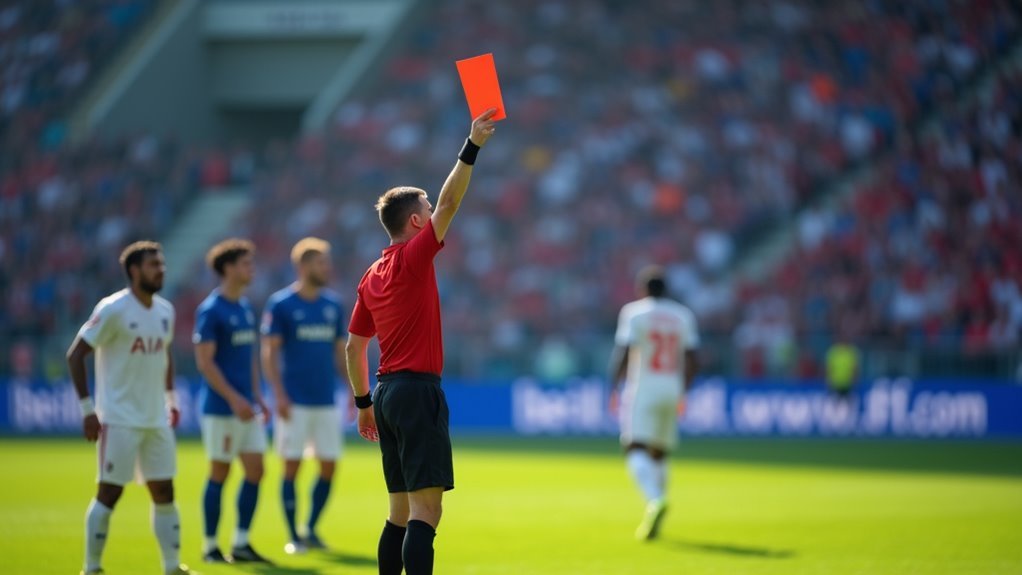

A red card removes a player from the match for a serious foul, violent conduct, or a second yellow card. The team with the sent-off player continues with one fewer player. Referees show a red card to enforce player safety and fairness. Receiving a red card also triggers post-match disciplinary action, such as suspension. Losing a player quickly shifts tactics, momentum, and emotional dynamics on the pitch.
What Is a Red Card in Soccer?
A red card in soccer is the referee’s strongest punishment, and it means a player, substitute, or even a team official has been sent off for a serious offense. You’ll see the referee signals with a clear card, and that moment tells everyone the match has changed fast.
A red card isn’t just a warning; it removes that person from the game right away. So, your team keeps playing with one fewer player, which can feel tough, but you’re not alone in noticing the shift. Player reactions often show shock, frustration, or concern, and that’s normal.
The red card also helps protect fair play and safety, so everyone knows the rules matter.
When Does a Referee Issue a Red Card?
Once the referee spots a serious mistake, they can show a red card right away, even provided the game is in the middle of open play or has shifted into halftime, extra time, or penalties.
You may ask why it happens so fast. The answer is referee discretion and timing considerations. Should you make a challenge that endangers another player, use violent conduct, spit, deny a clear scoring chance, or use abusive words, the whistle can stop, and the card can come out. You’re never left guessing about safety, because the official acts to protect everyone on the field.
Even should the moment feel tense or messy, the referee can still send you off on the spot. That decision keeps the match fair, clear, and respectful for both sides.
Straight Red Card vs. Second Yellow
When hearing about a red card in soccer, it helps to know that not all send-offs happen the same way. A straight red comes from one serious action, so you leave right away. A second yellow starts with a warning, then the next caution turns into a red. You’ll notice the difference in referee interpretation, because the official judges whether the second foul deserves a booking.
With a straight red, the psychological impact can feel sharper, since you recognize one moment changed everything. With two yellows, the stress builds more slowly, and you might already sense trouble before the final whistle. Either way, your team loses a player, and you perceive the game shift fast. It stings, but you’re still part of the club.
Which Fouls Can Lead to a Red Card?
Several kinds of foul play can lead to a red card, and the biggest clue is this: the referee looks for actions that put someone in danger, stop a clear scoring chance, or cross the line into abuse. You can get sent off for dangerous tackles, rough challenges from behind, violent contact, or spitting incidents. Should you trip, pull, or handball to block a sure goal, that can also bring a red. Then there’s language and gestures: insults, threats, or mockery can cross the line fast.
- You could feel shocked whenever a normal challenge turns scary.
- You could worry whenever tempers flare and trust breaks.
- You could cringe whenever a player acts with disrespect.
Whenever you stay calm and play fair, you help your team feel safe together.
What Happens After a Red Card?
After a red card, you have to watch the game change right away because your team must play with one fewer player and the sent-off player can’t return.
That moment can feel rough, but it also helps you see how the team adapts under pressure.
After the match, you might still face a review process that could bring a suspension or other penalties.
Immediate Match Consequences
A red card changes the match in a flash, and the effects are immediate.
You walk off, and your team drops to ten players with no replacement. That means the substitution protocol ends for that player, so the bench must stay calm and keep bench decorum.
Your coach might reshuffle positions, but everyone on the field has to cover more space and work together harder.
You can feel the shift fast: pressure rises, passing lanes shrink, and the crowd gets louder.
- You could feel stunned, but your teammates need you focused.
- You might feel angry, but staying united helps.
- You could feel pressure, but your side can still fight.
Disciplinary Review Process
Once the referee shows a red card, the match doesn’t just pause for drama, because the disciplinary process usually starts right away behind the scenes. You’ll often see the league or tournament officials collect the report, video, and match notes.
Then they check the facts, set a review timeline, and decide whether your team member faces extra punishment. Should the case looks clear, the ban could be automatic. In other circumstances, the appeals procedure lets your club challenge the decision within the rulebook’s deadline. That can feel stressful, but it’s there to keep things fair for everyone.
During this stage, the sent-off player usually waits out any suspension, and you might hear about fines or longer bans where the offense was serious.
How Does a Red Card Change the Match?
Whenever your team gets a red card, you’re suddenly at a player disadvantage, and that can tilt the whole match fast.
You’ll often see the coach make quick tactical changes, like tightening the defense or dropping a forward to cover space.
Even so, you can still fight back provided your team stays organized and calm.
Immediate Team Disadvantage
The moment the referee flashes red, the whole match can tilt in an instant. You feel the shock, and your team faces a numerical disadvantage that’s hard to ignore. One player leaves, and you can’t use a substitution to patch it right away because of substitution constraints. That means every run, pass, and duel suddenly matters more for you and the people beside you.
- You might feel the crowd go quiet.
- You might notice teammates glance around for support.
- You might sense the game slipping, then rally together.
Your side now works with less space, less cover, and more pressure. Still, you’re not alone in that moment. You can lean on each other, stay calm, and keep fighting for every inch.
Tactical Adjustments Needed
That sudden loss of a player does more than thin out the team, because it also forces everyone to rethink how they’re playing right away. You usually see formation shifts, like dropping a forward into midfield or tucking a fullback inside to protect space. Then your group has to press smarter, hold a tighter line, and cover passing lanes with extra care.
Should you be chasing the game, your substitution strategy changes too, because you might need a defender or runner who can work hard without getting stretched. Were you protecting a lead, you’ll likely slow the tempo and keep the ball more. The key is staying calm together, because one red card doesn’t end your chance. It just asks your team to adapt fast and support each other.
Can Players Appeal a Red Card?
Yes, you can often appeal a red card, because a referee’s decision doesn’t always have to be the final word after the match. You’re not stuck feeling helpless, and that matters whenever emotions run high. In the appeals process, your club can ask competition officials to review the call, and disciplinary hearings might follow provided the evidence supports it.
- You could feel relief whenever someone checks the video.
- You could feel heard whenever facts get a fair look.
- You could feel hopeful whenever your team stands with you.
Still, appeal rules usually need strong proof, like a mistaken identity or a clear error. Should the appeal work, the card can be canceled or reduced. Should it not, you keep moving with your squad and trust the next match.
Do Red Card Rules Change by Competition?
Yes, red card rules can change a bit from one competition to another, so you can’t always assume every league or tournament handles them the same way.
Some competitions use different suspension lengths, fine amounts, or extra disciplinary steps, even while the red card itself still means an immediate send-off. That’s why it helps to check the league rules or tournament policy before you expect what happens next.
League Rule Variations
Because soccer is played under different governing bodies, red card rules can shift a bit from one competition to another, even though the core idea stays the same. In league variations, you still get sent off for serious foul play, but competition distinctions can affect how long you sit out afterward. That means you should check the local rulebook, not just the global Laws of the Game. It can feel annoying, yet it also helps you know you belong on the field with confidence.
- You stay ready whenever your league handles suspensions differently.
- You avoid surprise whenever a team mate gets a ban.
- You feel calmer because the rules make sense in your competition.
Tournament Disciplinary Policies
Once you move from a league game to a tournament, the red card itself usually stays the same, but the punishment after the match can change a lot. You still get sent off right away, yet your tournament might add extra suspension games, fines, or team penalties. That’s why you should check the event handbook before kickoff.
Different competitions set their own appeal timelines, so you might need to act fast should you want a review. Some tournaments also use disciplinary hearings for serious fouls or abusive behavior, and those hearings can stretch your ban.
Should you’re on a team, this can feel rough, but the rules try to keep everyone safe and fair. So, know the policy, stay calm, and keep your group ready.
Famous Red Cards in Soccer History
- You might suppose of a harsh tackle that changed everything.
- You might recollect a furious crowd, then a silent bench.
- You might envision teammates rallying to cover the gap.
These famous dismissals stay vivid because they mix skill, pride, and pain in one instant. Whenever you watch them later, you don’t just see a card. You feel the pressure, the heartbreak, and the shared memory that keeps supporters talking for years.
How Can Players Avoid Red Cards?
Most red cards happen provided a player loses control for just a second, so you can lower your risk through staying calm and making smart choices all match long. You protect your team whenever you keep your temper in check, even after a rough tackle or a bad call.
Strong temperament management helps you pause, breathe, and reset before your next move. Then, communication training matters too, because clear talk with teammates can stop frustration from boiling over.
Should you hear a warning from a teammate, listen right away and adjust your play. Also, challenge the ball, not the person, and avoid late tackles, loud dissent, or careless hands. Whenever you respect the referee and trust your group, you fit in better and stay on the field.
Frequently Asked Questions
Can a Goalkeeper Receive a Red Card?
Yes, a goalkeeper can receive a red card. Goalkeepers can be dismissed for misconduct as well; FIFA reports that red cards are rare, occurring in under 1% of match incidents, but goalkeeper discipline still matters.
Can a Substitute Be Shown a Red Card?
Yes, you can receive a red card as a substitute for dissent or other misconduct. You will lose bench tactics support and your team will remain short handed. The referee can dismiss you at any time even before you have entered.
Does a Red Card Carry Over to Extra Time?
Yes, it does carry over into extra time like a storm cloud that will not budge. You will stay short handed, and the red card affects player suspension and match statistics too, unless competition rules say otherwise.
Can Team Officials Be Sent off Too?
Yes, team officials can be sent off for coach dismissal or bench misconduct. The referee will remove them immediately, and the team must cope while they leave the technical area.
Is a Red Card Possible During a Penalty Shootout?
Yes. A player can be shown a red card during a penalty shootout. The referee sends off a player for serious misconduct, and losing a player can have a major impact on the team.
