

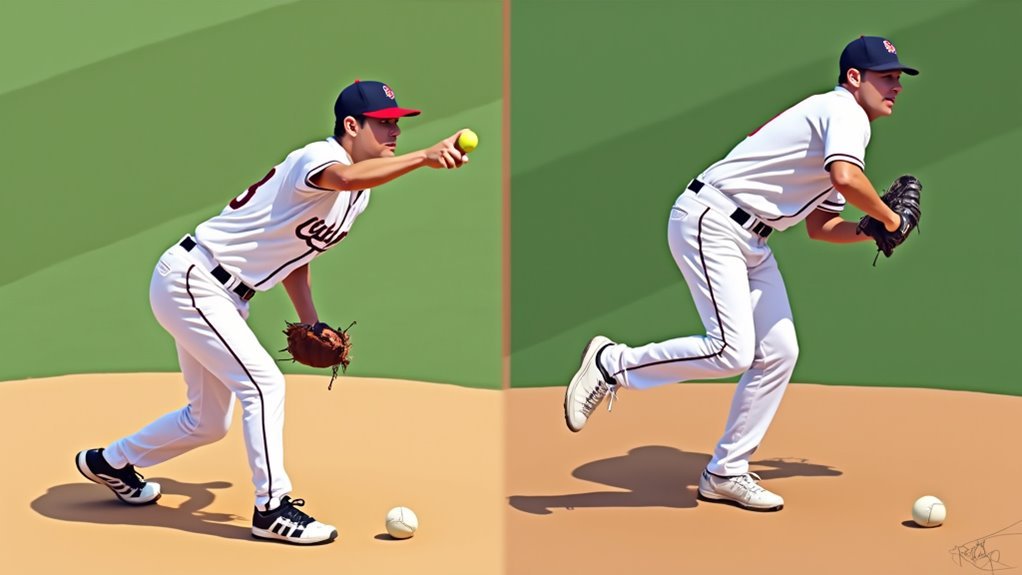

Softball and baseball share a common ancestry but differ in ball size, pitching style, field dimensions, and game pace. Softball uses a larger ball, underhand pitching, shorter base paths, and typically faster infield action. Baseball uses a smaller ball, overhand pitching, longer throws, and more outfield play. Pitch speeds and reaction times feel different because of pitching distance and delivery. These differences shape strategy, player roles, and the overall feel of each sport.
Softball Vs. Baseball: Key Differences
Once you look closer, softball and baseball could seem like close cousins, but their key differences shape every part of the game. You’ll notice it in the ball, the pitch, and the pace.
Softball uses a larger, lighter-feeling ball, so your timing shifts fast. The pitcher throws underhand, and that changes how you read each pitch. Because the field is tighter, you must react sooner and move with purpose.
Baseball gives you more room, more distance, and a slower build. That’s why league demographics often guide where you start, since age groups and local traditions shape what feels natural.
Good equipment etiquette matters in both sports, too, because the right bat, glove, and respect for shared gear help you fit in and play well.
Ball, Bat, And Field Size
The easiest way to tell softball and baseball apart is to look at what you hold, what you swing, and how much ground you have to cover. You’ll notice a softball is bigger, about 12 inches around, while a baseball is about 9 inches. That extra size changes how the ball feels in your glove and off the bat.
Equipment sizing matters too, because softball bats are often shorter and lighter, so you can handle them with more control. Baseball bats usually feel longer and heavier.
Then look at the field. Softball uses closer bases and shorter fences, so turf variations and space feel more compact. Baseball gives you more room, which changes your choices on every play and helps you feel right at home.
Softball Pitching Vs. Baseball Pitching
Whenever you watch softball pitching, you’ll notice the ball comes at you with an underhand motion from a flat circle instead of a raised mound.
In baseball, pitchers use overhand mechanics, and that alteration gives the ball a different path and feel.
As soon as you compare the two, you’ll see how each style shapes timing, control, and the batter’s reaction.
Underhand Softball Delivery
Softball pitching starts with an underhand motion that looks smooth, but it’s much more precise than it initially appears. You swing your arm in a full circle, then release the ball at the right moment to guide speed and placement. That motion helps cut wind resistance, so the ball can stay controlled and move late. It also supports arm preservation, which matters whenever you pitch often and want to keep your body feeling good.
Because you stay lower and stay in rhythm, you can build a repeatable delivery that feels natural. The underhand style also matches softball’s shorter distance, so you need quick timing and steady focus. Once you trust the motion, you join a game where skill, not strain, does the talking.
Overhand Baseball Mechanics
Baseball’s overhand mechanics give the game a very different feel, and you can notice it right away. Whenever you pitch, your arm slot helps shape speed and break, while your stride length drives power and balance. To feel at home with the motion, focus on this:
- Keep your front side closed.
- Let your arm whip through a natural slot.
- Push off the rubber with a smooth stride length.
- Finish tall so you stay in control.
Because you throw from a raised mound, your delivery changes the ball’s angle and timing. That means you need quick rhythm and solid body control.
Should softball feel compact and direct, baseball asks you to repeat a longer, more explosive move. With practice, you’ll fit in fast and trust your mechanics.
Game Length In Softball Vs. Baseball
You’ll notice that softball games usually move in 7 innings, while baseball games often run 9, so the clock feels different right away. That shorter format can make softball feel quicker and more urgent, especially as each inning starts to matter fast.
In baseball, the extra innings and longer rallies often give you more time to settle in and watch the game build.
Inning Count Differences
One of the biggest game-length differences between softball and baseball is the number of innings each sport usually plays. In softball, you often play 7 innings, while baseball usually gives you 9. That changes your inning strategies and scoring implications right away, because every half-inning matters more when you have fewer chances to rally.
- You might push for early runs.
- You might protect a lead sooner.
- You might adjust pitching plans faster.
- You might feel pressure build, but you’re not alone.
Time Limits And Pace
Softball usually feels quicker than baseball, and that pace starts with how the game is timed and played. You’ll notice fewer innings, shorter distances, and faster reactions, so each half-inning can move fast. Because the field is smaller, you get less downtime between plays and more action around every pitch.
Baseball often gives you a longer night, since nine innings and bigger gaps can stretch the game out. In softball, coaches often use pace drills to keep you ready and sharp, and some leagues even talk about shot clock adoption to speed things up more. That matters whenever you want momentum and team energy. You stay involved, your teammates stay loud, and the game can feel like it’s moving with you, not against you.
How Base Running And Steals Change The Game
Usually, base running changes fast in softball because the field is smaller and the plays happen quicker. You feel that speed every time you take a lead and watch the ball.
Because bases sit closer together, one sharp hit can turn into a big jump. In your circle, these moves matter most:
- lead steals help you surprise the defense.
- delayed steals give you a chance to catch them watching the batter.
- Quick turns from first to third can shake their confidence.
- Smart sliding keeps you safe and keeps your team in the fight.
In baseball, you might see more room to read the pitcher, but softball asks you to act sooner. That pressure could feel intense, yet it also brings you closer to your teammates and every run.
Key Rules That Separate The Two Sports
While both sports share the same basic goal, the rules around pitching, field size, and game flow can change how each play feels. You’ll notice softball asks you to react faster because the pitcher throws underhand from a shorter distance, and the field is smaller. Baseball gives you more room and more time between big plays.
| Rule area | Softball | Baseball |
|---|---|---|
| Pitching | Underhand, shorter distance | Overhand, longer distance |
| Field | Smaller bases and fences | Larger bases and fences |
| Game flow | Usually 7 innings | Usually 9 innings |
You also need to watch umpire signals closely, since they guide safe, fair play. Plus, equipment rules matter too, because bats and balls must match each sport. Once you understand these differences, you can step in with confidence and feel like you belong.
Which Sport Fits You Best?
Now that you know how softball and baseball differ on the field, the next question is a personal one: which game fits you best?
You could lean toward softball when you like a quicker pace, shorter throws, and a close-knit team feel. Baseball could suit you when you enjoy longer at-bats and more room to track the ball.
Consider these points:
- Your comfort with fast reaction time
- Your interest in social dynamics on the team
- Your tolerance for injury risks
- Your favorite pace of play
Should you want a sport where everyone feels included and every play comes fast, softball can feel welcoming.
Should you enjoy patience, strategy, and big-field moments, baseball could fit better.
Either way, you’re joining a game with real community and shared excitement.
Frequently Asked Questions
Which Sport Is Easier for Beginners to Learn?
Softball is usually easier for beginners to learn. Its underhand pitching and smaller field can feel more approachable, and youth clinics often teach it well. You will pick up the basics faster, so you will feel included sooner.
Can Men and Women Both Play Softball and Baseball?
Yes, you can both play softball and baseball, and many leagues welcome everyone. With coed leagues and gender inclusivity, you will find teams where you belong, compete, and enjoy the game together.
Why Is Softball Played on a Smaller Field?
You play softball on a smaller field because the game uses shorter pitching distance and tighter field dimensions, which keeps action fast and accessible. You will react quicker, stay connected, and enjoy every play together.
Do Softball and Baseball Use the Same Equipment?
Not exactly. You’ll use similar gloves, bats, and a diamond, but softball gear differs. Like cousins, they share basics. Softball usually has underhand pitching and reduced basepaths, so you’ll notice ball and bat differences too.
Which Sport Has More Injuries on Average?
You’ll usually see more injuries in baseball, especially higher concussion risk from faster pitches and longer throws. Injury rates vary across league, but you can lower your risk with proper gear, warm ups, and coaching.
