

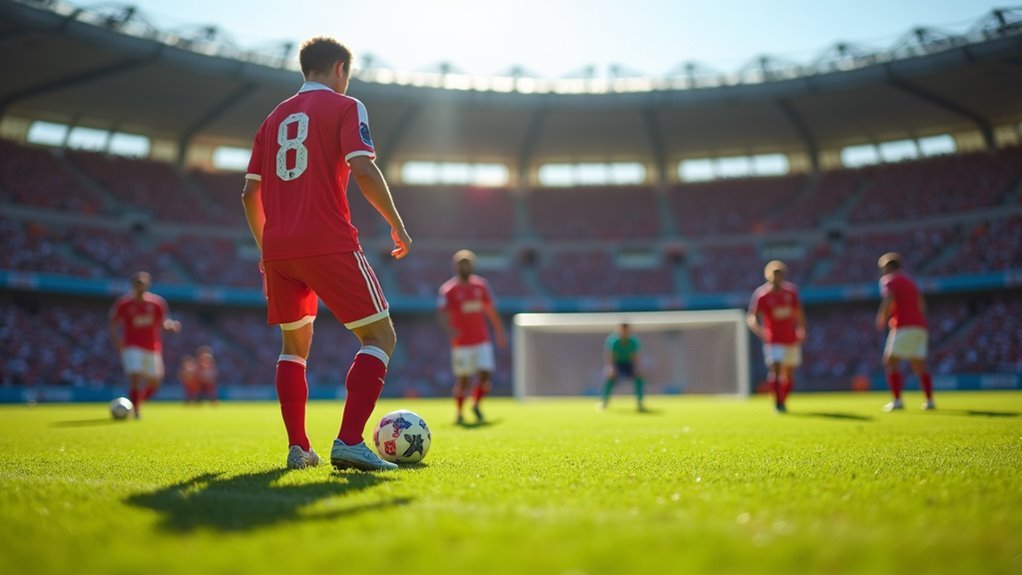

A free kick in soccer restarts play after a foul or rule breach and can be taken directly on goal or played via a teammate. Direct free kicks allow shooters to score straight from the kick; indirect free kicks require touch before a goal counts. Referees award location and type based on the offense and its spot on the field. Teams plan set-piece routines, wall placement, and goalkeeper positioning to turn free kicks into scoring opportunities. Mastering free-kick situations helps teams control momentum and create chances from stoppages.
What Is a Free Kick in Soccer?
You’ll usually take it from where the play stopped, so your field positioning matters right away. The referee signals the type of restart, and that cue helps you and your teammates get set fast. Opponents must back off, which gives you a little room to breathe and plan.
From there, you can choose a quick pass, a driven shot, or a smart setup that fits your team’s style. Whenever you stay calm and watch the setup, you turn a pause in play into a chance to belong, connect, and attack together.
When Is a Free Kick Awarded?
Free kicks usually show up right after the whistle blows on a foul or another rule break, and that stop in play can feel sudden should you not be ready.
You’ll most often see one after tripping, pushing, charging, handball, or reckless play, since the referee wants the game fair again. They can also come from offside, a bad restart, or a goalkeeper mistake.
If the referee employs the advantage rule, play might keep moving for a moment, then a free kick comes only provided the chance fades.
Sometimes a call follows time wasting too, because delaying the match hurts everyone. Once the whistle sounds, you and your teammates can reset, gather, and use the restart to keep possession together.
Direct vs. Indirect Free Kicks
A direct free kick gives you a chance to shoot straight at goal, so it can change the game in a flash.
An indirect free kick asks you to connect with another player initially, which means you need a quick pass before any shot counts.
The main difference comes down to the referee’s signal and whether the ball can go in the net right away.
Direct Free Kick
As soon as you hear the whistle for a direct free kick, the attacking team gets a real chance to change the game in one smart touch. You can feel the pressure, but you’re not alone. Your teammates can help by shaping the wall placement and setting up a clean spin technique for the ball. A sharp strike can bend around defenders or dip over them.
| Key point | Why it matters |
|---|---|
| Wall placement | It blocks the most direct path |
| Spin technique | It helps the ball curve |
| Quick decision | It keeps the defense guessing |
Because the kick is direct, you can shoot at goal right away. That makes every step count, from your run-up to your follow-through. Whenever you stay calm and trust your setup, you give your side a real lift and a stronger chance to score.
Indirect Free Kick
At the point the referee points for an indirect free kick, the play changes in a quiet but significant way.
You still get a chance to move as a unit, but you can’t score until a teammate touches the ball. That simple rule helps your team build patience and trust, especially at times pressure feels tight.
Watch the referee signal closely, because one raised arm tells you the restart is indirect. Then look at wall positioning, since defenders will try to block the lane and crowd your space.
You can use a short pass, a quick touch, or a clever layoff to open a shot. This kind of kick often rewards calm teamwork, and it gives you a chance to stay connected and turn a stoppage into momentum.
Key Rule Differences
Direct and indirect free kicks may look similar at initially, but the rule difference changes everything you could do next. With a direct kick, you can shoot straight at goal and score right away provided the ball crosses the line. With an indirect kick, you need a teammate to touch it first, so your team has to stay calm and work together. The referee signals tell you which type you have, and that keeps everyone on the same page.
For both restarts, the ball must stay still, and wall organization matters because defenders must back off to the required distance. When you know the difference, you can choose a smarter play, protect possession, and help your team feel ready instead of rushed.
Soccer Free Kick Rules to Know
Soccer free kick rules can feel tricky at initially, but they make much more sense once you know the basics. Whenever the referee stops play, you get the restart from the foul spot unless a rule states otherwise.
Provided the foul is physical, you might earn a direct kick and even shoot at goal. For technical mistakes, you usually get an indirect kick, so a teammate must touch it initially.
During youth coaching, you’ll hear about wall organization, because opponents must keep their distance until the ball’s in play. You also need the ball to stay still, and the referee shows which type you possess.
Once you learn these rules, you’ll feel calmer, more included, and ready to support your team.
How to Take a Free Kick
Start with a calm breath and a clear plan, because a good free kick is part skill and part composure. Initially, place the ball where the referee allows, then step back and envision your target. Keep your body loose, and choose run up techniques that feel natural, so you stay balanced instead of rushed.
Next, watch the wall and trust your practice from wall drills, because that work helps you lift, curl, or drive the ball with control. As you approach, plant your non-kicking foot beside the ball and strike through the middle or lower half, depending on your aim. After the kick, stay focused and ready to react with your teammates. Whenever you move with confidence, you help everyone feel like you belong in the moment.
Can You Score Directly From a Free Kick?
Yes, you can score directly from a free kick, and that’s one of the most exciting parts of soccer. Whenever you step up, you’re joining a moment where your whole team feels the pressure and the hope. A direct free kick lets you shoot straight at goal, while an indirect one needs a touch initially.
| Type | Result |
|---|---|
| Direct free kick | You can score immediately |
| Indirect free kick | You need a teammate’s touch |
| Weather effects | Wind or rain can change your shot |
You’ll often hear fans cheer whenever the ball bends past the wall. Provided you like flair, the bicycle technique can add style, but it’s rare from a free kick. Stay calm, trust your touch, and you’ll feel ready once your chance comes.
Free Kick Tactics and Set Plays
A free kick can feel like a small gift after a foul, but the real value shows up in how you use it. You and your teammates can turn that pause into pressure with clear set piece routines.
Start by speaking fast, then move with purpose so everyone knows their job. One player can fake a run, another can bend toward the ball, and the kicker can wait for the right lane.
That’s where wall deception helps, because a quick glance or shift can pull defenders off balance. You also need timing, trust, and calm feet, since rushed kicks usually waste the chance. Whenever you work together, your free kick feels less like luck and more like a plan your whole side believes in.
Common Free Kick Positions
As soon as you know where free kicks usually happen, the game feels a lot less random and a lot more manageable.
You’ll often see them near the top of the box, where a foul can turn into a quick chance. You’ll also notice wide free kick spots near the sideline, and these feel like home for crossing teams. From there, you can swing the ball into traffic and stay in the play together.
Another common area is deep in the attacking third, where a short corners-style restart can keep pressure on.
In midfield, free kicks usually help you reset, breathe, and move as one group. Once you learn these spots, you start reading the field like a teammate who belongs there.
What Happens After the Free Kick?
After the free kick, the ball is back in play once it’s kicked and moves clearly.
You’ll then watch both teams react fast, because possession can change in a split second.
Should your team takes the kick well, you could keep control and build a real chance.
Ball In Play
Once the referee puts the free kick back into play, the ball becomes live and the game can move fast again. You feel the on field continuity return, and referee signalization helps everyone read the moment. Then your team can react with trust and energy.
- The ball rolls cleanly across the grass.
- Teammates spread out and call for space.
- Defenders step up and stay alert.
- A quick touch can open a lane.
- The crowd leans in, waiting with you.
Because the restart is active, you need to stay sharp and connected. Your best move often comes from simple timing, smart runs, and calm feet. That’s how you keep belonging to the flow instead of chasing it.
Restart Possession
Gaining possession again, your team has to think fast because the free kick is not just a restart, it’s a new chance to control the moment.
| Action | Effect | Why it matters |
|---|---|---|
| Short pass | Keeps the ball close | Builds possession retention |
| Quick switch | Opens space | Pulls defenders apart |
| Safe touch | Slows pressure | Supports turnover minimization |
After the whistle, you and your teammates must move as one. Should you take the kick cleanly, you can settle the ball, protect it, and choose the next pass with confidence. In case the defense crowds you, a simple touch or layoff can keep play alive. Your group stays connected, and that feeling helps. You’re not just chasing the ball; you’re keeping your shape, your calm, and your chance to attack. As you read the field together, you make the restart count and keep control.
Famous Free Kicks in Soccer History
Some of soccer’s most unforgettable moments have come from free kicks, and that’s no accident. You recall the hush, the wall, and then the strike that sends everyone roaring. Consider legendary goals like Roberto Carlos bending one in with wild curve technique, or Beckham curling a winner whenever your team needed belief.
- a ball resting in the grass
- a wall of defenders bracing
- a keeper edging left
- a shot arcing over shoulders
- teammates running to join you
These moments matter because they turn pressure into joy. Whenever you watch them, you feel like part of the crowd, part of the story. That’s the beauty of a free kick: one clean hit can pull you closer to the game and make your side feel unstoppable.
Frequently Asked Questions
Can a Free Kick Be Taken Quickly Without Waiting for the Wall?
Yes, you can take a quick restart provided the referee hasn’t held it up and your opponent positioning allows it. Like a spark before the storm, you will catch defenders off balance and keep possession.
What Happens if the Ball Moves Before the Kick Is Taken?
If the ball moves before you kick, the referee usually stops play for premature motion and orders a retake. You need to reset it motionless so your team keeps the restart fair.
Can a Free Kick Be Retaken After an Encroachment?
Yes, you can retake the free kick provided the encroachment affects the restart. You will hear the whistle, see the encroachment consequences, and follow the retake procedure. Stay calm, reset together, and keep your team ready.
Are Opponents Allowed to Stand Inside the Penalty Area?
No, you cannot usually stand inside the penalty area during a free kick. You must stay outside the required distance, use smart defensive tactics, and avoid offside positioning until the ball is in play.
Can the Kicker Touch the Ball Twice on the Restart?
No, you can’t touch it once on the restart; that’s a double touch. Unless another player touches it once, your second strike stops play, and you will usually lose possession to the other team.
