

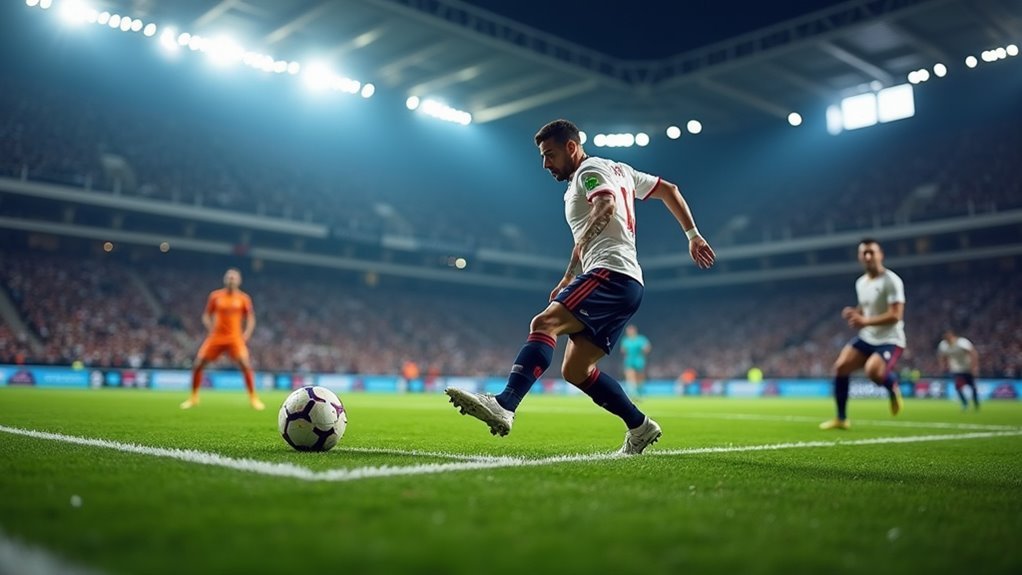

A penalty kick is a direct shot taken from the penalty spot 11 meters from goal after a defender commits a direct free-kick foul inside the penalty area. The kicker faces a single goalkeeper with no other players allowed between them. Referee signals restart and players must stay outside the area and behind the penalty mark until the kick is taken. The ball is in play once it moves forward and the taker cannot touch it again until another player does. Timing, placement, and goalkeeper anticipation decide success more than raw power.
What Is a Penalty Kick in Soccer?
The goalkeeper stays on the line, and you try to keep your focus steady. Because the kick can score directly, every touch matters. Fans often talk about VAR controversies, yet the basic idea stays simple: you get a clear chance, you take a breath, and you aim with confidence.
When Is a Penalty Kick Awarded?
You’ll hear the whistle and know it’s serious once a penalty kick gets awarded, because the referee gives it only after a defending player commits a direct free kick foul inside their own penalty area.
You earn this call whenever the offense happens in the box, not where the ball sits. That can mean holding, handling, a reckless challenge, or too much force. Even tougher acts, like spitting or throwing an object, can count there too.
Should you be watching from the stands, bear in mind that referee bias can spark debate, but VAR reviews help check close calls.
How Is a Penalty Kick Taken?
Once the referee points to the spot, the kick itself follows a clear set of steps, and that order helps keep the moment fair and tense at the same time.
You place the ball on the mark, wait for the whistle, and then strike it so it moves forward. You’re the only attacker allowed to finish the play, while the goalkeeper stays on the line and tries to read you.
That’s where your shooting techniques matter most, because a clean contact can beat even a brave keeper. At the same time, psychological tactics can help you stay calm and send the keeper the wrong message.
Should you keep your motion legal and your focus sharp, you give yourself the best chance to score and feel like you belong in that pressure-filled moment.
What Happens Before the Penalty Kick?
Before you take the kick, the referee blows the whistle to show everyone the play is ready to begin.
Then you need the ball placed right on the penalty spot, with no shortcuts or funny business.
At the same time, you’ll see the other players and the goalkeeper checked into their proper spots, so the kick starts fairly and calmly.
Referee’s Signal
The referee sets the stage with a sharp whistle, and that sound tells everyone a penalty kick is about to begin. You hear the referee whistle, then you notice signal timing that keeps the moment fair and calm. | Signal | Meaning |
| — | — |
|---|---|
| Whistle | Play stops now |
| Arm point | The kick is approved |
| Eye contact | You know it’s your turn |
| Hand motion | Everyone waits in place |
You can relax a little, because this signal gives you a clear cue and helps your team stay ready together. The referee’s action also protects both sides, so no one jumps prematurely or feels lost. Whenever you watch closely, you’ll see the call is simple, firm, and easy to follow. That shared moment helps you feel part of the match, not left out.
Ball Placement Rules
A penalty kick starts with careful ball placement, and that small step matters more than many fans realize. You place the ball on the penalty spot, not a step closer or farther, because spot placement keeps the kick fair and exact.
Then you check that the ball sits still before you step away. This part helps you feel ready, too, because every clean setup builds trust in the moment.
Whenever you handle kick positioning, you’re setting the stage for a calm strike and a clear decision. Should the ball shifts, you reset it on the mark. That little pause can feel tense, but it also gives you control.
With the ball set correctly, you know the kick starts the right way.
Player Positioning Checks
Usually, the most nerve-racking part is checking where everyone stands, because one small step too soon can change everything. You watch the referee, then you notice each player settle into place. The keeper stays on the line, while you and the kicker wait for the whistle. Everyone else must keep outside the penalty area and away from the spot, so no one crowds the moment.
- Check the goalkeeper’s feet on the line
- Hold clear offside positioning near the box
- Keep teammates outside the area
- Watch for substitute proximity near the sideline
- Wait for the whistle before moving
Once these spots look right, the kick feels fair and calm. You’re not alone in that pause; it’s the shared breath before the strike, and that makes the pressure easier to carry.
What Are the Penalty Kick Rules?
As you face a penalty kick, the setup starts with the penalty area and the spot 11 meters from goal, so every player knows exactly where things must happen. You’ll see the kicker place the ball on the mark, while everyone else stays outside the box and away from the spot until the whistle blows. Then the goalkeeper stays on the goal line, and the kick must go forward, which keeps the play simple but intense.
Penalty Area Setup
Set the ball on the penalty spot, and the whole setup becomes very clear fast: the kick starts 11 meters from the goal line, right in the center of the penalty area, and the foul that created it must have happened inside that box. You stand with your team, and you can envision the space like a shared stage. The goalpost padding and corner arc help mark the field, so the scene feels fixed and fair.
- The penalty area sits in front of the goal.
- The spot stays centered, not near the foul.
- The ball must rest still before the kick.
- Players wait outside the box for order.
- The goalkeeper stays on the line and faces you.
Kick Procedure Rules
The referee’s whistle starts the drama, and then the penalty kick has to follow a very exact routine.
You place the ball on the spot, wait for the signal, and make sure everyone else stays outside the area and behind the line. Only you and the goalkeeper can stay close. The ball must roll forward, and you can’t touch it again until someone else does. The keeper must keep at least one foot on or above the goal line until the kick leaves your foot.
That’s where kicker psychology matters, because calm focus helps you ignore the crowd. It also helps with goalkeeper deception, since smart body language can keep the keeper guessing without breaking the rules.
If anyone moves prematurely, the ref might order a retake.
Why Do Penalty Kicks Matter in Soccer?
Even though a penalty kick lasts only a few seconds, it can change a match, a season, and even how a team feels about itself. You feel that pressure because one clean strike can lift your group or leave everyone stunned. That’s why game changing psychology matters here: your nerves, focus, and trust in teammates all show up at once. Match deciding statistics also back this up, since penalties often tilt tight games and shootouts.
- You get a direct chance to score.
- Your team can shift momentum fast.
- The keeper faces huge pressure too.
- Fans feel every kick together.
- A miss can sting, but it won’t define you.
When you step up, you carry your squad’s hope, and that shared moment can bring everyone closer.
Frequently Asked Questions
Can a Penalty Kick Be Taken From the Foul Location?
No, you cannot take it from the foul location; you must place the ball on the penalty spot instead. That spot placement feels like the whole stadium holding its breath, and you will follow the referee’s signal.
What Happens if the Goalkeeper Moves Early?
If the goalkeeper moves prematurely, that is usually considered goalkeeper encroachment and the referee may order a retake. You will feel the pressure, but you still get another chance to score cleanly and confidently.
Can the Kicker Touch the Ball Twice on a Penalty?
No, you can’t touch it twice unless another player touches it first. If you do so the referee might stop play and the retake procedure won’t save you from technical encroachment.
Are Penalty Shootout Rebounds Allowed as Goals?
No, you cannot score rebound goals from a shootout after a save or a follow up; the ball must stop there. In penalties, only the initial kick counts, so you need accuracy rather than second chances.
Who Chooses the First Team in a Shootout?
Usually a coin toss decides which team kicks initially, though you may suspect team strategy matters too. Should you be choosing sides, the toss gives you the initial advantage and helps shape momentum.
