

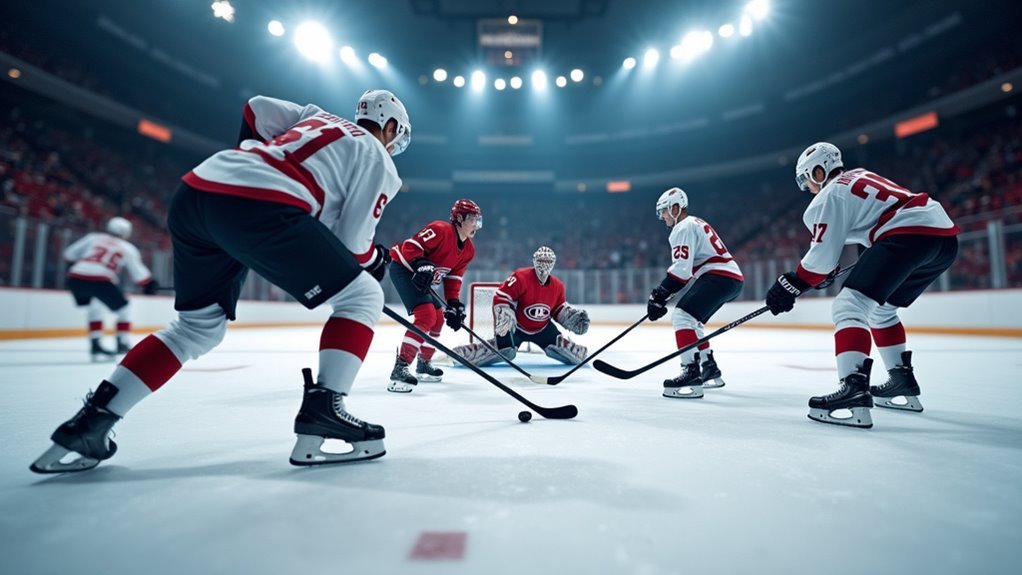

A power play in hockey is when one team has more players on the ice because an opponent is serving a penalty. The advantaged team uses extra space and quicker puck movement to create higher-quality scoring chances. The short-handed team focuses on tight defense, blocking passing lanes and shots. Successful power plays often rely on set formations, strong point shots, and crisp passing. Special teams performance can decide games and shifts momentum quickly.
(word count: 64)
What Is a Power Play in Hockey?
You’ll usually see your team attack with five skaters against four, so the ice opens up and passing gets easier. That’s why special teams matter so much.
During this moment, you can feel momentum swings fast, because one sharp shot or a smart setup can change the whole rink’s mood. Should you’re cheering, you’re part of the pressure and the hope.
In case you’re defending, you’re trying to stay calm, keep shape, and protect the net together.
In simple terms, a power play gives your side extra space, extra chances, and a real shot at shifting the game.
Why Penalties Create Power Plays
Penalties create power plays because hockey has to punish rule breaks in a way that changes the flow of the game.
Whenever you or your team commit a minor infraction, the referee sends the player to the penalty box, and your side plays shorthanded. That extra skater gives the other team a clear edge, so the penalty matters right away. This system keeps the game fair and helps the rink stay honest. It also gives referee discretion a role, since calls can vary with the play.
Because of that, you feel quick momentum swings after a whistle. One mistake can shift pressure, open space, and make everyone on the ice adjust fast. That’s why penalties don’t just stop action. They reshape it.
How Teams Adjust on a Power Play
On a power play, you’ll see players shift into smarter spots so they can open lanes and keep the puck moving. You also need quicker puck movement, because a slow pass lets the penalty kill reset and smother your chances.
Then you’ll choose your shots more carefully, since a clean look from the slot usually beats a rushed blast from the point.
Player Positioning Changes
Skaters shift fast once a power play begins, because every inch of ice suddenly matters more.
You’ll usually see one player move high to guide the attack, while another drifts net-front to screen the goalie and pounce on rebounds.
The wings spread wider for offensive spacing, and that extra room helps you feel less cramped under pressure.
At the same time, a defenseman often slides to the blue line to keep the puck in and reset the play.
Should the penalty kill collapses low, you might notice a quick defensive rotation from your side, with teammates swapping spots to keep lanes open.
These changes aren’t random. They help you stay calm, support one another, and turn the man advantage into real pressure.
Puck Movement Speed
Usually, a strong power play depends on quick puck movement, because slow passes give the penalty kill time to reset and clog the passing lanes. You want crisp touches, not lazy drifts, so your puck velocity stays high and your group keeps pressure alive. Whenever you move it fast, you make the defenders shift, and that creates small gaps your team can use together.
- Pass before the wall closes.
- Keep your head up and read support.
- Change sides once the lane shrinks.
- Use tempo control to stay calm, then strike again.
That rhythm helps you feel connected with your teammates, even under heat. In case the pace drops, the defense gets brave. Provided it stays sharp, you keep them chasing and your unit feels in charge.
Shot Selection Options
As the puck starts moving quickly on a power play, the next big question is where to shoot it and at what point to hold it a little longer. You can look for a quick one-timer, a low shot, or a hard slap shot from the point. Should the lane close, pull the puck back and reset so your group stays calm and connected.
Once you have traffic in front, net front screening can hide the goalie’s view and make a clean shot matter more. You also want to mix in passes across the slot, because that can open a sharp angle or a tap-in. The best choice depends on what the penalty kill gives you. Supposing they chase high, shoot low. Whenever they sink back, move it fast and make them stretch.
Common Power Play Formations
The umbrella setup and the umbrella overload are two of the most common power play formations, and both help the attacking team turn extra ice into real pressure.
In the umbrella formation, you spread out and keep one player high, which opens passing lanes. In the overload strategy, you pack one side and work together near the boards and circles. Either way, you stay connected and make the penalty killers move.
- You can keep the puck safe.
- You can switch sides fast.
- You can find a better passing lane.
- You can support each other under pressure.
When you know these looks, you fit in quicker and feel calmer.
Your team can shift between them during one power play, so defenders can’t settle in.
What Teams Try to Create on a Power Play
Now that you know how umbrella and overload looks work, it helps to see what teams are actually trying to make happen with all that extra ice. You want to pull the defense apart, then make one quick pass or shot beat them before they reset.
That means you look for clean puck movement, sharp lane changes, and a screen at the net front. Whenever you set that traffic, the goalie has a harder time tracking the puck, and you can jump on rebounds. Good rebound control matters too, because a loose puck can turn into a second chance in a hurry.
Should you stay patient, you keep pressure alive, build trust with your line, and make every touch feel like part of the same plan.
How Penalty Kills Shut Down Power Plays
Penalty kills shut down power plays through making the ice feel crowded, even though they’re the ones with fewer skaters. You feel that pressure fast. They stick together, block passing lanes, and force you into rushed choices. By clearing lanes, they keep your shots from reaching the net cleanly.
Then forecheck disruption starts promptly, so you can’t set up the calm, confident rhythm your team wants.
- They angle you toward the boards.
- They lift sticks before you settle the puck.
- They clog the middle, where you want space.
- They turn your passes into panic.
What Happens When a Power Play Ends
Once the power play ends, you’ll see both teams return to even strength as the penalty time runs out.
Sometimes it ends even sooner provided the attacking team scores on a minor penalty, which can feel like a sudden shift.
That moment matters because the ice opens up again, and you’re right back to five-on-five action.
Power Play Expiration
A power play ends the moment the advantage disappears, and that change can happen fast enough to catch you off guard. You watch the penalty clock, and once it runs out, the help on ice is gone. Should your team scores on a minor penalty, the goal reset happens right away, so the rush can feel sudden.
- You lose the extra skater.
- The other side gains confidence.
- Your breakout needs to stay calm.
- Your group has to switch back fast.
That shift can sting, but you’re not alone in it. Every fan and player knows the swing, and your team can still stay connected. A clean finish to the penalty makes the next rush feel normal again, even supposing your heartbeat says otherwise.
Even Strength Resumes
Usually, the instant the power play ends, the rink feels smaller and faster at the same time, because both teams snap back to even strength and every player has to reset right away. You’ll see skaters jump into line changes, and the flow can flip in a heartbeat.
| What you notice | What it means |
|---|---|
| Extra skaters disappear | The game returns to even strength |
| Benches get busy | Coaches send fresh lines over the boards |
| Passing lanes shrink | Defenders close space faster |
| Puck battles heat up | Both teams fight for control again |
You might feel the momentum shift too, since neither side has the built-in edge anymore. So you stay alert, watch the next rush, and trust your group to settle in together. That quick reset can calm nerves, and it also wakes up the crowd.
Penalty Ends Early
Sometimes the power play ends prematurely, and that can catch you off guard should you’re watching for a big chance to score. Whenever that happens, you feel the shift right away, and your team must reset fast.
- The penalized player gets a premature release from the box.
- The ice returns to even strength, so space shrinks.
- Your rush can stop, even though you still hold the puck.
- On a minor penalty, goal forgiveness means a single goal can end the advantage.
Famous Power Play Moments in Hockey
Some of hockey’s most thrilling memories come from the power play, where one penalty can flip the whole mood of a game in seconds. You can feel it in arena noise, because your crowd leans in and your team starts to believe. Consider a Miracle comeback, whenever quick puck movement turns doubt into hope.
Then comes the Bench celebration, with teammates jumping over the boards and sharing that rush with you. Big playoff goals often happen this way, as a sharp pass finds an open lane and the goalie can’t cover everything. As your side stays calm and moves the puck well, you see why these moments stick with fans. They make you feel part of something bigger, loud, proud, and together.
Frequently Asked Questions
How Long Does a Minor Penalty Power Play Last?
A minor penalty power play lasts two minutes, unless you score initially on the delayed penalty. Then the advantage ends prematurely and you’ll return to even strength while keeping your team’s momentum rolling.
Can a Power Play Continue After One Team Scores?
Yes, if you are on a minor penalty power play, scoring usually ends it, unless a delayed penalty keeps play alive. You will keep your extra attacker advantage until the whistle, and major penalties do not end prematurely.
What Is the Difference Between 5-On-4 and 5-On-3?
5 on 4 gives you a man advantage, like one extra skater against four defenders. 5 on 3 creates a bigger numerical imbalance, so you get even more space, easier passes, and better scoring chances.
Who Serves Penalty Time if the Goalie Is Penalized?
Another eligible skater serves it, usually the backup goalie if one is available. You will not see the penalized goalie leave the bench for a penalty shot; instead, your team absorbs the full penalty time.
Can a Shorthanded Team Score During a Power Play?
Yes, you can score shorthanded during a power play, and that can shift momentum fast. During the penalty kill you could steal the puck and score, even into an empty net, should you seize your chance.
