

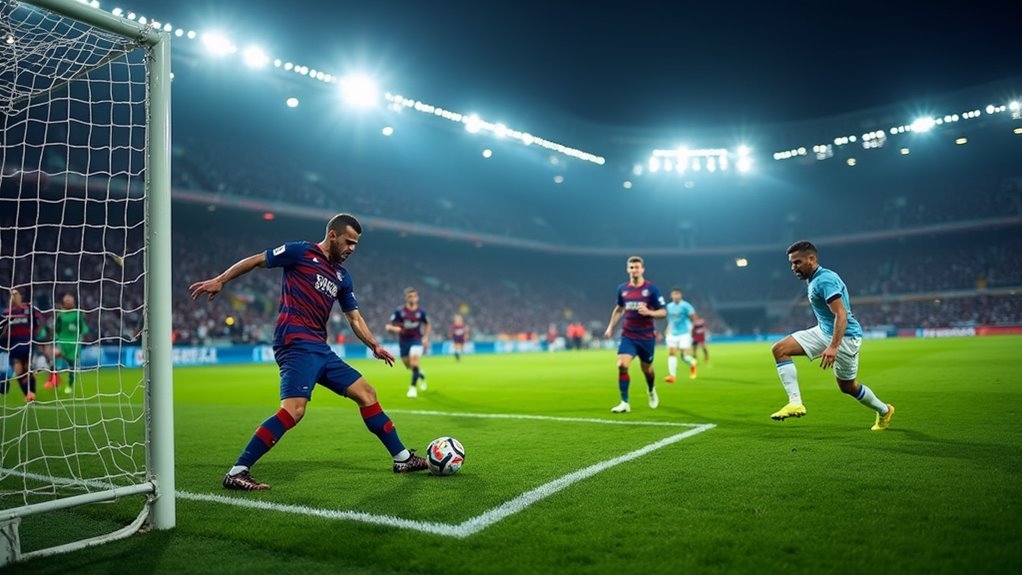

A corner kick is a restart awarded when the defending team last touches the ball before it crosses the goal line. The attacking team places the ball inside the corner arc and sends it back into the penalty area. Teams use set plays, player movement, and positioning to create scoring chances from corners. Defenders mark opponents, guard the near post, and try to clear the ball under pressure. Small details like delivery, timing, and runs often decide whether a corner becomes a goal.
What Is a Corner Kick in Soccer?
A corner kick is one of soccer’s simple but exciting restarts. You get this chance whenever the ball leaves the field near the goal line, and your team takes it from the corner arc. It’s one of the clearest set piece basics, and it can lift your whole side in a big moment.
You place the ball still, then a teammate strikes it into the box. Good corner etiquette matters too, so you wait your turn, keep space, and respect the defender’s distance. That small pause can build trust among players who want the same goal.
Because offside doesn’t apply here, you can stay alert and ready. With practice, you’ll feel more confident, and your team can turn this restart into real pressure.
When Is a Corner Kick Awarded?
You get a corner kick whenever a defender is the last player to touch the ball and it then crosses the goal line without a goal.
You’ll also see one whenever a goalkeeper saves the ball wide and sends it out over the end line.
In each case, the attacking team gets the restart from the nearest corner.
Ball Last Touched Defensively
Corner kicks get awarded as soon as the defending team last touches the ball before it crosses the goal line, and that’s one of the most common ways a game restarts near the goal.
You can consider it as a defensive ricochet that still counts against the defenders, even if the touch feels tiny or accidental.
Should the ball take a last touch off a defender and then rolls or flies away from danger, your team earns the corner. That helps you stay alert, because one brief mistake can turn into a big chance for your side.
In these moments, you and your teammates get a fresh attacking opportunity, and the referee points you toward the corner arc with clear, simple confidence.
Crosses Goal Line
Once the ball fully crosses the goal line and doesn’t go into the net, the referee points to the corner and play shifts back to the attacking team.
You’ll usually see this whenever the defending side last touches it, and that final touch matters more than where everyone else stands.
Goal line technology can help confirm the call, so you’re not left guessing after a tight save or a messy bounce.
Even if the ball skims over on the ground or floats in the air, boundary physics still decide whether it stayed in or slipped out.
That’s why the corner arc matters. It gives your team a fair restart, a shared chance to press again, and a moment to regroup together with confidence.
Goalkeeper Saves Wide
As soon as a goalkeeper makes a save that sends the ball wide and over the goal line, the referee points to the corner and gives the attacking team a corner kick.
You’ll see this most often after wide angle saves, whenever the keeper gets a strong touch but can’t keep the ball in play. Good goalkeeper positioning can turn a dangerous shot into a routine corner, and that’s still a win for your team’s defense.
From there, your side resets, stays calm, and gets ready for the next challenge. You should know that the ball must last touch the defending team before it crosses out. So at the time you’re watching or playing, trust the process. A corner kick gives your attackers another chance to work together and create pressure.
How to Take a Corner Kick
To take a corner kick well, start placing the ball still inside the corner arc nearest to where it went out, then step back and look up before you strike it.
You’re handling a set piece, so calm foot placement matters as much as power. Plant your non-kicking foot beside the ball, point it toward your target, and keep your body balanced. Then swing through with a clean contact, so the ball lifts or bends where you want it.
Next, follow through naturally and stay composed, because your teammates are counting on you to deliver something useful. Should the referee wait, don’t rush. Instead, breathe, pick your spot, and trust your technique.
Once you strike with confidence, you help your side feel organized, connected, and ready.
How to Attack Corner Kicks
To attack a corner kick well, you need sharp near-post runs, because they can pull defenders out of shape and open space fast.
You should crowd the box with smart movement, then stay ready for second-ball finishes thereafter the initial header or clearance pops loose.
In case you time your runs together, you’ll make the defense feel rushed and give yourself a much better chance to score.
Near-Post Runs
You should start with near post timing, so you arrive as the ball leaves the taker’s foot, not a moment late. Then you help create defender displacement, pulling attention toward you and opening a small gap for a teammate. Keep your run direct, quick, and confident, because hesitation kills the chance. You don’t need to shout or force it; you just need to read the flight and trust the plan. Whenever you attack that space with your group, you make the defense turn, react, and scramble. That shared movement can feel small, but it often gives your team the edge.
Crowd The Box
Flood the penalty area with purpose, and you make a corner kick much harder to defend. You should crowd the box with teammates who move with trust and timing. Place runners near the near post, the middle, and the far side, so defenders can’t relax.
Then add late runs from deeper spots, because those surprise the line and open space. Whenever you attack together, you also help each other by blocking defenders with clean body position and smart movement, not fouls. Keep your eyes on the kicker and stay ready to break at the whistle.
Provided you arrive as a group, you force confusion, and that gives your team a better chance to finish strong. In these moments, unity matters, and you can feel the pressure shift toward the goal.
Second-Ball Finishes
Watch the rebound, because corner kicks don’t end once the initial header is cleared. You should stay alert and trust your teammates, because the ball often drops into a crowded area where quick feet matter most. Read reaction patterns so you can move before defenders reset, then crash the space with purpose.
Should you’re near the near post, attack the loose ball fast. In case you’re deeper, hold your second phase positioning and be ready for a blocked shot or a weak clearance. Keep your body open, keep your balance, and strike with confidence. That second touch can feel messy, but your group belongs in that moment. Whenever you stay connected, you turn a scramble into a clean finish and make the corner count.
How to Defend Corner Kicks
Usually, the best way to defend a corner kick is to stay calm, stay organized, and trust your shape. You can protect the box by using zonal marking, where each player guards a space and attacks the ball together. Keep your goalkeeper positioning strong, too, so your keeper can claim crosses or punch them clear with confidence.
Then, match runners promptly, check shoulders, and keep your body between the attacker and the goal. Communicate fast so everyone knows who’s near the near post, the far post, and the danger zone. Because corners move quickly, you need to stay sharp, but you don’t need to panic. Whenever you work as one unit, you make the attacker feel crowded, and your team feels safer.
Common Corner Kick Mistakes
Even a simple corner kick can go wrong fast, and that’s often because players rush the small details that matter most.
You could use poor technique, like planting the ball badly, swinging too hard, or leaning back and sending it wide. Then your teammate’s late runs can arrive too soon or too late, which kills the timing and leaves everyone out of rhythm.
You also can forget to scan the box, so you miss open space and crowded marks. Another common mistake is ignoring the referee’s distance rule, which can waste the restart and hand control away.
Should you keep calm, communicate, and trust each other, you’ll turn those messy moments into chances your group can feel proud of.
Frequently Asked Questions
Can a Corner Kick Score Directly?
Yes, you can score a goal directly from a corner kick, and goalkeeper positioning matters because you will want to catch the keeper off guard. If the ball enters your opponent’s net untouched, it counts.
How Far Must Defenders Stand From the Corner Arc?
You must keep defenders at least 10 yards, or 9.15 meters, from the corner arc. This encroachment distance protects your spatial marking, and you will usually feel the referee’s pressure should you drift closer.
Can Offside Be Called on a Corner Kick?
No, you can’t be offside directly from a corner kick. You’ll see offside subtleties matter after the restart, and referee interpretations stay simple here. Isn’t it nice once a rule actually helps your team feel confident?
What Happens if the Kicker Touches the Ball Twice?
Should you touch it twice, the referee stops play and gives the other team an indirect free kick. That double touch can punish you, so make sure you let someone else play it initially.
Can a Corner Kick Be Taken Quickly?
Yes, you can take it quickly, as long as you have placed the ball and the referee allows it. You can catch defenders off guard, speed the game up, and turn a surprise routine into an advantage.
