

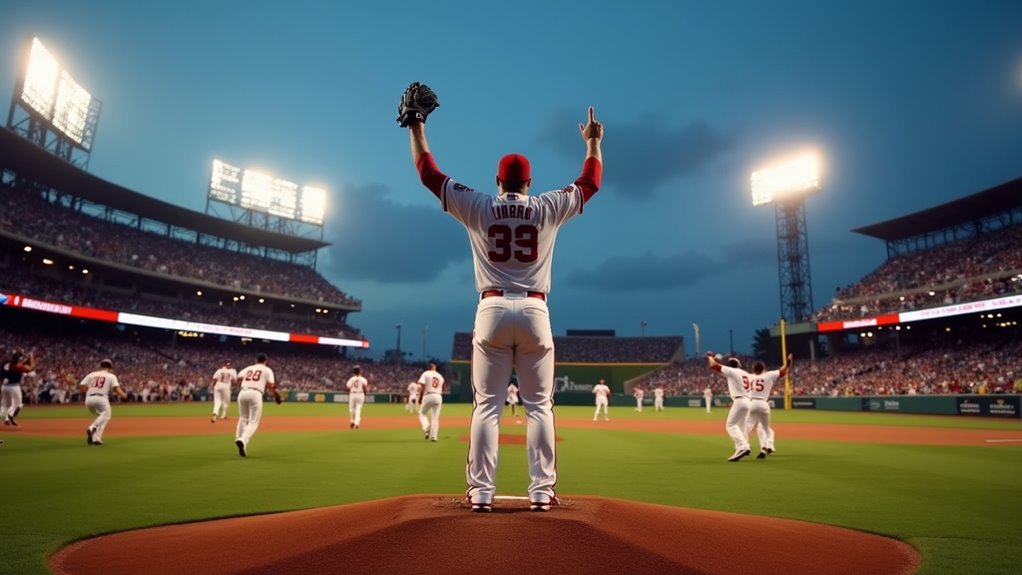

A perfect game in baseball is a nine-inning complete-game performance in which no opposing batter reaches base. Only 24 perfect games have occurred in Major League Baseball history, highlighting its extreme rarity. The pitcher retires all 27 batters with no hits, walks, hit-by-pitches, or errors allowing a runner. Defense and pitch selection must work flawlessly alongside command and stamina. One small mistake can instantly end the bid, which is why each perfect game becomes a historic event.
What Is a Perfect Game in Baseball?
A perfect game in baseball means a pitcher, or sometimes a group of pitchers, gets through the whole game without letting a single opposing batter reach base safely. You’re watching 27 straight outs, with no hits, walks, hit-by-pitch, or errors that send someone on. That’s why this feat feels so rare and so personal to fans who love clean, tense baseball.
To get there, you need sharp pitch sequencing and strong strike efficiency, because every count matters. You also need mental stamina, since one shaky moment can break the run. And yes, umpire impact can shape the edge of the strike zone, so close calls matter. Still, you and your team stay locked in, because every out builds trust and keeps the dream alive.
How Is a Perfect Game Scored?
Upon examining the scorebook, the key thing is simple: every batter has to be retired without anyone reaching base, so the box score stays clean from the initial pitch to the 27th out. You’ll see 27 outs, no hits, no walks, no hit-by-pitch, and no errors that let a runner aboard. Scorekeeping subtleties matter, because the official scorer must note each play with care and follow umpire judgment on close calls.
Should a fielder’s choice, catcher’s interference, or obstruction puts someone on, the perfect game is gone. That’s why you should regard the scorecard as a shared record of calm, sharp teamwork. Once everything lines up, you get that rare 27 up, 27 down feeling, and it belongs to everyone in the dugout.
How Is It Different From a No-Hitter?
Although both feats look almost magical from the stands, a no-hitter and a perfect game aren’t the same thing at all.
With a no-hitter, you only need to stop hits. You can still let hitters reach on walks, errors, hit-by-pitches, or a catcher’s mistake.
In a perfect game, none of that happens. Every batter must go down, and you need 27 straight outs. That makes the pitcher mentality sharper because every pitch matters, even whenever the umpire strikezone feels tight or loose.
You’re watching a cleaner, stricter performance, not just a quiet scoreboard. So in case you’re cheering with the crowd, bear in mind this: every perfect game is a no-hitter, but a no-hitter doesn’t always give you that flawless, all-in feeling.
Why Are Perfect Games So Rare?
Perfect games are so rare because baseball gives hitters and chaos a lot of chances to sneak in. You need 27 straight outs, and one tiny mistake can end it.
Even great pitchers must win every count, every matchup, and every moment. Your pitch sequencing has to stay sharp, because hitters learn fast and adjust by the third trip through the order.
Then weather effects can bend the game too. Wind, rain, heat, and sticky air all change grip, movement, and control.
You also need flawless defense, since one error, walk, or hit batter breaks the run. So whenever you watch a perfect game, you’re seeing a whole team stay calm together, for a very long time, whilst pressure keeps growing.
Famous Perfect Games in Baseball History
Fans usually light up whenever a perfect game shows up in baseball history, because these moments feel almost unreal. You can envision the hush, the tense pitch evolution, and then the crowd’s roar as the last out lands. In stadium lore, names like Don Larsen, Sandy Koufax, and Félix Hernández still feel close to fans who love the game’s biggest nights.
- Larsen’s 1956 World Series gem made history shine brighter.
- Koufax’s 1965 masterpiece showed clean command and calm nerves.
- Hernández’s 2012 game gave Mariners fans a shared memory they still carry.
Whenever you learn these stories, you join a club of people who cheer for baseball magic. Each perfect game gives you a reason to believe great moments can still happen.
What Ends a Perfect Game?
A perfect game ends the moment the initial batter reaches base, because that breaks the clean 27-up, 27-down run.
You can also lose it provided an error gives a hitter a way on, even whenever no one records a hit.
Walks and hit-by-pitches end it too, since both put a runner on initial and ruin the flawless inning.
First Batter Reaches Base
Once the initial batter reaches base, the perfect game is over immediately. You feel the shift right away, because the crowd knows it too. The psychological impact can hit you hard, but your team can still regroup and stay locked in. At that point, manager decisions start to matter in a new way, since the goal changes from history to simple control.
- A single walk or hit stops perfection.
- A hit-by-pitch also ends it.
- Any safe reach counts, even on a close play.
You might feel let down, yet you’re still part of a strong performance. The pitcher could keep competing, and your group can keep supporting each other. That shared effort still matters, even whenever the perfect-game dream is gone.
Error Extends Inning
An error can feel messy, but it does not always end a perfect game. In case a fielder misplay happens, you initially look at the umpire ruling and the official score.
Whenever the play lets a runner reach base safely, the perfect game is gone, and you feel that sting with the whole dugout. But supposing the mistake only extends the inning without giving up a baserunner, the perfect game can still stay alive. That’s why every detail matters.
You and your teammates need clean defense on every pitch, because one shaky moment can change the story fast. Still, not every awkward bounce ruins the dream. Sometimes the scorekeeper calls it an error, and you can breathe, reset, and keep chasing those 27 clean outs together.
Walks And Hit By Pitch
Even though an error doesn’t spoil the dream, walks and hit-by-pitch moments can end it in an instant, because they put a runner on base the moment the umpire makes the call. You know how tight a perfect game feels, so one free pass changes everything. A walk, including an intentional walk, gives the batter initial base. A hit by pitch does the same, even on a rehab appearance whilst a pitcher is just finding rhythm.
- One ball four breaks the perfect line.
- One plunked batter does it too.
- After that, you’re chasing perfection, not keeping it.
That’s why pitchers attack the zone and fielders stay ready. Every pitch matters, and your crowd can feel that pressure.
Why Perfect Games Matter So Much
At the moment you watch a perfect game, you’re seeing something so rare that it instantly joins baseball history. That’s why it carries so much weight, because every pitch adds to a legacy that almost never happens.
You can feel the pressure, the self-respect, and the prestige all at once, and that’s what makes it unforgettable.
Historical Rarity
Because a perfect game leaves no room for a single mistake, it stands apart from almost every other feat in baseball history. You can feel why it hits so hard: in more than 238,500 MLB games, only 24 have ended with 27 up, 27 down. That tiny number tells you this club is almost impossible to join.
As pitcher fatigue starts creeping in, or weather conditions make every pitch harder to control, the margin disappears fast.
- You need every out to come clean.
- Your defense has to stay sharp all game.
- One baserunner ends the dream instantly.
Legacy and Prestige
A perfect game carries a special kind of weight, and that’s why fans recall it long after the final out. You feel its prestige because it shows total control, trust, and teamwork in one clean run.
Whenever your club earns one, the moment brings ceremonial recognition, from cheers in the park to praise that never fades. It also shapes legacy narratives, since people link that night to greatness for years.
You don’t just watch a scoreless line; you witness a shared memory that belongs to players, coaches, and fans together. That sense of belonging matters. It tells you your team touched a rare level, and you get to keep that story close every time baseball talks about its finest moments.
Frequently Asked Questions
Can a Perfect Game Include Multiple Pitchers?
Yes, you can see a perfect game with multiple pitchers, though it is rare: MLB has 24 official ones total, and combined pitchers can share the 27 outs provided nobody reaches base.
Does a Rain-Shortened Game Count as a Perfect Game?
No, you usually cannot count a rain shortened game as a perfect game under official rules. You need at least nine innings, so if rain ends it prematurely, you are left without that historic achievement.
Can a Perfect Game Happen in Extra Innings?
Yes, you can see a perfect game in extra innings provided you keep every batter off base. In extra inning bullpen dynamics, postseason implications grow huge, and you are watching history unfold together.
Does an Error Always Ruin a Perfect Game?
No, an error does not always ruin your perfect game. Provided fielding errors do not let a batter reach base, you are still perfect; scorekeeping controversies can still matter, though, and official rulings decide it.
Has Any Pitcher Thrown More Than One Perfect Game?
No, you won’t find any pitcher with more than one official MLB perfect game. That lone, spotless feat glows across multiple seasons as one of baseball’s rarest career milestones, and you’re part of its lasting awe.
