

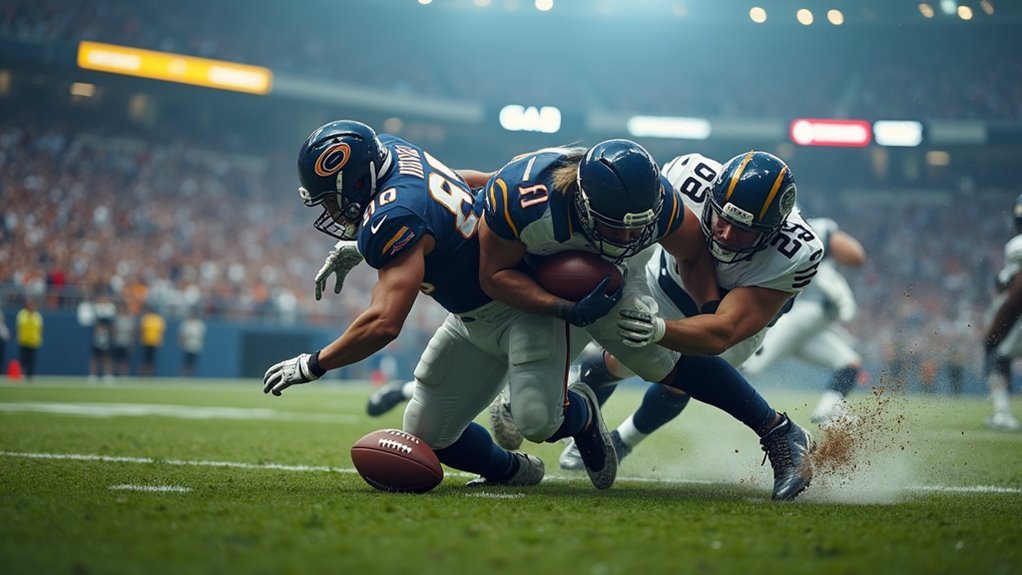

A fumble in football is when a player who has clear possession loses the ball before the play is over. That loose ball can be recovered by either team, often changing possession instantly. Fumbles happen after hits, bad exchanges, or a dropped catch while the play continues. Officials look for established control and the exact moment the ball comes loose to rule a fumble. Recoveries and returns after a fumble frequently swing momentum and scoring opportunities.
What Is a Fumble in Football?
A fumble can turn a calm play into instant chaos, and that’s exactly what makes it such a big deal in football. You’re seeing a player lose control of the ball after he already had it, and that’s different from a pass that falls short or a picked throw.
If this occurs, the ball becomes live, so either team can jump on it. That sudden scramble changes game psychology fast, because your team feels pressure and the other side feels hope.
It also drives fan reactions, since one loose ball can flip the mood in seconds. In the stands, you know that gasp. On the field, you feel the swing.
A fumble isn’t just a stat. It’s a moment that can shift trust, energy, and momentum in one breath.
How Does a Fumble Happen?
Fumbles usually happen in the middle of contact, and that’s where the game gets messy fast.
You can lose the ball whenever a tackler hits your arm, your grip slips, or helmet pops jar the ball loose.
A bad snap can also start trouble before you ever settle in.
Sometimes weather effects make it worse, especially in rain, wind, or cold, whenever the ball feels slick and harder to secure.
On defense, a quick swipe or punch can knock it free before you react.
Even a clean hit can shake the ball out provided you’re carrying it high and loose.
That’s why strong ball security matters every snap, because one small mistake may turn your drive into a scramble.
What Counts as a Fumble?
- A runner gets hit and the ball pops free.
- A quarterback drops the snap before control settles.
- A defender punches the ball loose in traffic.
- A loose ball rolls live until someone secures it.
If you’re rooting with your crew, that live-ball moment can feel huge. The fumble counts only when possession slips away, and it doesn’t become a turnover unless the other team recovers. That’s the simple exam you can trust.
Fumbles vs. Incomplete Passes
You can spot the difference by asking one simple question: did the player already have control of the ball at the moment it came loose?
A fumble happens whenever possession slips away, while an incomplete pass happens once a thrown ball never gets secured by a receiver. That small difference can change the whole play, so it’s worth understanding before the crowd starts arguing.
Fumble Definition
At initially glance, a fumble can look a lot like an incomplete pass, but the rule is much more specific than that. You lose the ball only after you’d clear control, and that’s the heart of the call. Consider fumble psychology and equipment standards too, because grip, contact, and ball security all matter whenever you’re in the mix with your team.
- You tuck the ball and get hit hard.
- The ball pops free onto the turf.
- A defender reaches in and jars it loose.
- The loose ball rolls away, and everyone reacts fast.
That’s a fumble. You’re not watching a missed throw; you’re seeing possession slip away.
Once the ball is live, both teams can fight for it, and that scramble can swing the game in a heartbeat.
Incomplete Pass Criteria
Not every loose ball counts as a fumble, and that’s where incomplete passes can trip people up fast.
You need the ball to leave the passer’s hand during a forward throw and then hit the ground, a defender, or another player without a catch.
Should the quarterback never have had clear possession for a pass, statute interpretation says you might be looking at a fumble instead.
Watch the referee signals too, because they’ll stop the play with an incomplete pass signal, not a scramble for recovery.
That difference matters for your team, since an incomplete pass keeps the down alive and the ball where the play ended.
Once you understand this line, you can follow the action with confidence and feel right at home.
What Happens After a Fumble?
After a fumble, the play doesn’t just stop and fade away, because the ball becomes live and both teams suddenly have a chance to take control. You’ll see the post fumble protocol unfold fast, and the official ruling tells everyone whether the ball stayed loose or became dead. Stay calm with your team, because the next few seconds can flip field position.
- A runner hits the turf, and the ball pops free in a flash.
- Players plunge, reach, and form a small pile near the spot.
- The sideline watches the referee signal what happened.
- The crowd holds its breath as momentum swings.
Should your side secure it, you keep going. In the event the other side gets it, you feel the sting, but you also know the game’s rhythm.
Who Can Recover a Fumble?
On a fumble, either team can recover the ball, and that’s what makes the next moment feel so tense. You’re watching for who gets there initially, but the ball can also bounce in tricky ways.
Should your team secures it, you keep the drive alive. In the event the other side grabs it, you lose possession, and the play becomes a turnover.
Officials’ rulings matter here because they decide whether a player truly had control before the ball came loose or whether someone actually recovered it. Sometimes fan reactions explode before the call is even announced, since everyone sees the scramble and hopes for a break.
You’ll notice that recovery, not just contact, decides the result. That’s why every loose ball feels like your whole side is holding its breath together.
What Is a Forced Fumble?
A forced fumble happens after a defensive player knocks the ball loose from someone who already has control of it.
You’ll usually see this while a defender punches at the ball, hits the runner hard, or strips it during a tackle.
That’s what turns a normal carry into a loose-ball scramble, and it can flip the play in a heartbeat.
Forced Fumble Definition
Forced-fumble drama starts the moment one defender makes the ball leave the runner’s control. You’ll hear fans roar because this play can flip a drive fast, and you’re part of that chaos. A forced fumble happens whenever a defender legally jars the ball loose from a ball carrier, often with a strip sack or a punch out technique. That loose ball becomes everyone’s race.
- Envision a running back clutching the ball.
- See a hand swipe in and knock it free.
- Picture teammates diving through traffic for it.
- Feel the sideline surge as your side wins it.
If your team forces one, you’ve earned a huge edge. It isn’t just luck; it’s pressure, timing, and hustle working together.
Defensive Force Techniques
Now that you know how a defender can force the ball loose, it helps to see the moves that make that happen.
You can watch for the punch technique, where you strike the ball with quick, clean force instead of reaching wildly.
You can also use strip fundamentals, which mean you attack the ball as you wrap the runner.
Stay balanced, keep your eyes on the football, and finish every tackle with strong hands.
Once you time your hit well, you don’t just slow the play; you give your team a real chance to steal momentum.
That’s why good defenders train these skills together. They trust each other, play with purpose, and keep their focus on the same prize: the ball.
What Is a Fumble Return?
At the moment the ball pops loose and one team grabs it, the play can turn fast into a fumble return. You see a teammate scoop the ball, then sprint with help from blockers while the crowd rises around you. That run counts as return yards, and it can spark big momentum swings for your side.
- The defender or runner snatches the loose ball.
- The returner looks for open grass and cuts cleanly.
- Teammates seal off pursuers and clear a lane.
- The run ends once the ball carrier is tackled or ruled down.
You feel the thrill because every step can shift your group’s energy. Still, you need quick hands, sharp eyes, and calm feet to keep the ball secure.
Why Fumbles Change Games
A single loose ball can flip the mood of a whole game in seconds. Whenever you’re on the sideline or in the stands, you feel it right away. A fumble creates momentum swings because one mistake can hand the other side a fresh chance and a short field. It also has a strong psychological impact, since your team might press harder while the other side grows louder and sharper.
| Effect | What You Feel | Game Result |
|---|---|---|
| Sudden loss | Shock | Energy drops |
| Live ball | Stress | Possession changes |
| Recovery | Relief or buzz | Field position shifts |
That’s why each loose ball matters. It can change your rhythm, tilt confidence, and turn a steady drive into a scramble for control.
How Do Teams Reduce Fumbles?
You can cut down on fumbles by building strong ball security habits each time you run, catch, or get hit. Coaches help you lock the ball in tight, keep two hands on it in traffic, and protect it with your body as defenders close in.
Then, through steady practice and smart drills, you train those moves until they feel natural under pressure.
Ball Security Techniques
Ball security starts long before a defender reaches in, because the best way to cut down fumbles is to make the ball hard to steal in the initial place. You can tuck it tight, keep two hands on it in traffic, and protect it with your body so your team feels steady together.
- Cradle the ball high and close, like it’s your own.
- Build wrist strength so your hands stay firm through contact.
- Use grip trainers to make your hold tougher and more reliable.
- Keep your elbow in, so the ball can’t pop free.
Whenever you move this way, you send a clear message: you’ve got your crew’s back. Small habits like these make you harder to strip and easier to trust as soon as the game gets loud.
Practice And Drills
On the practice field, teams cut down fumbles through turning good habits into muscle memory. You start with hand eye drills that make you track the ball and squeeze it fast, even whenever a defender swats at it.
Then you repeat footwork drills so your steps stay tight, balanced, and ready for contact. Coaches also use pressure circuits, where you run, catch, and protect the ball while tired, because real games don’t pause for fresh legs.
You’ll hear teammates call out prompts, and that support helps you stay calm. With every rep, you learn to trust your grip, keep your eyes up, and finish plays clean. That’s how your unit gets tougher, safer, and harder to strip.
Frequently Asked Questions
Can a Quarterback Fumble Before Throwing the Ball?
Yes, a quarterback can fumble before throwing; it’s an awkward pre throw mishap. A quarterback strip or bad snap can jar the ball loose before your passing motion even starts.
Is a Fumble the Same as a Turnover?
No, you do not treat a fumble as a turnover unless the other team recovers it. A forced fumble creates a live ball, and you can still keep possession provided your team recovers.
Can the Offense Recover Its Own Fumble?
Yes, you can recover your own fumble, such as snatching back a dropped pass in a crowd. If the offense recovers, you keep possession provided you were the one to grab it initially. A forward fumble still cannot be advanced by you.
Does a Fumble Still Count if the Player Regains It?
No, it usually does not count provided you regain it immediately. In recovery scenarios, the ball never truly becomes loose. Replay reviews can confirm possession and you still keep the play alive with control.
Can a Fumble Happen on a Bad Snap?
Yes. If you lose control on a bad snap, that muffed exchange can absolutely become a fumble, and it can feel like the world just tipped. You have a live ball, so either team can recover it.
