


Choosing the right swim vest can make your water days safer and less stressful, but not every option fits every child the same way. You’ll want to think about comfort, buoyancy, secure straps, and how visible the vest is in the water. The six options below cover different ages, sizes, and features, so you can narrow down what works best before you decide what your swimmer really needs.
| Colorblock Toddler Swim Vest Life Jacket (Blue) |  | Best Overall | Age Range: Toddler | Weight Range: 33–55 lbs | Buoyancy Type: Level-70 PFD | VIEW LATEST PRICE | Read Our Analysis |
| Owntop Youth Swim Vest for Kids | 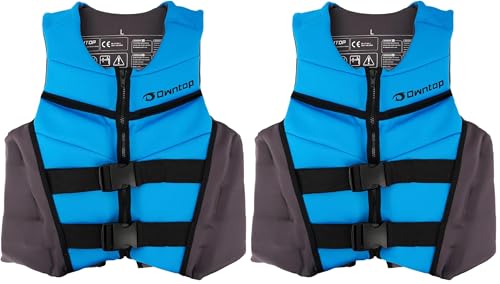 | Most Comfortable | Age Range: Youth | Weight Range: 50–125 lbs | Buoyancy Type: Swim vest | VIEW LATEST PRICE | Read Our Analysis |
| Kids Neoprene Swim Vest with Crotch Strap | Best for Beginners | Age Range: Ages 1–9 | Weight Range: Up to 20 kg | Buoyancy Type: Buoyancy aid | VIEW LATEST PRICE | Read Our Analysis | |
| DOOHALO Toddler Swim Vest for Kids Age 1-8 | Best for Toddlers | Age Range: Ages 1–8 | Weight Range: 20–46 lbs | Buoyancy Type: Buoyancy aid | VIEW LATEST PRICE | Read Our Analysis | |
| Bestway Swim Safe Toddler Floaties Swimming Vest |  | Best Sun Protection | Age Range: Ages 3–6 | Weight Range: 19–30 kg | Buoyancy Type: Buoyancy aid | VIEW LATEST PRICE | Read Our Analysis |
| Toddler Swim Vest with Crotch Strap and Harness |  | Most Secure | Age Range: Ages 1–7 | Weight Range: 22–66 lbs | Buoyancy Type: Buoyancy aid | VIEW LATEST PRICE | Read Our Analysis |
More Details on Our Top Picks
Colorblock Toddler Swim Vest Life Jacket (Blue)
If you’re looking for a safe, easy-to-fit vest for a young swimmer, the Sisterly Market Colorblock Toddler Swim Vest Life Jacket in blue is a strong choice. You get a U.S. Coast Guard Approved Level-70 PFD designed for children 33 to 55 pounds. The back-entry design helps keep your child secure, while the adjustable chest strap and quick-release rear buckle help you fit it properly. Built-in arm flotation supports beginners, and the PE foam interior adds buoyancy. You’ll also appreciate the durable polyester shell, reduced chafing, and cute colorblock style for boys and girls.
- Age Range:Toddler
- Weight Range:33–55 lbs
- Buoyancy Type:Level-70 PFD
- Closure System:Rear buckle
- Material:Polyester
- Adjustable Fit:Chest strap
- Additional Feature:U.S. Coast Guard approved
- Additional Feature:Built-in arm flotation
- Additional Feature:Quick-release rear buckle
Owntop Youth Swim Vest for Kids
Owntop’s Youth Swim Vest for Kids is a strong pick for young swimmers who need lightweight support without feeling restricted in the water. You’ll move freely because the vest feels light, not bulky, so you can enjoy swimming, kayaking, or other watersports with less drag. Two safety buckles and a smooth zipper help you fasten it quickly and securely. Soft neoprene adds comfort and can reduce skin irritation, even on sensitive skin. The expandable back panel helps you get a better fit, and it suits youth weighing 50 to 125 lbs.
- Age Range:Youth
- Weight Range:50–125 lbs
- Buoyancy Type:Swim vest
- Closure System:Zipper + buckles
- Material:Neoprene
- Adjustable Fit:Expandable back
- Additional Feature:Lightweight mobility
- Additional Feature:Two safety buckles
- Additional Feature:Expandable back panel
Kids Neoprene Swim Vest with Crotch Strap
For kids ages 1–9 who need extra security in the water, this neoprene swim vest with a crotch strap is a strong choice because it stays in place while still letting little swimmers move naturally. You get a continuous front zipper for easy on and off, plus adjustable straps for a snug, ergonomic fit. The neoprene and high-density EPE foam provide gentle buoyancy without limiting arm movement. Soft edge padding helps prevent chafing, and the lightweight, wear-resistant build stands up to pool days, beach trips, and lake fun. Bright colors boost visibility, too.
- Age Range:Ages 1–9
- Weight Range:Up to 20 kg
- Buoyancy Type:Buoyancy aid
- Closure System:Front zipper
- Material:Neoprene
- Adjustable Fit:Adjustable straps
- Additional Feature:Crotch strap included
- Additional Feature:Continuous front zipper
- Additional Feature:High-density EPE foam
DOOHALO Toddler Swim Vest for Kids Age 1-8
The DOOHALO toddler swim vest is a strong pick for boys and girls ages 1–8 who need a comfortable swimming aid that helps build confidence in the water. You can use it for pool sessions, garden play, or water park visits while your child learns water familiarity. It fits kids from 20–46 lbs, with a small size for ages 1–2. You’ll like the detachable foam block, adjustable buoyancy, front zipper, and safety buckle. The blue shark design uses polyester and weighs 400 g. Always keep adult supervision close, since it’s a buoyancy aid, not drowning protection.
- Age Range:Ages 1–8
- Weight Range:20–46 lbs
- Buoyancy Type:Buoyancy aid
- Closure System:Zipper + buckle
- Material:Polyester
- Adjustable Fit:Safety strap
- Additional Feature:Detachable foam block
- Additional Feature:Shark design
- Additional Feature:Full front zipper
Bestway Swim Safe Toddler Floaties Swimming Vest
Bestway’s Swim Safe Toddler Floaties Swimming Vest suits young beginners ages 3–6 who need extra confidence in the water. You get a Stage B buoyancy aid with soft knitted fabric, built-in foam floats, and a multicolored PVC design that’s comfortable and cheerful. The vest fits children 3–6, supports 19–30 kg loads, and includes two adjustable quick-release buckles, a self-locking zipper, and a protective flap. UPF 50+ protection helps block UV rays and resist fading. Use it to support arm spinning, hand paddling, and basic pool-safety learning.
- Age Range:Ages 3–6
- Weight Range:19–30 kg
- Buoyancy Type:Buoyancy aid
- Closure System:Zipper + buckles
- Material:PVC
- Adjustable Fit:Quick-release buckles
- Additional Feature:UPF 50+ protection
- Additional Feature:Built-in foam cushions
- Additional Feature:Protective zipper flap
Toddler Swim Vest with Crotch Strap and Harness
With dual adjustable safety buckles, shoulder straps, and an adjustable crotch strap, this toddler swim vest keeps little swimmers secure while they build water confidence. You get an anti-slip design that helps prevent accidental release, plus a snug fit that won’t slip off. For beginners, keep the crotch strap on for extra stability; for older kids, remove it for freer movement. It fits 22–66 lbs, ages 1–7, and adjusts easily for boys and girls. Soft, breathable twill and EPE foam stay comfortable. Bright colors, cute cartoon styling, and EN 13138-1 certification make pool, beach, and sea outings easier.
- Age Range:Ages 1–7
- Weight Range:22–66 lbs
- Buoyancy Type:Buoyancy aid
- Closure System:Dual buckles
- Material:Twill fabric
- Adjustable Fit:Crotch strap / straps
- Additional Feature:EN 13138-1 certified
- Additional Feature:Dual wearing methods
- Additional Feature:Double-stitched edges
Factors to Consider When Choosing Swim Vests
When you choose a swim vest, check the age and weight range first so it matches the swimmer. You should also look for safety certification, a secure fit with easy adjustability, and soft, comfortable materials. Finally, pick a buoyancy level that supports confidence without limiting movement.
Age And Weight Range
A swim vest should match your child’s age and weight range, because many models are built for specific bands like 1–7 years, 1–8 years, 3–6 years, or youth sizes. You should always check the maximum supported weight, since limits can range from about 18 kg to 66 lbs or 125 lbs. Don’t rely on age alone; make sure the listed fit range matches your child’s current body size. Some vests use narrower limits, such as 22–33 lbs or 33–55 lbs, so read those details closely. When a size chart is available, use it to compare height, chest, and weight. This matters most for smaller children. Choose a vest that allows a little room to grow, yet still fits snugly within the stated range.
Safety Certification
Check for a clear safety certification before you buy, such as U.S. Coast Guard approval or EN 13138-1 compliance. That label tells you the vest meets recognized safety standards. Next, read the PFD classification. A Level 70 rating or buoyancy-aid designation means the vest supports flotation, but it isn’t a substitute for full drowning protection. You should also verify the printed weight range and maximum capacity, since certified vests only work within specific limits like 33–55 lbs or 50–125 lbs. Look at the closure system too; quick-release buckles, safety straps, crotch straps, and rear-entry buckles all help secure the vest in use. Even with certification, keep your child under adult supervision. These vests aid learning, not independent swimming.
Fit And Adjustability
Fit matters just as much as certification, so choose a swim vest with a weight range that closely matches your child’s current size, such as 33–55 lbs, 22–66 lbs, or 50–125 lbs. Next, check for adjustment points that let you fine-tune the fit, including chest straps, safety buckles, zipper closures, and expandable back panels. When you secure the vest correctly, it should stay snug without slipping, riding up, or letting your child remove it easily without your help. You can also look for crotch straps and shoulder straps, which help stabilize the vest and keep it positioned as your child moves in the water. Adjustable designs work well because they adapt to different body shapes, growth spurts, and the amount of swimming support your child needs.
Material And Comfort
When you’re choosing a swim vest, comfort starts with the material, so look for soft, skin-friendly options like neoprene, polyester, twill fabric, or knitted fabric to help prevent irritation during longer water sessions. You’ll also want cushioning that feels gentle, not stiff, so PE foam, EPE foam, or integrated foam floats can add comfort without creating pressure points. Soft edge padding, breathable fabric, and a lightweight build help reduce chafing and let you move naturally in the water. Adjustable chest straps, back panels, and expandable fits can improve comfort across different body shapes. Choose a vest with wear-resistant outer shells, double-stitched edges, and tear-resistant construction, so it stays durable while still feeling flexible, smooth, and easy to wear all day.
Buoyancy Level
Buoyancy level matters because the vest should match your child’s size and weight range, whether that’s 20–46 lbs, 33–55 lbs, 50–125 lbs, or 22–66 lbs. If you choose a vest with too little support, it won’t help much; too much, and your child may feel stiff or awkward. Higher-buoyancy designs often use PE foam, EPE foam, or integrated foam cushions to better support the head and torso. If your child’s just learning, look for adjustable buoyancy or removable flotation pieces so you can start with more stability and then reduce support as skills grow. Also, compare labels carefully: a buoyancy aid helps with floating and swim practice, while a Level-70 PFD offers different flotation support.
Closure Security
Once you’ve matched the vest’s buoyancy to your child’s size and weight, the next thing to check is how securely it stays closed during play. You want closures that won’t give way when your child kicks, twists, or climbs in and out of the water. Look for multiple safety buckles, quick-release rear buckles, or dual adjustable buckles that help keep the vest fastened. A smooth front zipper can make dressing easier, but it shouldn’t stand alone; choose one paired with buckles or a protective flap. Back-entry designs can also add security because they’re harder for a child to remove. Adjustable chest, shoulder, and back straps help you get a snug fit, while anti-slip or self-locking closures can add extra protection.
Visibility And Design
Visibility matters just as much as fit, because a swim vest that’s easy to spot can make supervision safer and simpler. You should look for bright, high-contrast colors that stand out in pools, lakes, and busy splash zones. A simple colorblock or multicolor pattern can separate the vest from the water, helping you track your child faster during swim practice or open-water play. Cute cartoon prints or playful shark shapes can also boost acceptance, so your child may be more willing to keep the vest on. Bold panels and clear design elements give adults a quicker visual read from a distance. When you choose strong contrast and easy-to-see styling, you make monitoring easier and reduce the chance of losing sight of your swimmer.
Frequently Asked Questions
How Do I Clean a Swim Vest Properly?
Rinse the swim vest in cool fresh water after each use because salt and chlorine cause the most damage. Hand-wash it using a mild soap, lay it flat to air-dry, and do not machine-dry or bleach it.
Can Swim Vests Be Used in the Ocean?
Yes. Use a swim vest specifically rated for open water, supervise swimmers closely, and do not rely on a swim vest instead of a Coast Guard approved life jacket in strong currents or rough surf.
What Size Swim Vest Should I Choose?
Pick a vest that fits snugly like a tailored life jacket. Measure your chest, weight, and torso and use the brand’s size chart. The vest should not ride up, gape, or slip.
How Long Does a Swim Vest Typically Last?
A well cared for swim vest typically lasts about two to five years. Inspect it regularly for color fading, surface cracking, stitching coming undone, or reduced buoyancy. Replace the vest sooner after frequent use, prolonged sun exposure, chlorine or saltwater damage, or any visible tears or punctures.
Can Kids Wear Swim Vests Over Swimsuits?
Yes. Put a child’s swim vest over their swimsuit so the bright straps and fitted fabric remain clearly visible against the water. This arrangement helps keep the vest securely in place, increases comfort, and allows the child to move freely.
