

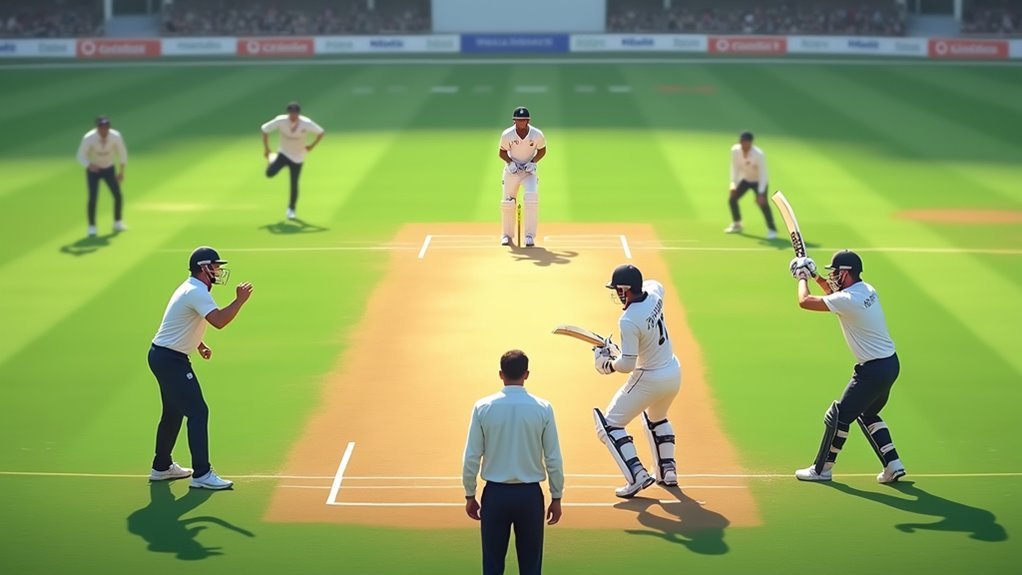

Cricket scoring shows runs, wickets, and overs to give a quick picture of the match. Runs are scored by batters through singles, twos, threes, boundaries, and sixes. Wickets record how many batters are out and affect batting strategy. Overs tell how many legal deliveries have been bowled and the match’s pace. Extras add runs to the team total without crediting a batter.
What Cricket Scoring Means
At initially, cricket scoring could look busy, but it actually follows a clear pattern. You only need to read the score as runs and wickets, and that keeps things friendly.
Every run adds to the batting side’s total, while wickets show how many dismissals you can still afford. Because of that, scoring conventions help you follow each change without guessing.
You’ll also notice match tempo through overs, since each set of six balls shapes how fast the innings moves. A score like 148/3 tells you the team has 148 runs and has lost 3 wickets.
Once you understand that simple format, you can join in the conversation with confidence, and the game starts to feel less like code and more like shared excitement.
How Batsmen Score Runs
Batsmen score runs through working as a pair and turning each safe crossing into progress for the team. You and your partner build rhythm with sharp running technique, calling promptly and watching the ball closely.
After each completed crossing, you swap ends, and that switch keeps strike rotation moving. Sometimes you’ll take one run, and sometimes you’ll press for more should the fielding side be slow.
Good footwork, clear calls, and quick turns help you avoid mistakes and keep trust strong between you. Should you stay alert, you can turn a single shot into steady score growth.
Every run adds to your team’s total, so your effort matters on each ball. Whenever you run together with confidence, you help the whole side feel settled and ready.
What Extras, Byes, and Boundaries Mean
You’ll sometimes see runs added without the batter hitting the ball, and those are called extras.
Occasionally you’ll see byes and leg-byes also can put runs on the board, even though the bat doesn’t make contact.
And once the ball reaches the boundary, you get a four or a six, which can lift the score fast without any running.
Extras Explained
Extras can slip into a cricket score almost quietly, but they matter a lot. You’ll see them whenever the batting side gets runs without a normal stroke, and that can lift you fast. Umpire signals make them clear, so you’re never guessing. Here’s the simple illustration:
- Wide: the bowler misses the batter’s reach.
- No-ball: the bowler breaks a rule, and you get a bonus run.
- Penalty runs: the umpire adds them for serious rule breaks.
- Boundary extras: sometimes the total rises even when no bat hit helps.
Extras sit beside your batting runs on the card, and they still count. That means your team can build pressure and stay together in the chase, one useful run at a time.
Byes And Leg Byes
Whenever the ball slips past the bat and the batter’s body is in the way, cricket can still keep the score moving through via byes and leg byes.
You earn a bye whenever the ball misses the bat and you both run safely because the wicketkeeper or fielders couldn’t stop it.
You earn a leg bye whenever the ball touches the batter’s body, not the bat, and you still run.
These runs count as extras, so they help your team without crediting the batter.
Good running etiquette matters here, because you and your partner must watch the ball and stay alert.
Umpire signals also matter, since they show which extra was given.
Should you be new, don’t worry, you’ll get the rhythm fast.
Boundaries And Runs
A well-hit boundary can change the mood of a cricket innings in a flash. You get four whenever the ball bounces initially, and six once it sails over the rope. That score joins your total just like a run from smart running technique, so every shot matters.
- Use boundary strategy whenever the field feels tight.
- Trust your running technique whenever a single looks safe.
- Recall extras, like wides and no-balls, still help your side.
- Byes and leg-byes add runs too, even without bat contact.
Once you and your batting partner read the game well, you build pressure on the fielding side and keep your team moving together. That mix of power, timing, and calm running makes scoring feel shared, not lonely.
How Wickets Affect the Score
Wickets can flip a cricket score in an instant, because every dismissal brings the batting side one step closer to the end of its innings. Whenever you lose a wicket, you lose a batter, but you also lose pressure on the fielding side provided strike rotation slows. That’s why steady partnerships matter so much.
You help your team by staying calm, finding singles, and protecting the set batter. Should wickets keep falling, a tail collapse can drag the score down fast, even after a strong start. In that moment, every run feels bigger, and every ball feels heavier. So as you watch a score, bear in mind that wickets don’t just count outs; they shape momentum, confidence, and how safely your side can keep building runs together.
How to Read a Cricket Scorecard
Once you know how wickets can change a match, the scorecard starts to make a lot more sense because it shows you the full story at a glance. You can read it like a team update, and that helps you feel part of the game.
- Check the main total initially, like 148/3, so you see runs and wickets together.
- Look at overs next, because they show score progression and how much play has passed.
- Scan batters’ names for runs, balls, and outs, which helps you follow each role.
- Use the extras line and partnership tracking to spot concealed help and strong stands.
When you read these parts together, you’ll understand who pushed the innings forward, who held firm, and where the pressure shifted.
How Scoring Differs in Tests, ODIs, and T20s
Because each format asks teams to balance risk and patience in a different way, scoring can look quite different in trials, ODIs, and T20s.
In exams, you face long innings duration, so you often build runs slowly, protect wickets, and wait for loose balls.
In ODIs, you still need care, but you also push harder because the over limit is tighter and every phase matters.
In T20s, you swing earlier, hunt boundaries, and accept more risk because time runs short fast.
That changes bowling strategies too, since bowlers attack differently in each format. You’ll see more caution early in exams, more pace control in ODIs, and more defensive fields in T20s.
Even so, the goal stays the same: help your side score more runs than the other team.
Frequently Asked Questions
How Are Runs Scored on Overthrows?
You score overthrow runs whenever the fielding side’s throw lets you complete extra runs, and a boundary overthrow adds four or six provided it reaches the rope. Fielder interference can make your side’s total soar!
What Happens if the Ball Hits the Helmet?
When the ball hits the helmet, you usually get five penalty runs for the batting side and play stops. The helmet obstruction counts as an extra even though it is your protective gear.
Can a Batter Score Runs Without Crossing the Wickets?
Yes, you can score runs without crossing the wickets. Boundary hits can blast up your total instantly, and extras can help too. You are never alone out there; every run pushes your side closer together.
How Is a Run-Out Recorded on the Scorecard?
You’ll usually see a run out recorded against the dismissed batter, with the bowler getting no wicket credit. Provided there’s a direct run out or obstructing the field dismissal, scorecards record the method and fielder involved.
What Does a Dot Ball Mean in Cricket?
A dot ball means you face a scoreless delivery, so you do not add any runs on that ball. You remain at the crease and your team’s total does not change unless extras are awarded.
