

Par in golf is the number of strokes a skilled golfer is expected to need to complete a hole. Typical par values are 3, 4, or 5, based primarily on hole yardage. Course designers also factor in elevation, hazards, and green complexity when assigning par. Comparing your strokes to par shows whether a round was under, over, or at the expected standard. Understanding par helps set realistic goals and read course strategy clearly.
What Does Par Mean in Golf?
Par is the number that gives a golf hole its target. In the par definition, you’re looking at the strokes a scratch golfer should need to finish the hole, usually upon reaching the green and taking two putts.
That’s why par gives you a clear scoring context, so you can tell provided you’re ahead, behind, or right on pace. Most holes are par-3, par-4, or par-5, and the number usually matches the hole’s length and challenge.
On a scorecard, par also helps you read the whole round, since course par adds every hole together. So whenever you hear someone say they made birdie or finished over par, you’re sharing the same language as everyone else on the course.
How Is Par Determined on a Hole?
A hole’s par starts with its yardage, but that isn’t the only thing that matters. You usually see a par-3, par-4, or par-5 based on how far the hole plays from tee placement to the green. The idea is simple: count the strokes you need to reach the putting surface in regulation, then add two putts. Still, course designers and committees can change the call if the hole plays longer or shorter than its number shows. Elevation, steep climbs, downhill runs, water, and forced carries all matter, and a slope adjustment can make a hole feel tougher or easier. On elite tees, raters might stretch the yardage limits, so a long par-4 can pass 500 yards. Very rare holes can even earn par-6 status.
How Par Appears on Scorecards
Whenever you flip over a scorecard, par shows up right next to each hole, and it gives you an instant image of how the round is meant to play.
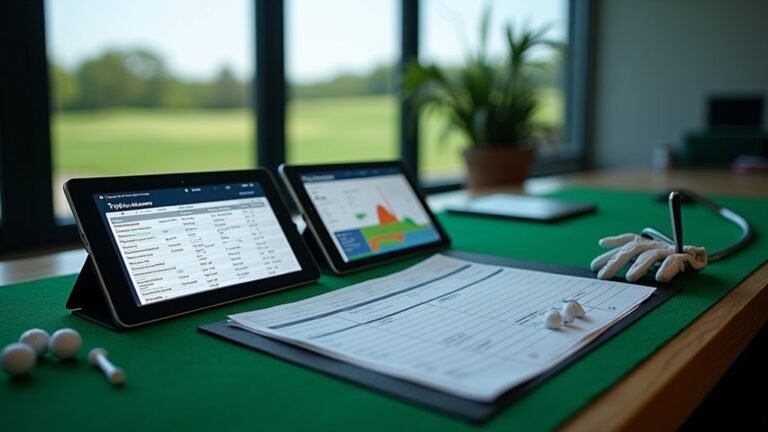
In the scorecard layout, you’ll usually see each hole’s par, plus totals for the front nine, back nine, and full 18. As you’ll typically find, you’ll also spot yardages from each tee box, so tee distinctions matter; a hole can play as a par 4 from the tips and feel shorter from forward tees.
Many cards add the course rating, slope rating, and each hole’s handicap index, which help you read difficulty. Some also list separate pars for men’s and women’s tees.
As you play, you record your score against par on each hole, so the card keeps you and your group on the same page.
Birdie, Bogey, Eagle, and Albatross
These colorful scoring words can make golf feel a lot less stiff, and they also give you a quick read on how well you played each hole.
- A birdie means you finished one stroke under par, like a 3 on a par-4, and that can feel great.
- A bogey means you finished one stroke over par, like a 5 on a par-4, and higher misses become double-bogey or triple-bogey.
- An eagle means you finished two strokes under par, often with a 3 on a par-5 or a 2 on a par-4.
- An albatross, also called a double eagle, means three under par. It’s so rare, especially in pro play, that rare albatrosses can spark scoring streaks and big smiles.
You’ll hear these terms hole after hole, and they also shape your total score across the round.
How Par Shapes Golf Strategy
Par isn’t just a number on the scorecard, because it quietly shapes almost every choice you make on the course. You use it for risk assessment, and that helps you feel settled while the tee box looks busy and intimidating. On a par-4, you often choose a controlled drive with smart club selection so you can hit the green in regulation and stay on plan. On a par-5, you decide whether to attack in two or lay up and keep trouble away.
| Hole Type | Strategy Focus |
|---|---|
| Par 3 | Match distance and shape |
| Par 4 | Control drive, then approach |
Par also guides you as wind, elevation, or hazards make caution feel like the friendly play with the best odds.
How to Use Par to Score Better
You can use par as a simple target on every hole, so you know whenever to play safe and whenever to press for a better number. Before you tee off, check the scorecard yardages and set a realistic plan for each hole, because that helps you keep your nerves steady and your choices smart. Should you aim for green in regulation and protect your two-putt chances, you’ll give yourself a much better shot at scoring lower without forcing risky hero shots.
Par-Based Strategy
A smart round starts before the initial swing, and that’s where par becomes your guide. You can use par-based strategy to feel calmer and play smarter with your group. Start with course management and shot selection by matching each hole’s par and yardage to your plan.
- Attack par-3s and shorter par-4s once the line looks safe.
- On par-4s, choose a controlled tee shot to the fairway.
- On par-5s, decide ahead of your swing whether to go for it or lay up.
- Practice your short game so missed greens still turn into pars.
As soon as you aim to reach green in regulation, you give yourself easy two-putt chances and more birdie looks. That’s how you stay steady, confident, and part of the pack.
Scorecard Planning
Before you tee off, your scorecard can do more than track numbers, because it can help you score better right away. Study each hole’s par and yardage, then use yardage mapping to spot the par-3s, shorter par-4s, and long par-5s that match your game.
Mark target GIR goals so your stroke planning stays clear, and record tee placement with the club you expect to use. That way, you won’t face surprise distances on tight or hazard-heavy holes.
Next, use the handicap column for risk assessment. Play boldly on low-handicap holes whenever birdie feels real, and protect par on tougher ones.
After each hole, record putts and penalties. Those annotations show where you lose strokes, and they help you feel like part of your own steady golf team.
Frequently Asked Questions
Can a Golf Hole Have a Par of 6 or Higher?
Yes, you can. A hole can be par 6 or higher, though it is rare, because golf loves to keep you humble. Your double bogey could still feel good depending on the course rating.
Do All Golf Courses Have the Same Total Par?
No, you will not find every course sharing the same total par. Course design choices and scoring standards vary, so par can differ, letting you compare your round with others in the golf community.
Is Par the Same for Men and Women?
No, you usually will not see identical par for everyone; gender differences and tee variations can change what you face. You will still belong on any course, because the rules stay fair and the challenge stays yours.
What Happens if a Hole Is Shortened After Construction?
You’ll usually see the par adjusted when tee placement or green slope changes make the hole play easier or harder. Your course staff or governing body might re rate it, so you still feel included.
Does Par Change During Professional Tournaments?
No, you usually won’t see par change during a professional tournament; it’s like a fence line staying put in a storm. You’ll notice professional adjustments for weather effects, but you’re still playing the same par.