

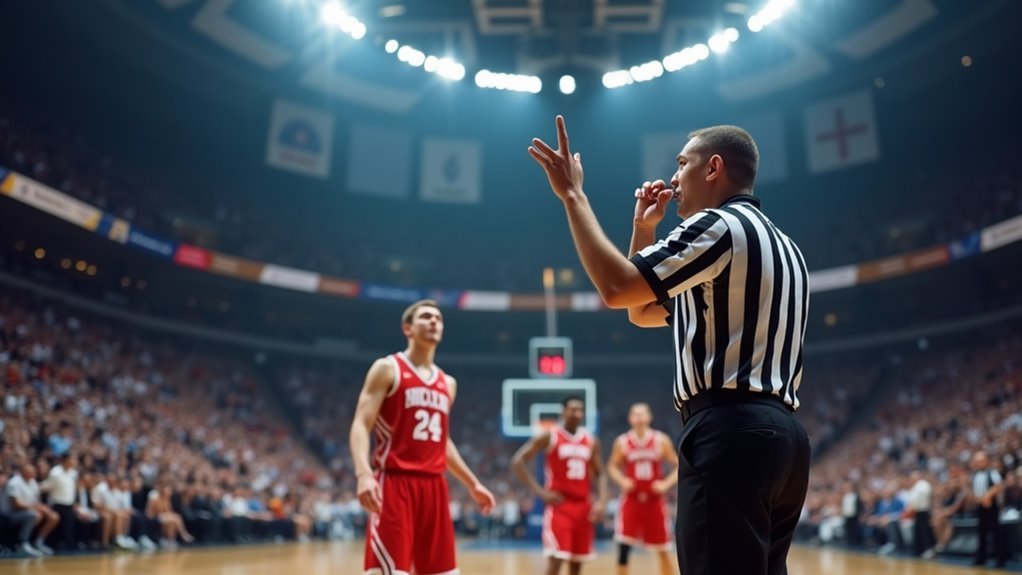

A technical foul is a penalty for unsportsmanlike actions, rule infractions, or conduct that disrupts play rather than for physical contact. Common triggers include arguing with officials, taunting opponents, excessive complaining, and certain bench misconduct. Officials call technicals to maintain control, protect safety, and keep the game moving. Penalties typically award free throws to the opponent and can lead to ejection after repeated or severe offenses. Knowing specific league rules helps explain why officials assess technicals and how they shift momentum during a game.
What Is a Technical Foul in Basketball?
Because the call can happen without warning, you need to stay steady and respectful. Good sportsmanship education helps you understand why that matters, and officiating training helps referees apply the rule clearly. Across leagues, the exact penalty can change, but the idea stays the same: basketball expects you to play hard, stay composed, and protect the game for everyone on the floor and in the stands.
Common Technical Foul Reasons
You can get a technical foul fast if your conduct turns unsportsmanlike, like taunting, profanity, or refusing to cool off.
You can also draw one through arguing too long with officials, since repeated complaints often cross the line from passion to disruption.
On top of that, illegal bench activity, like loud interference or other bench misconduct, can cost your team a technical foul as well.
Unsportsmanlike Conduct
Whenever tempers flare, unsportsmanlike conduct is often what turns a normal play into a technical foul. You could show frustration with harsh words, taunting, or unsportsmanlike signals that send the wrong message. Officials also watch crowd interactions, because staring down fans, mocking opponents, or celebrating in a disrespectful way can cross the line fast.
As long as you keep your energy competitive but calm, you help your team stay focused and respected. A technical foul can feel sudden, but it usually comes from choices that look petty or hostile. So, stay composed, listen to the whistle, and play with grit without crossing into behavior that puts your squad at risk. That’s how you protect your teammates, your rhythm, and your place on the court.
Excessive Arguments
Sometimes the loudest trouble in a game starts with a mouth, not a body check. Whenever you keep arguing after a call, you can turn a normal moment into argument escalation fast. You could feel misunderstood, but heated back-and-forth can make the official see disrespect instead of emotion. Good referee communication helps here. Speak once, stay calm, and then play on. Should you keep chasing an answer, you risk a technical foul for excessive arguments.
You don’t have to agree with every whistle, and that’s okay. Still, you can protect your team through using short, respectful words and accepting the next play. That approach keeps you in the game and helps everyone feel less tense. Whenever you control your voice, you show grit, trust, and real team spirit.
Illegal Bench Activity
Whenever a bench player or coach loses control, the whole sideline can pay for it fast. You might see bench infractions when someone storms onto the court, protests too loudly, or ignores the rule book during live action. | Behavior | Result |
| — | — |
|---|---|
| Leaving the bench area | Technical foul |
| Too many players | Warning or tech |
| Delayed substitution | Substitution violations |
| Interfering with play | Bench tech |
| Shouting at officials | Tighter control |
These moments can feel small, but they’re not. Should you be on the bench, you help protect team rhythm by staying calm, seated, and ready. Even a quick step onto the floor can trigger substitution violations or an extra free throw for the other side. So keep your focus, back your teammates, and let the officials handle the whistle. That’s how you stay in the game together.
How Technical Fouls Work
From the moment a technical foul is called, it changes the game’s rhythm through stopping play and putting the focus on conduct, not contact.
You’ll see the referee signals right away, and everyone on your side can reset and understand why the whistle blew.
The call usually comes after arguing, taunting, delay, or another rule break that hurts the game’s flow.
Because officials can call it without warning, you need to stay calm and keep your cool.
Should the moment feel unfair, don’t guess; trust the process and let post game reviews handle the deeper look.
The key is simple: technical fouls work as a fast way to protect order, respect, and fair play while keeping the game moving for both teams.
Free Throws and Possession After a Technical Foul
After the whistle, the next question is usually what the other team gets, and that part matters just as much as the call itself. In most games, you’ll see bonus free throws, so the other side sends one shooter to the line.
He gets one shot in the NBA, while some leagues give two. Then play restarts under clear possession rules, which can mean the ball stays with the offended team or goes to the opponent after the free throw, depending on the level.
That’s why the moment feels bigger than a simple whistle. You’re not just watching a penalty; you’re watching a small shift in the game’s rhythm. Should you know the rule set, you can follow the next possession with confidence, and that makes the whole sequence easier to trust.
Technical Fouls for Players, Coaches, and Benches
At the time you watch a game, you’ll see that technical fouls can land on players, coaches, or anyone on the bench if their actions cross the line.
You could hear a player argue too long, a coach complain too hard, or bench personnel stir up trouble, and the official can call a tech immediately.
Since each person is judged on their own conduct, these fouls can change the mood of the game quickly.
Player Technicals
A technical foul can feel frustrating, but it usually comes down to behavior that crosses the line, not hard play. Whenever you get one, the referee is saying your actions hurt the game. Stay calm, because emotion management keeps you in control and helps your team feel steady too. On the floor, you can get tagged for arguing, taunting, profanity, or hanging on the rim.
- Listen initially, then move on.
- Keep your hands down.
- Protect your words and body language.
- Respect bench behavior, even whenever calls feel unfair.
A player technical usually brings one free throw for the other team. Provided you stay focused, you protect your place, your teammates, and the rhythm you’ve built together.
Coach And Bench Technicals
Players get called for technical fouls, but coaches and benches can rack them up too, and that can sting just as much.
Whenever you’re on the sideline, your voice still matters, so a sharp argument, a loud complaint, or stepping over the line on bench decorum can bring a whistle fast.
You’ll also see technicals for substitution protocol mistakes, like sending in a player the wrong way or taking too long to report.
Even though you aren’t touching the ball, your actions can still hurt the team.
Officials might warn you, but they don’t have to. In the NBA, a coach or bench player can receive one right away, and that pressure can spread through the whole group.
Stay calm, stay ready, and help your team keep its rhythm.
Technical Foul vs Flagrant Foul
Technical fouls and flagrant fouls could both stop the game, but they punish very different behavior. A technical foul usually comes from unsporting conduct, while a flagrant foul comes from harder contact that crosses the line. You can spot the difference by looking at player intent and referees’ discretion.
- Technical: arguing, taunting, or delay.
- Flagrant: striking, reaching, or hitting too hard.
- Technicals often affect the scoreboard, not bodies.
- Flagrants focus on unsafe play and extra contact.
When you’re watching with your team, that split matters. A technical says, “Control yourself.” A flagrant says, “That hit was too much.” Both can frustrate you, but they protect the game in different ways and help everyone share the court safely.
How Many Technical Fouls Lead to Ejection?
Usually, two technical fouls in the same game lead to ejection, so that’s the number you want to watch provided you’re tracking a player’s trouble with the refs. Once you reach that mark, you’re done for the night, and your team has to adjust fast.
You can also see season accumulation matter over time, because repeated techs could trigger larger discipline issues. Should you get near that line, stay calm, breathe, and let your teammates help settle things.
Coaches and benches should do the same, since one heated moment can hurt everyone. Should you reckon a call was wrong, the appeal process might matter later, but it won’t usually stop an in-game ejection. So keep your cool, stay smart, and protect your squad.
NBA vs NCAA Technical Fouls
At the point you compare the NBA and NCAA, the biggest difference is that they handle technical fouls with different goals and game flow in mind. In NBA vs NCAA rule comparisons, you’ll notice the league distinctions right away. The NBA leans toward individual control, while the NCAA keeps team behavior and college spirit in view.
- NBA technicals often hit a player or coach quickly.
- NCAA officials might use the same call to keep order and stop tension.
- NBA penalties usually mean one free throw.
- NCAA penalties can follow a different setup, so you should check the rulebook.
Once you know these differences, you can follow the action with less confusion and feel more at home in either game.
How to Avoid a Technical Foul
The best way to avoid a technical foul is to stay calm, stay aware, and keep your reactions in check, even while a call goes against you. Take a breath, then turn your focus back to the next play.
You can protect yourself through using preventative drills that rehearse tough calls, quick resets, and respectful responses. Listen to your coach, since clear communication helps you feel supported and less alone on the floor.
Also, watch your body language. No eye rolls, no shouting, and no hanging on the rim after the whistle.
Should you need a mental cue, use emoji prompts on your phone before games. They can help you recall your role: compete hard, respect officials, and keep your team foremost, together.
Frequently Asked Questions
Can a Technical Foul Be Called Without a Warning?
Yes, a referee can call one without warning if you cross the line. You’ll face referee discretion, and serious misconduct might result in immediate ejection, so keep your composure and respect the game.
Do Fans Ever Receive Technical Fouls in Basketball?
Yes, fans can be penalized, but officials usually target team personnel instead. In some leagues, spectators may be ejected or fined for disruptive behavior; however, technical fouls are primarily assessed to players and coaches.
Can Technical Fouls Be Issued for Administrative Mistakes?
Yes, you can get one for administrative mistakes; a coach might hear a technical for scorekeeper errors or uniform violations. Rules vary, but you will be on the right side whenever you know them.
Are Technical Foul Penalties the Same in Every League?
No, they are not the same in every league. You will see rule differences in penalty enforcement, so your free throws, possession, and ejection risks can change between NBA, high school, and FIBA play.
Can a Team Be Penalized for Bench Misconduct?
Yes, you can be penalized for bench misconduct; officials might assess bench penalties for arguing, taunting, or other disruptive acts. You can also get substitution violations, and your team could lose possession or face free throws.
