

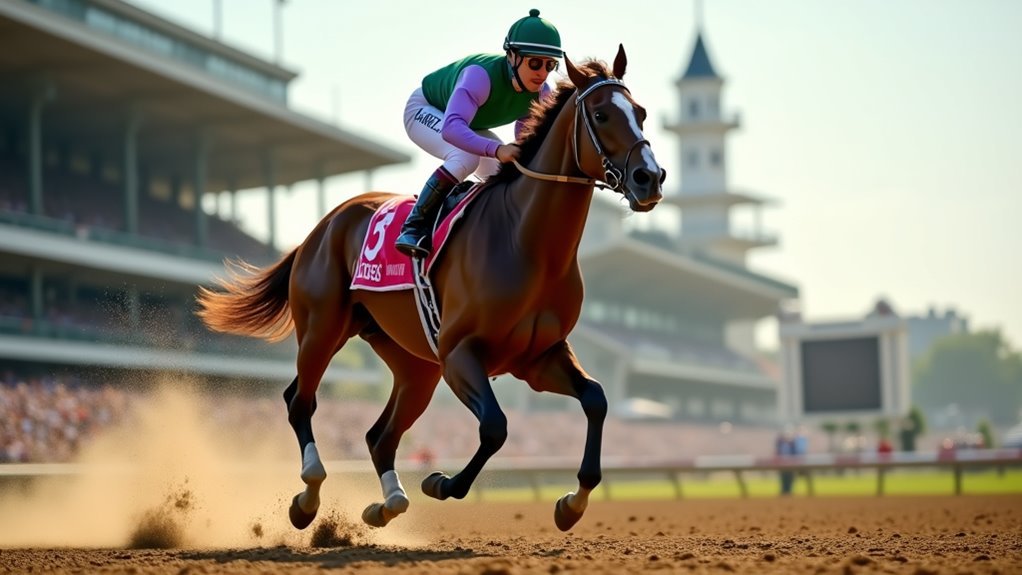

A Triple Crown in horse racing is the achievement of a three-year-old horse winning the Kentucky Derby, Preakness Stakes, and Belmont Stakes in the same year. These races are spaced closely on the calendar and vary in distance and track layout. The challenge tests speed, stamina, and adaptability across different conditions. Few horses complete the sweep, making it a rare and celebrated feat. Fans and participants feel intense anticipation during the chase.
What Is the Triple Crown in Horse Racing?
Because only three-year-olds can compete, the challenge feels tight and personal, almost like your whole racing community is holding its breath together. Breeding influence matters here, since bloodlines can shape the power and grit you see on the track.
At the same time, betting trends shift fast as excitement builds around a possible sweep. So whenever you hear people mention the Triple Crown, you’re hearing about the highest prize in American racing, where talent, timing, and pressure all converge.
The Three Triple Crown Races
Each spring, the Triple Crown race trio asks horses to do something that sounds simple but is brutally hard: win the Kentucky Derby, the Preakness Stakes, and the Belmont Stakes in the same season.
You’ll initially meet the Derby, where the field bursts out fast and the crowd feels electric.
Then comes the Preakness, a shorter race that keeps the pressure high and the rhythm quick.
After that, the Belmont examines stamina and heart over a longer trip.
Once you follow these three races, you can see how training methods shape speed, and how breeding lines often point to staying power.
Together, they create the path you root for, and they give you a shared story with every fan who loves the sport.
Why Winning the Triple Crown Is So Hard
You can see why the Triple Crown is so tough: the races come fast, and your horse gets very little time to recover.
Each track asks for something a little different, so your horse has to adapt quickly and still stay sharp.
On top of that, the physical grind and mental pressure build with every start, and that can wear down even the best runners.
Tight Race Schedule
Even with a great horse, the Triple Crown can slip away because the schedule leaves almost no room to breathe. You face a compressed turnaround from the Kentucky Derby to the Preakness, then again to the Belmont, and every day matters.
Your team must handle training, travel, recovery, and logistics planning without wasting a minute. Because the races come so close together, your horse can’t fully reset, and you feel that pressure too.
One strong run isn’t enough; you need steady energy, sharp focus, and a calm barn through all three weeks. Whenever you belong to this challenge, the tight race schedule examines your patience as much as your horse’s strength. That’s why so few pairs make it all the way.
Different Track Demands
The tight race schedule is tough, but the different tracks make the Triple Crown even harder to win. You face three courses that ask for different skills, and that can shake up even the best contender. The Kentucky Derby rewards quick position and smart race strategies early on. Then the Preakness often feels tighter and faster, so you need to adapt fast. At Belmont, the longer trip examines a horse on wide turns and a different rhythm. Even the track surfaces can change how your horse moves and finishes. Because each stop has its own feel, you and your team must stay flexible and sharp. That variety is part of the challenge, and it’s why every Triple Crown run feels so special for everyone who loves the sport.
Physical And Mental Stress
As soon as a horse starts the Triple Crown trail, its body and mind both take a real beating. You ask a young runner to peak three times in a short span, and that pressure can build fast. Hard races, travel, and tight recovery windows can trigger physiological fatigue, so muscles don’t bounce back the way you want.
At the same time, the horse has to keep focus amid noise, crowds, and new barns. That mental load can lead to behavioral burnout, where a horse seems flat, tense, or less enthusiastic. Because you’re rooting for the whole team, it helps to recollect that every start asks for courage and calm. Whenever the schedule stacks up, even elite talent needs patience, support, and smart care.
What It Takes to Qualify for the Triple Crown
To qualify for the Triple Crown, a horse has to clear a very narrow path, and that starts with age and breed. You need a 3-year-old Thoroughbred that meets strict breeding standards and can handle the same spring schedule as the rest of the field.
From there, every detail matters. Your team must keep the horse sound, choose races with care, and make smart jockey selection choices, because one weak link can ruin the run.
You also have to accept that the Kentucky Derby, Preakness Stakes, and Belmont Stakes examine different strengths, so the horse must fit all three. Assuming you’re part of this world, you know qualifying isn’t about luck alone. It’s about precision, patience, and the quiet confidence of belonging to a demanding tradition.
Famous Triple Crown Winners
Whenever you consider famous Triple Crown winners, Secretariat’s breathtaking sweep is probably the initial name that comes to mind.
You can also look at Affirmed’s fierce battles with Alydar, which made every race feel tense and unforgettable.
Then you’ll see how modern icons like Justify keep the Triple Crown story alive and exciting for you.
Secretariat’s Historic Sweep
Secretariat’s 1973 Triple Crown sweep still feels electric because he didn’t just win three races, he stunned the whole sport with how he won them. You can feel the power in that story because his pace strategy let him settle promptly, then surge as others faded. In the Kentucky Derby, Preakness, and Belmont, he kept making the impossible look calm, and that calm pulled fans in.
Should you love horse racing, you see why his breeding legacy matters too, since it linked raw speed with lasting influence. His Belmont run especially gives you that shared thrill, the sense that everyone watching belonged to one unforgettable moment. Even now, Secretariat shows you how greatness can feel both bold and welcoming.
Affirmed Versus Alydar
After Secretariat’s lone, blazing sweep, horse racing fans still had another kind of drama to recall in Affirmed versus Alydar. You could feel the tension every time these two colts met, because each race seemed to turn into a private battle for your heart. Affirmed stayed just ahead, while Alydar kept pressing close, and that slim margin made every finish unforgettable. Their owner rivalries and training regimens added extra heat, yet you mainly saw two brilliant horses pushing each other to the edge. Whenever Affirmed won the 1978 Triple Crown, you didn’t just witness speed, you felt grit, honor, and shared hope. Should you love racing, this matchup gives you a story that still invites you in.
Modern Triple Crown Icons
A few modern Triple Crown icons have done more than win races, because they’ve given horse racing its most unforgettable heroes. Whenever you talk about Secretariat, Seattle Slew, and Justify, you join a club of fans who still feel the thrill. | Horse | Year | Legacy |
| — | —: | — |
|---|---|---|
| Secretariat | 1973 | Record speed |
| Seattle Slew | 1977 | Undefeated champ |
| Affirmed | 1978 | Rivalry grit |
| Justify | 2018 | Modern sweep |
You can see how each champion shaped jockey legacies and breeding impact. Secretariat’s power changed how breeders dreamed, while Seattle Slew and Affirmed showed heart under pressure. Justify reminded you that a crown can still happen in today’s fast sport. These names help you feel part of racing’s inner circle, where every fan recollects the roar, the stretch run, and the hope that another legend could arise again.
The Closest Triple Crown Misses
Even though the Triple Crown is famous for its winners, its closest misses often leave the deepest mark. You feel their tension in every turn, because one rough trip can change everything. Some horses lose by photo finishes, and others fade after training setbacks that break their rhythm. Perhaps they sweep the Derby and Preakness, then Belmont distance asks for one more ounce. You can almost share the crowd’s hope as the final furlong arrives. These near misses matter because they show how hard the series really is, and they remind you that greatness can sit just one step away. Whenever a horse falls short, fans still hold that effort close, because the chase itself builds esteem, trust, and a lasting bond.
How the Triple Crown Affects Horse Racing
Because the Triple Crown sits at the top of American horse racing, it shapes almost everything around the sport, from breeding plans to the way trainers map out a season. You feel that pull in every spring race, where hope, pressure, and self-respect travel together. The series changes betting mechanics, because fans watch each start as though they’re part of the barn crew. It also drives media coverage, so your favorite horse can become a household name overnight.
| Effect | What you feel |
|---|---|
| Big stakes | More excitement |
| Tight schedules | More tension |
| Crowded attention | Stronger belonging |
When a horse chases this prize, you join a wider crowd that cares deeply. That shared energy makes each race feel personal, and it keeps you invested from gate to wire.
The Triple Crown in Modern Racing
As racing has changed, the Triple Crown has stayed powerful, and modern fans still treat it like the sport’s biggest trial. You see today’s horses shaped by smarter breeding strategies, sharper training innovations, and careful race planning.
Trainers study each colt’s build, recovery, and temperament so they can protect energy across the Derby, Preakness, and Belmont. The short gap between races means every choice matters, from workout pace to travel routines.
You also notice more data, video review, and vet support guiding decisions. Even with all that progress, the series still asks the same thing: can one young horse handle three tough trials in five weeks? That challenge keeps modern racing honest, and it gives you a clear place to root for greatness together.
Why Fans Still Care About the Triple Crown
Fans still care about the Triple Crown because it gives them something rare to chase and easy to feel. You can join the suspense, then share the win with everyone around you. That’s why fan rituals stick. You watch the Derby, then wait for the Preakness, then hold your breath for Belmont. Each step builds hope.
| What you feel | What you do | Why it matters |
|---|---|---|
| Nostalgia | Rewatch old races | You relive big moments |
| Belonging | Talk with friends | You feel part of the crowd |
| Anticipation | Track each result | You stay invested |
Those nostalgia debates keep the story alive, too. You might argue about greatness, but that’s part of the fun. The Triple Crown feels like a shared trial, and you get to be in on it.
Frequently Asked Questions
Can a Horse Win the Triple Crown More Than Once?
No you can’t, and here’s the catch: you will never see repeat winners because only three year olds qualify, so career longevity does not allow another shot; you are part of a rare club once they have swept it.
Is There a British Version of the Triple Crown?
Yes, you’ll find a British Triple Crown: you need the British Triple, winning the Flat Classics—Two Thousand Guineas, Derby, and St Leger—in one season. It’s rare, prestigious, and joins you with racing history.
When Was the Triple Crown Trophy First Awarded?
You’ll observe the Triple Crown Trophy was initially awarded in 1950. That initial presentation marked a significant trophy evolution, and it was later given retroactively to earlier winners, giving you a richer racing legacy.
How Many Horses Have Won the U.S. Triple Crown?
You’d say only 11 winning horses have captured the U.S. Triple Crown, and those historic droughts make the feat feel even bigger. You can join fans who celebrate one of racing’s rarest, proudest achievements.
Does “Triple Crown” Mean Other Things Outside Horse Racing?
Yes—you’ll hear “triple crown” used beyond racing as a cultural metaphor for three major wins, and even as an academic accolade. You can consider it as any celebrated three part achievement.
