

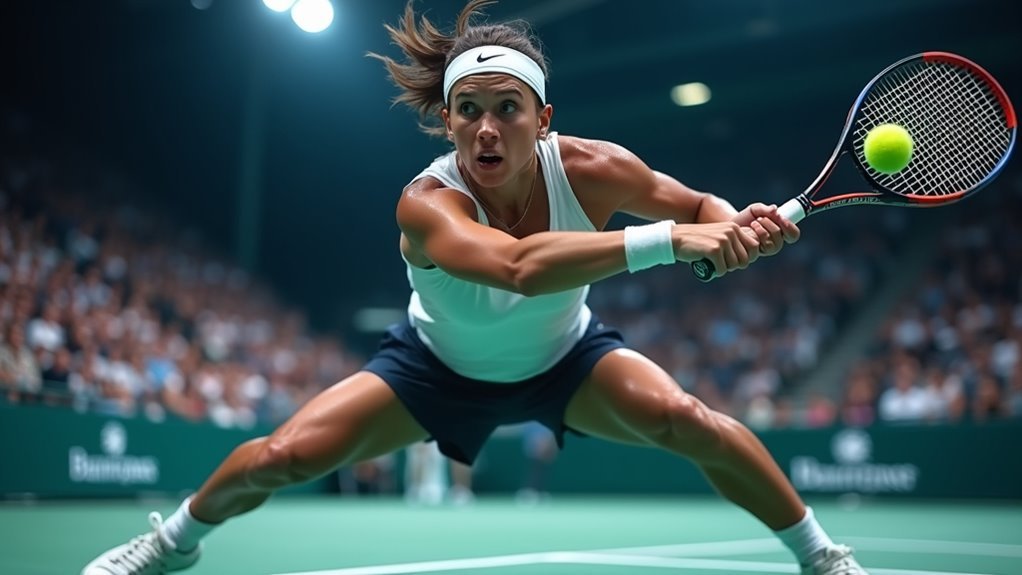

Match point is the single point that ends a tennis match when won by the leading player. It shifts players’ tactics for serving, returning, and shot selection under high pressure. Match point differs from game point and set point because it decides the entire match rather than only a game or set. This moment often magnifies focus, nerves, and strategy in every rally. Knowing how match point works clarifies why tension spikes at that instant.
What Is Match Point in Tennis?
Match point is the moment in tennis provided the very next point can end the entire match. You feel it as the last big gate before victory, and that can stir nerves fast. At this point, psychological momentum matters because one strong swing can lift your belief, while one shaky shot can shake it.
You might also notice crowd influence, since cheers, gasps, and silence can make the air feel heavier than usual. Still, you’re not alone in that pressure. Every player who reaches match point has earned that chance through steady play and courage.
How Match Point Works in Scoring
At the heart of tennis scoring, a match point means the next point can end everything, so the score has to put one player exactly one point away from winning the whole match.
You track it through point progression: each rally moves the score forward, and the leading player reaches that final chance only after the needed games and sets are already in place.
The scoring subtleties matter because one serve, one return, or one mistake can change the whole mood fast.
In the event that you’re holding match point, you stay calm and trust your plan.
In the event that you’re facing it, you fight for one more ball and keep your spot in the contest.
That’s why this moment feels so intense.
The next point doesn’t just count. It decides whether you celebrate or keep battling.
What’s the Difference Between Match Point, Set Point, and Game Point?
Grasping how match point works makes the other scoring terms easier to sort out, because set point and game point are close cousins, but they don’t mean the same thing.
Game point means you’re one point from winning just that game. Set point means you’re one point from taking the set. Match point means you’re one point from ending the whole match.
That difference matters, because each level changes the pressure you feel and the momentum swings you watch. A game point can shift a rally, but a set point can change the mood of the court. A match point has the biggest psychological impact, since every shot can feel like it carries the crowd with you.
Should you know which point you’re facing, you’ll follow the score with more confidence.
When Does a Player Get Match Point?
A player gets match point whenever the score puts them one point away from winning the whole match, and that can occur in a few different ways depending on the format and the scoreline. You usually feel it whenever you lead in the final set, or whenever your game score reaches 40-love with the match on the line. That’s where moment anticipation builds and score psychology kicks in for both of you.
- You might sense relief.
- You might hear the crowd lean in.
- You might trust your training.
- You might feel your pulse jump.
- You might notice your opponent’s hope fade.
In that shared pressure, you belong to the tension too. Your next point can finish the story, so every shot feels bigger, sharper, and louder in your mind.
What Happens During a Match Point Rally?
During a match point rally, you feel the pressure rise with every shot because one point can end everything.
Should you’re serving, you need to stay calm and put the ball in play, while the other player fights hard to keep the match alive.
Then the rally turns into an exam of nerve, and you either finish the point or defend it with everything you’ve got.
Serving Under Pressure
Initially, breathe, then trust your ritual routines so your body feels familiar. Should choke mechanics creep in, slow your tempo and pick a clear target.
- Bend your knees
- Grip the ball calmly
- Toss with purpose
- Watch the contact point
- Swing through boldly
These small moves help you stay present whenever the score feels huge. You’re not alone in that moment; every player feels the weight.
Defending Match Point
| Move | Purpose |
|---|---|
| High, deep return | Buys time |
| Crosscourt rally ball | Creates margin |
| Reset to center | Keeps you ready |
As the rally grows, you and your opponent trade pressure, and each extra ball feels huge. That’s okay. You belong in this moment too. Keep your eyes soft, your plan simple, and your effort steady. One solid shot can keep the match alive.
Finishing the Rally
Now that you’ve held your nerve and sent back one more tough ball, the rally at match point can turn very fast. You’re not just swinging; you’re reading the court, trusting your shot placement, and staying with your crowd of one, the people who know this pressure.
- You push deep to the corners
- You watch for a short reply
- You keep your feet light
- You aim for the open space
- You brace for a winner celebration
Should your next shot lands clean, the point ends and you feel that burst of relief. In the event your opponent reaches it, you reset and fight again. Either way, you belong in this moment, because every ball asks for courage, focus, and calm.
How Tennis Players Handle Match Point Pressure
Whenever you face match point, you need to stay calm and trust the plan you’ve built all match long. You can breathe, slow your thoughts, and pick the shot that gives you the best chance, not the flashiest one.
Should you keep your head clear, you turn pressure into a small, manageable problem instead of a giant mountain.
Staying Composed
Under match point pressure, staying composed starts with slowing the moment down in your mind, even should your heart be racing. You’re not alone there; every player feels the squeeze. Use breathing techniques to settle your shoulders, then lean on mental routines that feel familiar and steady. Whenever you trust what you’ve practiced, you give yourself a small island of calm.
- Breathe in for four counts, then out for six.
- Pick one cue word, like “smooth” or “steady.”
- Keep your eyes on the ball, not the score.
- Tell yourself you belong on this stage.
- Accept the nerves without fighting them.
That mix of calm and courage helps you stay present. With each point, you can let the crowd fade and play like yourself.
Upon trusting what you’ve practiced, you give yourself a small island of calm.
Tactical Decision-Making
Once you’ve settled your breathing and found a calm spot in your mind, the next step is choosing the smartest play, because match point often rewards clear reflection more than flashy shots.
You should trust moment selection, so you hit whenever the ball feels right, not whenever nerves rush you. Then, use risk assessment to judge whether a safe serve, a deep rally ball, or a sharp angle gives you the best chance.
Should your opponent look shaky, you can press them with pace. Should they read fast, you may aim for height and margin. That way, you keep control without forcing hero tennis. You’re not alone in this pressure, and smart choices can help you feel steady, connected, and ready for the point that matters most.
How a Player Can Save Match Point
A player can hang on and save match point via winning the very next point, and that starts with staying calm enough to make one good shot at a time. You don’t need magic. You need trust, breath, and a clear plan.
Whenever nerves rise, lean on composure drills you’ve practiced, then choose smart angle variation to pull your opponent off balance.
- Breathe out slowly before you serve or return.
- Pick a big target, not a perfect line.
- Keep your feet active so you feel ready.
- Swing with purpose, not panic.
- Tell yourself you belong here.
That little voice matters. It can steady your hands and lift your heart. Should you stay present, you give yourself a real chance to turn fear into fight.
Match Point in Singles vs. Doubles
In singles and doubles, match point feels the same at the core, but the pressure lands a little differently on your shoulders.
In singles, you carry every decision alone, so your court positioning shapes the whole point. You watch the open space, trust your feet, and stay calm as the crowd gets loud.
In doubles, you share that moment with a partner, so Communication signals matter just as much as the shot itself. A glance, a word, or a hand sign can keep you both aligned.
That teamwork can ease nerves, but it also asks you to stay sharp for each other. Whether you’re alone or paired up, you belong in the moment, and one clear point can finish the match.
How Tie-Break Match Points Work
In a tie-break, you can still face match point, and it feels just as intense as any other clutch moment.
You’ll usually see it whenever one player reaches the score that lets the next point finish the match.
Should you be serving at match point, you can use that serve to take a deep breath and push for the win.
Tie-Break Match Point Basics
At the edge of a tie-break, match point feels bigger than the score itself, because one clean shot can end the whole match.
In tiebreak psychology, you feel the crowd lean in and your heart race.
Sudden deathformat nuances matter too, since every point can flip the mood fast.
You’re not alone here; both players feel the same squeeze.
- You might win the match right away.
- You might see the score swing in seconds.
- You might hear teammates hold their breath.
- You might feel calm and shaky at once.
- You might know one rally changes everything.
Serving At Match Point
In a tie-break, you serve on your turn, and every initial ball matters more than usual. Use serve tactics that fit your strengths, like a wide serve to open the court or a body serve to jam the returner.
Keep your pressure routines simple. You could bounce the ball the same way, breathe slowly, and trust your toss.
That steady rhythm helps you feel part of the moment, not trapped around it. Should you miss the initial serve, reset fast and stay positive.
In that space, you’re not alone. Many players face this trial, and you can handle it with calm focus.
Famous Match Point Moments in Tennis
Some match points stay with fans forever because they capture everything tennis can be at once: skill, fear, hope, and one last swing of the racket.
You recall them because they feel personal, even from your couch. Consider Federer’s calm at Wimbledon, Nadal’s fist pump in Paris, or Serena’s roar under pressure. Their moments spark crowd reactions that shake the stadium and pull you in.
- You feel the silence before the serve.
- You hear the gasp after a missed shot.
- You watch coach interventions from the box and bench.
- You sense belief return whenever a point turns.
- You celebrate like you’re part of the team.
These match points remind you that tennis isn’t lonely. You’re part of a shared story.
Common Match Point Strategy Choices
Once the crowd has gone quiet and the pressure starts to pinch, your choices at match point matter as much as your swing. You don’t need to play hero; you need a plan that fits your game.
Begin with an opening serve you trust, then mix serve variety so your opponent can’t sit on one pattern. Provided you like attacking, aim for smart net placement and close in behind a solid ball.
Should you feel nerves, keep the target big and let margin work for you. You can also use a safer rally ball to reset the point and stay steady with your feet.
Trust your training, breathe, and choose the shot that feels familiar. That’s how you stay calm together with your own rhythm.
Why Match Point Changes Everything
Match point changes everything because the whole match suddenly shrinks to one swing, one serve, or one clean return. You feel the crowd lean in, and your heart joins the rally. That’s why this moment brings a momentum shift fast. One point can flip hope into panic, or calm into courage. It also starts a kind of psychological warfare, because both players read each other’s nerves.
- You might hold your breath.
- Your hands can feel heavier.
- Your opponent could rush.
- Your team might rise with you.
- You might belong in that brave pause.
At match point, you’re not just hitting a ball. You’re protecting belief, chasing a finish, and trusting your next move.
Frequently Asked Questions
Can a Match Point Happen in a Tie-Break?
Yes, you can earn match point in a tie break, and you will feel the tension rise. In break point scenarios, tiebreak psychology matters; you are one point from wrapping things up and claiming victory.
Does Serving Affect Match Point Chances?
Yes, serving can enhance your match point chances because you control the point’s start and often enjoy a serve advantage. However, pressure psychology still matters, so you must stay calm and finish strong.
Is Match Point Different in Singles and Doubles?
Not really: you face the same match point rule in singles and doubles, but doubles adds partner dynamics and psychological pressure. You will feel every point more keenly, because two minds can steady each other or wobble together.
Can There Be More Than One Match Point?
Yes, you can have more than one match point provided you lose the initial one. In the final set, you will face pressure situations, but you can still regroup and earn another chance.
What Is the Toughest Shot to Face on Match Point?
A crushing serve is usually the toughest on match point. You are bracing against speed and nerves, like standing in a storm. If possible, attack with an inside out forehand or defend using a backhand slice.
