

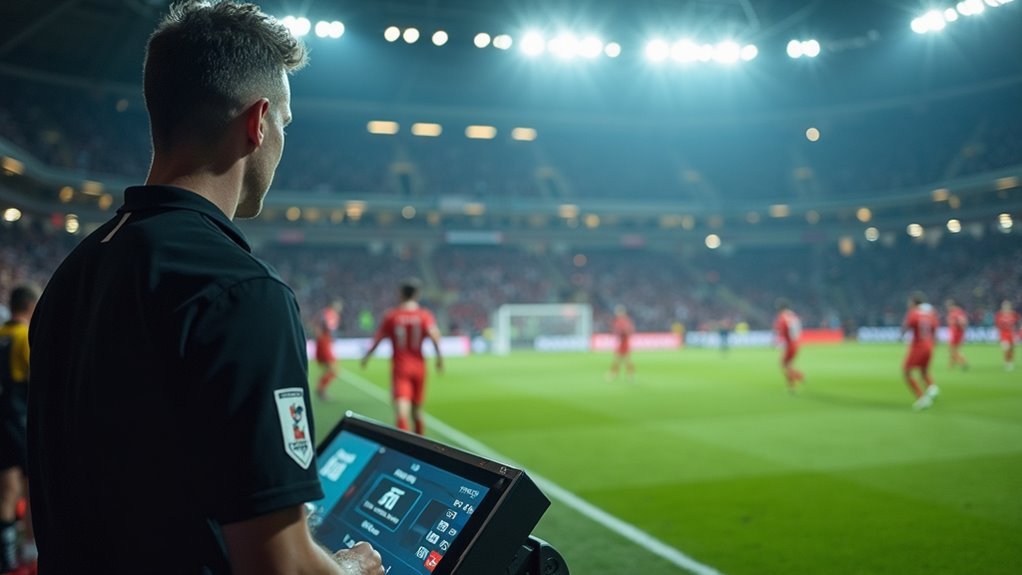

VAR stands for Video Assistant Referee and reviews key moments in soccer using multiple camera angles. It helps referees decide on goals, penalties, straight red cards, and cases of mistaken identity. The VAR team reviews incidents in real time and communicates with the on-field referee. The on-field referee makes the final decision after consulting VAR or viewing a pitch-side replay. VAR intervenes only for clear and obvious errors or serious missed incidents.
What Is VAR in Soccer?
VAR, short for Video Assistant Referee, is soccer’s video review system that helps the referee check big decisions with camera replays. You get a fairer match because video technology can spot clear mistakes in key moments.
It doesn’t replace the referee; it supports the person on the field, who keeps the final call. Whenever you watch a game, VAR helps protect goals, penalties, red cards, and mistaken identity, so the action feels more accurate and respectful to everyone.
Referee training also matters, because officials learn how to use the system calmly and quickly. That way, you can trust the process without feeling lost.
In the end, VAR gives your team and the whole crowd a better chance to feel heard.
When Can Referees Use VAR?
You can expect VAR to step in only for a few big moments, like goals, penalty calls, direct red cards, and mistaken identity.
It doesn’t look at every foul or stoppage, so the referee still handles most of the match on the field.
Whenever VAR does get involved, the referee can review the footage and then keep or change the original call.
VAR Reviewable Incidents
Clarity matters most as a referee reaches for VAR, because the system only steps in for a few specific match incidents. You’re not waiting for every close call. VAR checks goals, penalty decisions, direct red cards, and mistaken identity. In some leagues, it can also look at corner kicks and second yellow cards. That focus respects technology limits and keeps the training impact real for everyone on the pitch.
| Incident | VAR? | Why |
|---|---|---|
| Goal | Yes | Checks scoring moments |
| Penalty | Yes | Reviews major contact |
| Red card | Yes | Catches serious misses |
| Mistaken identity | Yes | Fixes the wrong player |
| Routine foul | No | Game flow stays live |
Referee Review Process
Referees don’t use VAR anytime they feel unsure, because the system only steps in under strict rules. You’ll see it used only for goals, penalties, red cards, and mistaken identity.
Initially, the on-field referee makes a call. Then the VAR team checks the footage in the video room and follows communication protocols to share what they find.
Should the issue look like a clear and obvious error, the referee can pause play and review the monitor. If not, the original call stands.
This process protects referee psychology too, because you get support without losing the referee’s authority. So whenever you watch a match, bear in mind that VAR helps only in big moments, and it works to keep the game fair, calm, and trusted by fans like you.
The Four Calls VAR Can Review
You’ll see VAR step in for four main calls that can change a match fast. It checks goal decisions, penalty decisions, red card decisions, and mistaken identity, so the referee can fix the big mistakes without slowing the game too much.
That means you get a fairer result, while the on-field referee still keeps the final say.
Goal Decisions
A goal can change a match in seconds, so VAR pays close attention to those moments. Whenever the ball crosses the line, you get fast help from goal line technology, then VAR checks the buildup for offside or handball. In case the goal stands, you still follow celebration protocols while waiting for the final signal. That pause can feel tense, but it keeps the call fair for everyone.
| What VAR checks | Why it matters |
|---|---|
| Ball over line | Confirms a real goal |
| Offside in buildup | Stops illegal scores |
| Handball before goal | Protects fair play |
| Final referee decision | Keeps authority on pitch |
You’re not alone in the wait. VAR gives your team a better chance to trust the result, even whenever hearts race.
Penalty Decisions
Penalty calls can flip the mood of a whole stadium in one instant, so VAR steps in with extra care whenever the box gets crowded and emotions run hot. You get a fairer look at a tackle, handball, or trip that could change everything.
Then the crew checks camera angles, slow motion, and whether the referee missed a clear foul or an embellishment. Provided the contact is doubtful, the on-field call usually stays, and that referral consistency helps you trust the process.
VAR also looks at the buildup, because a tiny push or a late block can matter. Even your shooting technique can shape the decision whenever a player seems to sell contact. So, assuming the whistle pauses play, you’re not alone, and the game keeps its heart.
Red Card Decisions
Watching a red card review can feel tense, because one split-second foul can change the whole match. You’re not alone should your heart races while the referee waits for VAR.
The team checks violent conduct, serious foul play, and mistaken identity, then sends the referee to the monitor whenever needed. That pause can ease referee psychology, since extra eyes help calm pressure and support fair judgment.
You still keep the rhythm of the game, because VAR steps in only for clear, match-shifting errors. Suppose a card stands, the appeals process starts through the competition rules, not on the field. So you get clarity, your side gets fairness, and the right player leaves the moment with the right punishment, even though the replay feels brutal.
How VAR Works on Matchday
On matchday, VAR kicks into action from a separate video room, where a small team watches the live game from many camera angles and stays ready to step in only once it matters.
You’re not alone in this process; the crew works with the referee team, stadium logistics, and broadcast coordination so the match keeps moving smoothly.
- The assistant VAR tracks play while the main VAR studies key moments.
- Multiple screens help you see fouls, goals, and red card scenes clearly.
- The referee keeps full control, so the final call stays on the pitch.
- Communication stays fast, calm, and focused, which helps you trust the system.
That setup lets you follow the action with confidence, even as the game gets tense.
What Happens in a VAR Check
During a VAR check, you’ll see the team review the play from several camera angles to spot any clear mistake or missed incident.
Then the referee gets the information, watches the replay provided that needed, and decides whether to keep the original call or change it.
That process helps you understand why VAR feels slow sometimes, but it’s there to make the big moments feel fairer.
Review Process
Once a possible VAR incident occurs, the check starts right away, and you don’t have to wait long for the process to kick in. You stay in the loop while the crew follows a strict communication protocol and works within technology limits.
- The video team scans the play from different angles.
- They compare the action with the match rules.
- They speak with the referee if the call needs a closer look.
- They keep the review focused on the key moment, not the whole match.
This review process helps you feel part of a fair system, because it aims to catch clear mistakes without slowing the game too much. In the event you’re watching with friends, you can trust that the check is careful, calm, and built to protect the match.
Final Decision
The check doesn’t end with the video team spotting a possible error because the final call still rests with the referee. You might watch that moment unfold and feel the tension rise, but the referee keeps referee autonomy, so the game stays in trusted hands.
Should VAR spots a clear mistake, the crew sends a recommendation, and the referee can accept it, review the screen, or stand by the initial choice. That choice matters because accountability measures keep every decision visible and explainable.
Why VAR Decisions Take Time
Even though VAR is meant to fix big mistakes, its decisions can still take a few tense moments because the team has to check more than one angle before it speaks up. You may feel that pause in the stadium, but it helps keep the call fair for everyone.
- The crew reviews live play and replays together.
- Good camera calibration helps every image line up.
- The referee stays in the loop, so trust doesn’t break.
- Delay psychology matters because a short wait can calm the rush and build confidence.
That’s why the process feels slow, yet it protects your sense of fairness. Whenever you’re cheering with others, that shared patience can make the crowd feel united, even before the final signal arrives.
What Counts as a Clear and Obvious Error?
A clear and obvious error is a mistake that looks very wrong to most people right away, not just to someone with slow-motion replays and a headset. You and I can spot it once the call clashes with game situation and the referee’s own view. VAR uses a subjective threshold, so not every bad judgment gets changed. It steps in whenever the mistake feels undeniable.
| Clue | Meaning |
|---|---|
| Big miss | The call ignores what happened |
| Strong replay | The video shows it plainly |
| Game situation | The moment matters a lot |
| No debate | Most viewers agree fast |
| Reviewable | It fits VAR’s limit |
How VAR Handles Offside
Offside is one of the trickiest parts of VAR, so let’s slow it down and make it clear. You’re not guessing alone here; the VAR team checks the exact pass moment with frame calibration and careful camera angles.
- They freeze the play at the kick.
- They line up the last defender and attacker.
- They compare body parts that can score.
- They watch for sensor latency that could blur timing.
If the image looks tight, they might use the calibrated lines to measure who’s ahead. You still get the final call from the referee, but VAR helps protect your team from a bad offside miss. That way, you can trust the process even whenever the margin feels tiny and the wait feels huge.
How VAR Affects Handball Calls
Upon the occurrence of a handball in the box, VAR steps in to help sort out the moment that can feel messy and unfair in real time. You get a closer look at the touch, and the referee keeps control. That balance matters because handball interpretation can shift fast, so VAR checks camera angles for clear contact, arm position, and intent.
| Check | What you see | Why it matters |
|---|---|---|
| Angle | Different replays | Finds the best view |
| Position | Arm shape | Shows likely foul |
| Decision | Keep or change | Supports referee consistency |
When the evidence stays unclear, the original call stands. So you can trust the process to protect the game and keep everyone in the same community of fair play.
How Fans and Players React
Fans and players often react with a mix of relief, frustration, and hope whenever VAR gets involved, because the pause changes the mood in seconds. You may cheer one moment, then groan the next, and that swing can bring a crowd closer together or split it fast.
- You feel fan sentiment rise whenever a call seems fair.
- You hear player protests whenever a decision hurts their team.
- You wait with teammates, sharing the same tense silence.
- You celebrate harder whenever VAR backs your side.
That shared wait can feel awkward, yet it also builds belonging, because everyone watches the same screen and hopes for the same answer. Even whenever you disagree, you still join the chant, the sigh, and the buzz that follows every review.
How VAR Is Used in Top Leagues
In top leagues, VAR usually works behind the scenes so the game can keep moving while officials check the biggest moments. You’ll often see the referee pause, then listen to a headset while the VAR team studies several camera angles.
This setup helps with goals, penalties, red cards, and mistaken identity, so you’re not left pondering about a huge call. Top leagues also rely on broadcast integration, which sends clear replay feeds to the review room and to viewers at home.
Just as crucial, referee training helps officials use the system with calm, consistent judgment. Whenever it works well, you feel the match stay fair without losing its rhythm. That balance matters, and it’s why many fans accept VAR even whenever the wait feels a little tense.
What the Future Holds for VAR
As the game keeps changing, VAR will likely get faster, clearer, and a little less stressful for everyone watching. You’ll still see debates, but better technology can trim waits and cut confusion.
- Faster reviews will help you stay in the moment.
- Better camera tools might make calls feel fairer.
- Clearer audio could help you trust the process.
- Stronger rules could ease the ethics debate around delay and control.
As VAR grows through technological evolution, you’ll want it to protect the flow you love without stealing the joy. That balance matters because you’re not just watching decisions, you’re sharing a match with millions who care. Should leagues listen to fans, you might get a system that feels more human, more open, and more in sync with the game’s heartbeat.
Frequently Asked Questions
Who Invented VAR in Soccer?
You can’t credit one inventor; FIFA and IFAB developed VAR together. The origin controversy centers on multiple contributors, and the implementation timeline runs from trials to the 2018 World Cup and wider adoption.
Which Countries First Adopted VAR?
You’d see initial adopters in countries like Italy, Germany and the Netherlands, whose pioneering leagues trialed VAR initially. Then Australia and the United States followed, helping you trust the system’s growing global acceptance.
Does VAR Work in Amateur Soccer Matches?
Usually, you won’t get VAR in amateur matches; it’s like a bright replay booth in a small club. You’ll rely on referee communication and match day logistics, while local rules and resources decide whether it’s available.
Can VAR Be Used in Youth Tournaments?
Yes, you can use VAR in youth tournaments provided organizers have the technology, budget, and competition rules allow it. You should also ensure youth accessibility and age appropriate refereeing so kids still feel supported and included.
How Much Does a VAR System Cost?
A VAR system can cost hundreds of thousands to millions, depending on the setup, broadcast rights, and operational training. You will need cameras, software, and staff, but you are investing in fairness, trust, and belonging.
