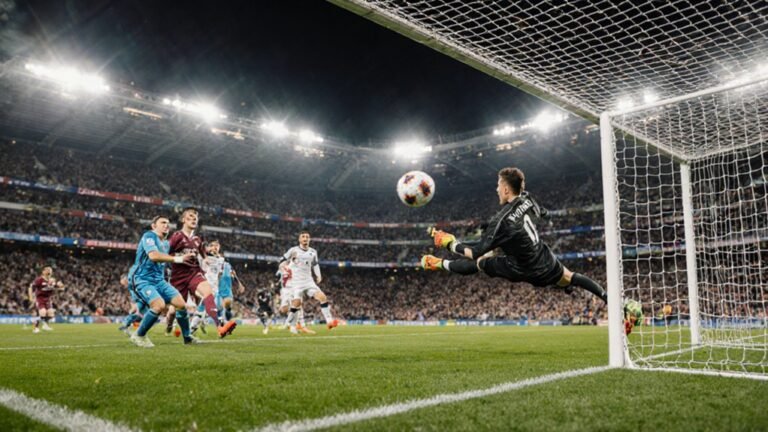



Promotion and relegation means teams move between divisions based on season results. Top finishers earn promotion to a higher league, often through automatic spots or playoff matches. Bottom teams drop to a lower division after poor league finishes. Financial rules, stadium standards, and licensing can block promotion or force relegation regardless of results. This system keeps competition intense and gives clubs clear rewards and risks tied to performance.
What Promotion and Relegation Means
Once you’ve followed soccer for long enough, you’ll hear people talk about promotion and relegation as though it’s the heartbeat of the sport. You’re not just watching teams win or lose, you’re seeing league fluidity at work. In a promotion and relegation system, clubs earn their place via results, so every season feels open and fair.
That creates competitive balance, because stronger sides can climb while weaker ones drop, keeping the chase alive for everyone. You can sense the tension in every match, since each point matters to fans who want their club to belong at the right level. Even so, a team usually has to satisfy league rules off the pitch, too, before it can take part in a higher division.
How Teams Move Up and Down
After a long season, teams usually find their place via where they finish on the table, and that’s what makes promotion and relegation feel so intense. You can regard it as soccer’s yearly reset.
Should your club sits near the top of a lower division, it can move up to face stronger opponents. In the event your club lands near the bottom of a higher division, it can drop down and rebuild.
In many leagues, a few clubs go up and a few go down, but rules can change whenever finances, stadium checks, or league shifts get involved. This system keeps rivalries intensity high and rewards steady youth development, because your club’s future often depends on smart planning, not just one lucky result.
Promotion Spots, Playoffs, and Relegation Zones
Most leagues keep promotion and relegation simple on purpose, but the details can still feel nerve-racking provided your club is close to the line. You’ll usually see a few automatic promotion spots and a few relegation zones, so every match matters.
In England, teams near the top can chase direct spots, while others enter playoff formats for one last chance. Those playoffs often use semifinals and a final, and some leagues even rely on aggregate scoring over two legs.
At the bottom, clubs fight to stay clear of the drop, because one slide can send you down. Rules can shift for league changes or club trouble, so you’ll want to check the table carefully and stay with your side.
The English Soccer Pyramid
You’ll see that the English soccer pyramid starts with the Premier League, then the Championship, League One, and League Two, and each tier shapes who rises and who falls.
Three clubs usually go down from the Premier League, while the Championship sends up two automatic winners and one playoff winner, so every place can feel huge.
As you move lower, you’ll notice the same pressure and hope, because promotion playoff paths keep more clubs in the fight until the very end.
English Pyramid Structure
Although English soccer looks simple at initial glance, its pyramid structure runs deep and keeps every season full of hope, pressure, and surprises.
You start with the Premier League, then the EFL Championship, League One, and League Two, which together form the 92 pro clubs you can follow with esteem.
Below that, regional divisions and nonleague dynamics shape the next steps, so your local club can still rise provided it’s ready.
Whenever a season ends, the bottom teams drop and the best teams move up, but clubs also need solid stadiums and clean finances to join the Football League.
That mix keeps the ladder fair, tough, and personal. You’re never just watching games; you’re sharing a system where every point can change your place.
Promotion Playoff Paths
As soon as a club reaches the promotion playoffs, the pressure feels huge, but the path is clear and fair. You can still climb once automatic spots are gone, and that keeps hope alive for your side.
- The Championship sends 3rd to 6th into two-legged semis, then a Wembley final.
- League One sends 3rd to 6th; League Two sends 4th to 7th, with the same format.
- The higher finisher hosts the second leg, so every point matters.
That setup shapes playoff psychology and makes fixture congestion feel even heavier. In the Championship, the prize can be worth about £200 million, so every run matters.
Still, you must meet financial and stadium rules too, or promotion can slip away.
Why Promotion and Relegation Matters
Promotion and relegation gives every match a real pulse, even though the title feels out of reach. You feel that energy because fan engagement grows whenever your club has something to chase or protect. The table stays alive, and competitive balance keeps stronger teams honest while weaker ones keep fighting.
Late-season games matter, since teams can rise, drop, or survive through automatic places and playoffs. In some leagues, you even get a playoff for the last spot, which turns one night into a shared memory. Promotion can also depend on stadiums, money, and facilities, so success still asks for more than goals. That mix makes the system fairer, sharper, and more connected to you, your club, and every supporter around you.
What Happens Financially After Relegation
After relegation, you usually see a sharp revenue drop, and that can feel like a financial gut punch.
You might also face wage bill pressure because player contracts don’t shrink as fast as your league status does.
Some clubs get parachute payments to ease the hit, but those payments only soften the blow, and they don’t make the problem disappear.
Revenue Drop
The financial shock of relegation hits fast, and it usually starts with a brutal drop in broadcast money. You can feel the broadcast collapse right away, and that revenue volatility can shake every plan you made. In the Premier League, TV income can fall from about £100 million to as low as £7 million in the Championship before parachute payments.
- Your club might still get phased parachute payments.
- Those payments can ease the landing for three seasons.
- Even so, the gap stays wide, and you notice it everywhere.
That’s why you and your fellow supporters often see clubs scramble to protect their identity. The money image changes fast, but you’re not alone in following the club through it.
Wage Bill Pressure
Relief can feel small once a club drops down a division, because the wage bill usually stays heavy while the income falls off a cliff. You still owe players the money in their contracts, and that can squeeze every part of your club. Should you be unable to move high earners, the gap between pay and revenue can push you toward panic, or even administration.
Parachute Payments
Parachute payments can soften the blow whenever relegation strikes, but they don’t make the pain disappear. You get a short-term cash bridge that helps cover wages, travel, and contracts while your club adjusts to lower TV income. In England, the top payment can replace about two-thirds of the lost broadcast money in year one, then shrink in years two and three.
- You might keep key staff longer.
- You could sell players under pressure.
- You might chase quick promotion.
That safety net brings relief, yet it also raises parachute fairness questions. Rivals in the division can feel the squeeze, because your club might spend more and bid higher. So the long term effects reach beyond your books, shaping the whole league and the chances you share.
Promotion Rules Off the Pitch
Off the pitch, promotion can hinge on more than wins and losses, and that’s where many clubs feel the squeeze. You need stadium standards, licensing compliance, and the right youth and training setup before you can join the next division. Should your books look shaky, or your ground falls short, the league can block you even after you’ve earned the points. That can feel harsh, but it protects the competition and the fans who invest in it.
In some seasons, playoffs decide the final places, so the pressure rises fast. And whenever a club folds, gets expelled, or a league reshapes, the rules can shift again. Still, provided you meet the off-field criteria, you give your community a real shot at moving up together.
Promotion and Relegation in Other Sports
Other sports use promotion and relegation too, and that makes the idea feel bigger than soccer alone. You can see it in basketball, rugby, and even gaming.
- In Spain, the top ACB clubs keep fighting because the LEB Oro champion and playoff winner move up.
- In England, rugby clubs rise or fall provided they meet licensing and stadium rules.
- In esports pathways, lower tiers can open doors to bigger stages.
In baseball, though, you usually won’t see that movement. Japan’s NPB and major North American leagues keep Franchise stability with closed systems and big expansion fees. That setup protects owners, but it also blocks sporting mobility.
Frequently Asked Questions
How Do Promotion and Relegation Work in Football?
You watch league movement each season: finish high in season standings and you move up; finish low and you drop down. You can celebrate promotion, avoid relegation, and keep earning your place with each result.
Has Real Madrid Never Been Relegated?
Yes, Real Madrid has never been relegated from La Liga. You can feel proud of its dominance streak, club heritage, and unbeaten legacy, because it has stayed in Spain’s top flight since 1929.