
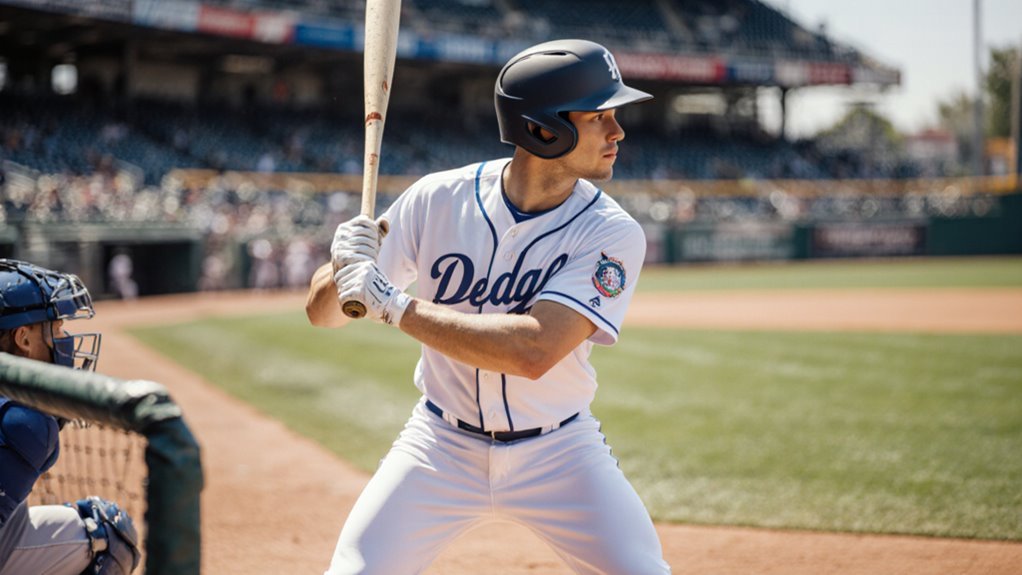

A designated hitter (DH) is a player who bats in place of the pitcher. The DH usually does not play defense and focuses on hitting. This rule exists in the American League and some leagues worldwide. Teams use a DH to boost offensive power and protect weaker-hitting pitchers from batting. The presence of a DH affects roster construction, pinch-hitting decisions, and late-game strategy.
What Is a Designated Hitter?
A designated hitter, or DH, steps in to bat for the pitcher and usually doesn’t play defense at all. You’ll see this role on the lineup card before the game starts, and it gives your team a way to keep one strong bat in the order.
That matters because pitchers often hit weakly, and batting psychology can improve as the lineup feels deeper and steadier. Teams also use lineup analytics to choose a DH who can lift scoring without wearing down in the field.
Sometimes you’ll cheer for a full-time DH, and other times for a player who fills that spot just whenever your club needs extra offense. The key is simple: the DH helps your team stay confident, connected, and ready to attack.
How Does the DH Rule Work?
You pick the DH before the game, and that player stays in the batting order instead of taking a fielding spot.
The DH must bat at least once, unless the other team changes pitchers before that initial plate appearance, and a pinch-hitter or pinch-runner can take over as the new DH.
Assuming the DH moves into the field, or a pitcher who started as the DH goes out to defend, the DH role ends for the rest of the game, except for the special Ohtani rule.
DH Selection Rules
The DH rule sounds tricky at initially, but the selection part is pretty simple once you see the steps. You name your designated hitter on the lineup card before the game starts, and that choice gives you lineup flexibility and steady batting consistency.
The DH bats for the starting pitcher all game unless your team later gives up that role. Should a substitute bats for the DH, that player becomes the new DH. But in case the DH or pitcher takes a defensive spot, you lose the DH for the rest of the game.
Were you to forget to list a DH, the umpire can fix the error before play. Also, the Ohtani exception lets one pitcher keep batting after leaving the mound.
Batting Order Effects
Once the DH is set on the lineup card, it takes a real spot in the batting order, not just a loose idea on paper. You feel that in lineup construction, because the hitter stays tied to one place and gives your team more batting flexibility around the pitcher’s slot.
- Imagine a clean card with the DH at No. 5.
- Envision the pitcher’s spot handled without panic.
- Envision a pinch-hitter stepping in, then keeping that DH place.
- Envision the same spot still waiting when the game rolls on.
Should the DH move to defense, your team loses that role, and the pitcher or another player must bat there. Should you start without a DH, you can’t add one later. One special reminder: an Ohtani-style player can keep hitting after leaving the mound.
Substitution And Exceptions
Because the DH is fixed on the lineup card before initial pitch, substitutions can change a game fast, and the rule has a few key twists that are easy to miss.
You get batting flexibility, but also some role ambiguity should the DH be swapped. In the event a pinch-hitter or pinch-runner takes that spot, that player becomes the new DH, and the old one is done for the day.
Should your DH moves to the field, or your pitcher shifts to defense, you lose the DH and the pitcher’s spot bats.
In 2022, the Ohtani rule gave you one exception: a starting pitcher who also began as DH can keep hitting after leaving the mound.
In case you forget to name a DH, you can’t add one later.
Why Did Baseball Add the Designated Hitter?
In the early 1970s, baseball’s leaders added the designated hitter to wake up an offense that had gone quiet, especially whenever pitchers came to bat and often gave fans an easy out instead of a real threat. You can see the batting decline in those low-scoring games, so this rule overhaul aimed to bring back energy and hope.
- Picture a packed park buzzing again.
- Image line drives flying over the infield.
- Hear fans rise as a big swing changes the inning.
- Feel veterans stay in the game with one more chance to hit.
The DH gave owners a simple fix: more runs, more excitement, and longer careers for hitters who still had skill. Even so, some fans worried it changed the rhythm and strategy they loved.
When Did the American League Adopt the DH?
The American League officially adopted the designated hitter on January 11, 1973, as its owners voted 8-4 to try the rule as a three-year experiment. That owner vote shaped your adoption timeline and gave you a new way to watch offense grow.
| Date | Milestone | What it meant |
|---|---|---|
| 1969 | Minor-league trials | Baseball experimented with the idea |
| 1973 | AL adoption | The DH entered play |
| Apr. 6, 1973 | Ron Blomberg | Initial DH walk |
| 1976 | Permanent status | The AL kept it |
You can see how quickly it moved from trial to the big leagues. Ron Blomberg of the Yankees became the inaugural MLB DH and drew a walk in his opening plate appearance, a small moment that made fans feel part of something new.
Why Did the National League Resist the DH?
You can see the National League’s long resistance in its strong hold on tradition, since many team leaders believed every player should both bat and field.
They also worried the DH would shake up strategy and roster choices, and that can feel like changing the game’s rhythm too much at once. So, for years, the league kept pitcher batting because it valued those old tactics and didn’t want to lose them.
Tradition And Purist Concerns
Although the designated hitter later became common in baseball, many National League people fought it hard because it seemed to break one of the game’s oldest rules: every player should both hit and field.
You can feel the tradition clash, because purists saw a hitter-only job as a break from the cardina l principle and from the game they loved.
They also liked managerial aesthetics, where you watched a skipper juggle pinch-hitters and make the double switch.
Picture these scenes:
- A pitcher gripping the bat in a quiet box
- A dugout full of old school elan
- A scoreboard that still rewards all-around players
- A crowd debating change under summer lights
Strategy And Roster Impact
Because the National League saw baseball as a full nine-man dance, it resisted the DH for years, and not just out of habit. You could have felt that every spot should earn its keep on both sides of the ball. NL leaders agreed, so they valued pitchers who could swing, double switches, and late pinch-hits that kept games tricky and fun. They also worried a DH would cut batting depth and shrink roster flexibility, since one hitter-only player can crowd out a useful multi-position teammate. Even whenever owners voted, like in 1980, the idea kept getting turned down. Sure, the DH could add offense, but the league preferred strategy over shortcuts. In time, uniform rules won, yet that old baseball chessboard still explains the resistance.
What Happens If the DH Plays Defense?
Once the designated hitter steps into a defensive spot, the rules change right away, and that can feel a little jarring should you not be expecting it. With DH forfeiture, your team loses the extra bat for the rest of the game, but the hitter stays in the same lineup slot. That Defensive conversion keeps the order steady, so you still know who’s coming up next.
- Imagine a catcher’s mask snapping on.
- Envision a first baseman digging a throw out of the dirt.
- Visualize a shortstop charging a slow roller.
- Visualize your lineup card shifting, but not breaking.
If a pitcher takes defense, the same rule applies, and the DH is gone for good that day. You’re still in the game, just with one less safety net.
What Is the Ohtani Rule?
The Ohtani Rule lets you keep a two-way star like Shohei Ohtani in the DH spot after you take him out as the pitcher. You get extra lineup flexibility because the pitcher and DH count as separate roles under this exception.
But in the event that player goes back to the mound, he can’t keep batting for himself as the pitcher without ending the DH role.
Ohtani Rule Basics
In plain terms, the Ohtani rule gives one special player a little extra freedom. It lets you keep a two way roster feel without losing batting continuity. If you start him as both pitcher and DH, and then pull him from the mound, you can still keep him in the lineup as the DH.
- Imagine a pitcher throwing heat.
- Envision him later swinging at the plate.
- Visualize your team staying set.
- Visualize one card holding two jobs.
That’s why fans tied the name to Shohei Ohtani. The rule protects that rare setup, but only in that narrow role. If he later moves to the field or leaves the DH spot, normal DH rules kick in. You get flexibility, and your team keeps its rhythm.
Two-Way Player Exception
That special setup works because baseball now gives true two-way players their own safety net, and the Ohtani rule spells it out clearly. Provided you’re on a two way roster, you can pitch and hit without losing your place whenever you leave the mound. That keeps batting continuity alive for you and your team.
| Role | What happens |
|---|---|
| Starting pitcher, also DH | Stays in the lineup |
| Pitcher replaced on mound | Keeps batting as DH |
| Later pitcher enters | Hits only provided the DH spot changes |
This carve-out protects the player who began the game in both jobs. It’s built for real two-way talent, not a pitcher who picks up the bat later. That means you get smoother strategy, fewer headaches, and a clearer path to belong in both parts of the game.
DH Substitution Limits
Baseball keeps the DH spot exactly on a tight leash, and that’s where the Ohtani rule becomes really vital. You pick your DH before initial pitch, and that choice sticks. In case someone pinch-hits for that player, the new batter takes over the DH role. If the DH moves into the field, you lose the DH for the rest of the game, and your pitcher has to hit there next.
- Imagine a bat resting in the dugout like a reserved seat.
- Envision a starter on the mound, then still batting as DH.
- Visualize a fielder stepping in, and the DH card folding away.
- Picture smart roster flexibility and lineup manipulation helping your team stay connected.
Under the Ohtani rule, you can keep a pitcher batting as DH after a mound change. But in case that DH pitches, the privilege ends.
How Does the Designated Hitter Change Strategy?
With the designated hitter in play, managers get a lot more room to contemplate offensively instead of worrying about a pitcher’s weak spot in the lineup. You feel that shift right away. Late inning tactics change because you don’t need to pinch-hit for the pitcher, and double-switch moves fade. Instead, you can build matchup rotations with lefties and righties to press an edge against each opposing arm.
That steadier bat also lets you rest regulars without emptying your offense, so your club stays fresh and dangerous. Because the DH cuts down on pitcher pinch-hits, you might see more relievers and fewer bench bats built only for one job. Since the universal DH arrived, everyone plays under the same rules, and your strategy stays focused on runs, not rescue.
Which Awards Have Designated Hitters Won?
Designated hitters have earned some of baseball’s biggest honors, and their awards tell a clear story about how much offense can matter. In award history, you can point to the Edgar Martínez Award, which has celebrated the game’s best DH since 1973. David Ortiz owns eight wins, and Edgar Martínez won it five times. Shohei Ohtani has taken it four times, too.
- World Series MVP: Paul Molitor, Hideki Matsui, Ortiz, and Jorge Soler.
- ALCS MVP: Ortiz, Delmon Young, and Yordan Álvarez.
- Hall of Fame: Edgar Martínez proved your bat can carry you far.
- postseason impact: these prizes show DHs can shine whenever the lights get hottest.
Even though voting has often favored fielders, your favorite DH can still turn big moments into lasting respect.
How Did the DH Spread Beyond MLB?
From small trial fields to packed stadiums, the DH didn’t stay put for long. You can trace its rise from minor-league trials in 1969 to the American League in 1973. After that, International adoption followed fast as pro and Amateur leagues wanted more offense and less strain on pitchers.
| Level | Change | Result |
|---|---|---|
| MLB | AL adopted DH | New norm |
| Japan | Pacific League used DH | Long-term fit |
| Global | Leagues copied it | Wider use |
| NCAA | DH rules spread | More lineup depth |
You’ll also notice MLB helped push the change. The National League used the DH in 2020, then accepted the universal DH in 2022. Japan’s Central League plans to join in 2027. Even the Ohtani exception reached the 2023 World Baseball Classic, so you’re seeing a shared game grow together.
Why Does the Designated Hitter Still Spark Debate?
Although the universal DH now fits much of baseball, it still stirs up strong feelings because it changes the game in ways that hit both tradition and strategy. You might love the extra offense, yet you can miss the old chess match.
The debate lives on because:
- A DH can enhance fan engagement with louder rallies and more RBI chances.
- It can help aging hitters like Ortiz and Martínez stay useful.
- It can also keep weaker fielders in the lineup too long.
- It trims NL tactics, like pinch-hits and double-switches, so rule parity feels incomplete.
Even the Ohtani exception shows that baseball still makes room for special cases, and that keeps your clubhouse conversations going.
Frequently Asked Questions
Can a Designated Hitter Bat for Anyone?
No, you can’t. The DH bats only for the pitcher in your batting order. As the saying goes, “You can’t fit a square peg in a round hole.” Your lineup strategy stays fixed.