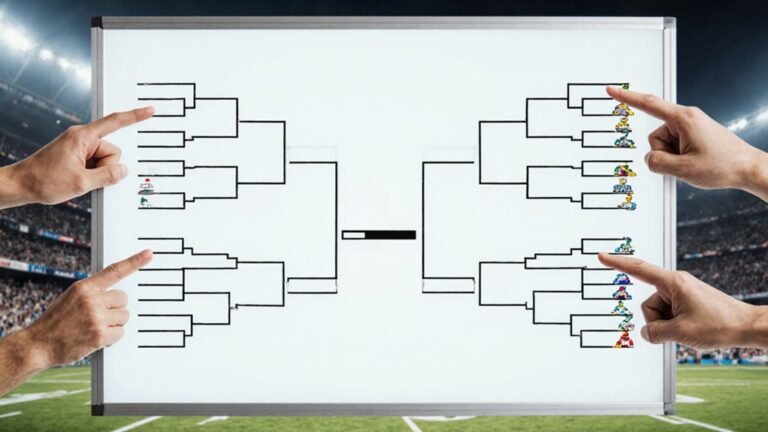



The Champions League pits top European clubs through qualifying rounds, a league phase, and knockout ties to crown a continental champion. Teams earn spots via domestic leagues and preliminary qualifiers. The league phase has 36 clubs split into groups where each plays eight different opponents. Standings determine who advances to knockouts, who drops to the Europa League, and who is eliminated. Late goals and tiebreakers often decide final placings, keeping tension high until the last matchday.
How the Champions League Format Works
Step into the new Champions League format, and you’ll see a much bigger league phase than before. You’re now part of a 36-team table, where every club plays eight matches, four at home and four away.
Instead of separate groups, you follow one shared race, and that makes every point feel personal. The draw places teams into four pots, then gives each club eight different opponents, so the path feels fresh and fair.
Because of that, fan engagement stays high all season, and broadcast rights gain more value as more matchups matter. You’ll also notice that standings shape who moves on, which keeps every night tense but welcoming. This setup gives you more chances to belong, cheer, and stay connected.
How Qualification Rounds Work
Once the league phase is set, the qualification rounds show you how clubs still have to earn their place in the main competition. You can regard them as football’s front door, where hopeful teams knock hard and try to join the bigger crowd.
Clubs from lower-ranked associations often begin in preliminary qualifiers, and each round gets tougher. UEFA uses association coefficients to decide entry points, so stronger leagues usually send teams in later. That helps keep the path fair and clear.
You’ll see home and away ties, tense nights, and slim margins, because one mistake can end a dream fast. Still, every club gets a real chance to fight, and that’s what makes these rounds feel so alive.
How the New League Phase Works
Now that clubs have fought their way through the qualifying rounds, the real shape of the Champions League starts to open up in the new league phase. You’re in one shared table with 36 clubs, and every point feels personal. Each team plays eight matches, four home and four away, against eight different opponents from four pots. That creates sharp league phase momentum, because every draw can change your path.
| Match type | Count | Feeling |
|---|---|---|
| Home games | 4 | Comfort |
| Away games | 4 | Pressure |
| Total fixtures | 8 | Belonging |
You’ll notice fixture congestion impacts too, since every midweek match asks for focus and energy. The points system is simple: win, draw, move on together.
How Teams Advance
Advancing in the Champions League is where the tension really sharpens, because every team now has a clear target and very little room for mistakes.
You’ll want to watch the league table closely, because the top eight teams move straight into the round of 16. Should your club finish from ninth to 24th, you still stay alive, but you enter a two-legged playoff. That means your playoff strategy matters, especially as fixture congestion examines your squad’s energy and depth.
Were you to land inside the top eight, you gain a calmer path and better seeding later on. Were you to fall below 24th, your run ends there. So every point feels personal, and every match can pull your team closer to the next round.
How Champions League Tiebreakers Work
Although the Champions League table can feel busy, the tiebreakers are there to make it fair whenever teams finish level on points. You can read them as a clear order of checks.
Initially, UEFA looks at head to head criteria, so your team’s results against the rival matter most. In case that still leaves a tie, goal difference and goals scored come next, which keeps every goal feeling significant.
After that, away goals in those direct meetings can help separate sides, and then disciplinary points come into play. Fewer cards means a cleaner record, and that can protect your spot.
Should teams still can’t split, UEFA keeps moving through its rules until one team stands ahead, so you never need to guess.
How the Knockout Rounds Work
In the knockout rounds, you get a much sharper path because every tie now matters over two legs. You’ll watch teams play home and away, so each side gets one more chance to control the result.
And for years, the away goals rule added extra tension, so a single score on the road could change everything.
Knockout Round Structure
Once the league phase ends, the Champions League shifts into a tighter, more dramatic knockout path where every match starts to matter a little more. You’re now in the part where one slip can send your club home, so the pressure feels real and the crowd feels closer.
- The round of 16 opens the knockout stage.
- Winners keep moving toward the trophy.
- Should a match stay level, you can get extra time.
- If necessary, penalty shootouts settle it fast.
From there, each round trims the field until only a few clubs remain. You’ll notice the stakes rise because every decision, tackle, and save can shape your run. That’s what makes this stage feel so connected and intense for fans like you.
Two-Legged Ties
| Stage | What you face |
|---|---|
| First leg | You set the tone at home or away |
| Second leg | You finish the job with more nerves |
| If level | You might need extra time |
| Still level | Tie breakers decide who moves on |
Away Goals Rule
The knockout rounds can feel tense, but the old away goals rule used to make them even trickier, because not every goal counted the same way. You’d watch both legs closely, since goals scored away from home could break a tie before extra time rules even came into play.
- Should the two teams finished level on aggregate, away goals decided it.
- In case you scored more away, you usually moved on.
- In the event away goals were still level, the match went to extra time.
- In the event nobody separated you there, penalty shootouts settled it.
That rule is gone now, so you can focus on the scoreline itself. Still, being aware of it helps you follow older Champions League nights and feel part of the shared history.
How Seeding Affects the Draw
Seeding matters a lot in the Champions League draw because it shapes who you can face and how tough your path could feel from day one. You’re placed through pot composition, so stronger and weaker teams spread out across the draw. That keeps the league phase balanced and helps you feel part of a fair contest, not a random scramble.
| Pot | Effect |
|---|---|
| 1 | Highest-ranked clubs lead |
| 2 | Strong challengers follow |
| 3 | Mid-tier balance appears |
| 4 | Lower-ranked sides wait |
| Rules | Draw restrictions stay tight |
With draw restrictions, you won’t meet the same club twice, and you face two teams from each pot. So your schedule mixes quality and variety, which keeps every match fresh. Should your club earns a higher seed, you might like the edge, but you still need steady play to belong with the best.
How the Draw Shapes Matchups
Once the pots are set, the draw starts shaping the real path each club has to walk. You’ll see seed distribution at work, and it quickly decides which names can meet. That matters because the pairings feel personal, like your club is getting its own story.
- Each team gets two opponents from every pot.
- Opponent restrictions stop repeat meetings in the league phase.
- You face eight different clubs, so every trip feels fresh.
- The mix of home and away games changes the challenge.
Because of these rules, you don’t just get random fixtures. You get a map with limits, and that keeps your side’s route clear. Once the draw ends, you already know who’s in your way, and that shared sense of being in the same race starts to sink in.
Why the Format Creates Drama and Fairness
Because every club now shares one big table, the Champions League feels tighter, sharper, and a lot more alive. You can feel moment to moment tension in every match, because one win can lift you toward the top eight and one slip can push you into danger.
That setup also protects competitive balance, since you face different opponents and must earn points the hard way at home and away. So each club gets a fair shot, yet nothing feels easy. You stay engaged because every goal matters, even late in a match. That’s why the format feels personal too, as assuming your team’s path is unfolding right in front of you, with no safe room to relax.
Frequently Asked Questions
Can Clubs From the Same Country Be Drawn Against Each Other in the League Phase?
Yes, clubs from the same country can meet in the league phase because UEFA does not fully separate them. This can intensify domestic rivalries and increase fixture congestion, making your team’s schedule feel tougher.
What Happens if Teams Finish Level on Points in the League Table?
If teams finish level on points, they are separated by tiebreakers such as goal difference and head to head results. Teams remain in the same table and those margins can decide final positions, playoff spots, or elimination.
How Are the Four League-Phase Pots Determined?
You’re seeded into four pots via UEFA coefficient rankings and domestic champions status, so stronger clubs go higher while champions from lower ranked leagues get protection; then UEFA draws you against two teams from each pot.
Does the Champions League Winner Automatically Defend Its Title?
No, you do not get a royal title defense parade; you need to qualify automatically through your league or via UEFA rules. If you win, you are invited back next season, but you do not automatically defend the crown.
Where Is the Champions League Final Usually Played?
You’ll usually find the Champions League final at a neutral venue, chosen as a rotating host across Europe. You can expect iconic stadiums in different cities, giving every club and supporter a fair, shared stage.