

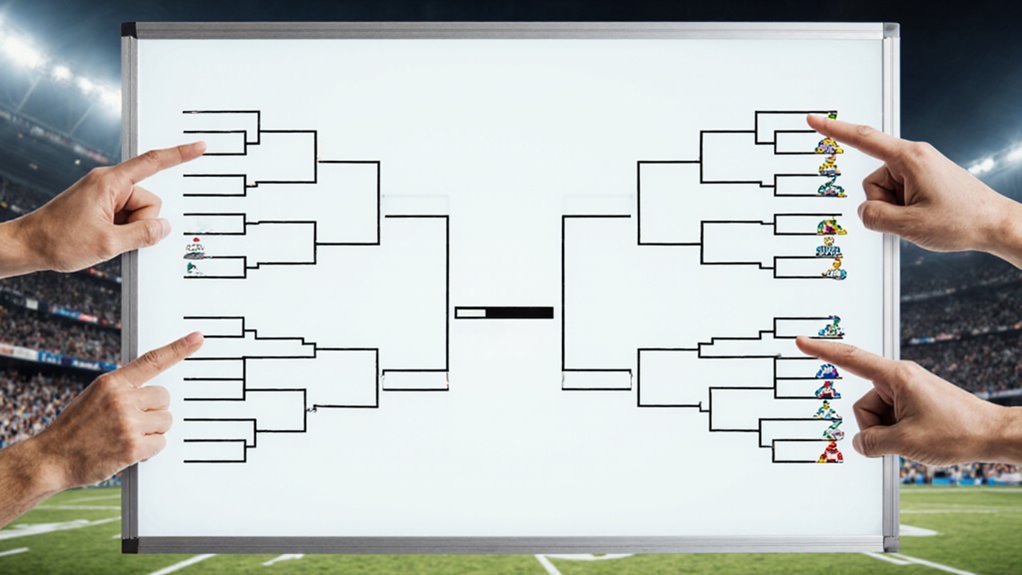

A knockout tournament eliminates players after a loss, so each match carries high stakes. In poker knockouts, bounties reward players for eliminating opponents, adding cash incentives beyond the main prize. Some formats pay bounties immediately, while progressive variants increase the bounty as a player knocks out more opponents. These rules change strategic choices, pushing players toward more aggressive or targeted play. Understanding bounty timing and structure helps players adjust tactics and maximize returns.
What Is a Knockout Tournament?
A knockout tournament is the kind of competition that keeps things simple and intense. You play a match, and should you lose, you’re out. Should you win, you move on with the group still cheering you forward.
That’s why this format feels so personal. It rewards steady focus and quick recovery after every round.
In many events, seeding subtleties matter because top players face lower-ranked opponents at the outset, which helps keep the bracket balanced. Some tournaments also use consolation matches whenever they need exact placings, like a bronze medal spot.
In poker, knockout events add bounties, and progressive versions make each elimination feel even bigger.
Still, the heart of the format stays the same: one loss ends your run, and one winner stands tall.
How Knockout Poker Tournaments Work
In a knockout poker tournament, part of your buy-in goes straight into a bounty, so every player you eliminate puts cash or chips right back in your stack.
In a standard KO game, you collect the full bounty right away, while in a progressive knockout, part of that reward increases your own bounty too. That means you’ll often play more aggressively, because each knockout can change both your stack and the table’s strategy.
Knockout Tournament Basics
Knockout poker tournaments change the usual game immediately, because every time you eliminate someone, you get paid for it. You’ll notice the rhythm fast: part of each buy-in funds individual bounties, so bounty psychology starts shaping your choices from the opening hand.
In regular KO events, you collect that cash instantly after a bust. In PKOs, part of the bounty pays you now, and part grows on your own head for later. You can join these games as Sit & Go or multi-table events, in regular, turbo, or hyper-turbo speed.
Good registration timing matters too, since tables often show eliminations and bounty amounts clearly. That visibility helps you feel part of the action and plan smarter, especially whenever shorter stacks look tempting.
Bounty Payout Structure
The payout structure sets the pace right away, because every buy-in gets split into two parts: one part feeds the main prize pool, and the other part funds the bounties.
You’ll see this in a $100+$20 event, where $100 stays in the normal pool and $20 becomes your knockout reward.
Whenever you eliminate someone, you get that bounty immediately, in cash or chips, and tournament software usually shows the update at the table. That payout transparency helps you track every knock and keeps bounty accounting simple.
Also, bounties still count even though you don’t cash in the main prize spots, so each elimination feels meaningful. As a result, you gain extra value for staying active, and the format grants you a clearer, more rewarding path through the field.
Progressive Knockout Strategy
Progressive knockout strategy changes how you consider about every hand, because now each elimination grows your own bounty too. You’re not just chasing chips; you’re building a payout that keeps rising. That means targeted aggression matters most whenever you spot shorter stacks you can cover. Whenever the math and the bounty line up, you can make bold calls that feel scary but make sense.
Still, stack preservation stays crucial, especially near the bubble and final table, where laddering still has value. PKOs also soften variance, since you can win money from bounties before the prizes start. So you’ll often balance pressure, patience, and table awareness. Provided you keep hunting smart spots, your reward can grow fast, and your deep run can pay twice.
Where Your Bounty Comes From
Your bounty comes from part of your buy-in, so a $100+$20 entry usually sends $20 into the bounty pool and $100 toward the main prize pool.
In a Progressive Knockout, that bounty gets split, so you win some cash right away whenever you knock someone out and the rest gets added to your own bounty.
That means every elimination can pay you now, and in case you keep stacking knockouts, your final bounty can grow fast.
Buy-In Bounty Split
A knockout tournament’s buy-in breaks down right away, and that split tells you where the bounty money actually comes from.
You pay an entry fee, and the site separates it into prize money and bounty accounting, so you can see the deal clearly.
In a $100+$20 event, your $100 builds the main pool, while your $20 goes into the bounty pool.
Whenever you knock someone out, your reward comes from that shared bounty pool, not from the regular prizes.
The operator might add a listed fee, but it’s shown up front, so nothing feels sneaky.
Because part of every buy-in funds bounties, the standard-place pool is smaller than in a regular MTT.
That’s the tradeoff, and you’re in good company once you understand it.
Progressive Knockout Payouts
Step into a PKO tournament, and the bounty starts working in a special way. You don’t just chase chips; you also build value for every player who busts out.
In a typical $100+$20 event, part of that $20 goes to the immediate payout, and the rest joins your growing bounty. That means once you knock someone out, you might get cash now and add more to your own stack of future value.
This bounty accounting changes your choices, because each elimination raises what others can win from you later. The payout timing feels different too, since rewards arrive during play instead of only at the end.
As the field shrinks, the mix of prize pool and progressive bounty keeps you connected to every table.
Elimination Reward Sources
Behind every knockout, the money has to come from somewhere, and in bounty tournaments it comes from a special part of each buy-in. That’s your bounty funding, and it sits apart from the main prize pool, so everyone knows where eliminator rewards come from. You’re not stealing from final payouts; you’re sharing a separate pool built by all players.
- In a standard KO, a fixed bounty from each buy-in goes to the player who knocks you out.
- In a PKO, part of that bounty pays you now, and part grows your own target.
- Tournament lobbies usually show the split, like $100+$20 or $100+$20 PKO.
- So each elimination just moves dedicated bounty money between players, and that feels fair and clear.
How Bounties Are Paid Out
As soon as you knock someone out in a poker tournament, the payout is usually simple and immediate, which makes the whole thing feel fast and exciting. You can see your bounty accounting update right away, so you know exactly what you earned. That helps you feel part of the action, not lost in the crowd.
| What you get | At the time it arrives |
|---|---|
| Cash bounty | Right away |
| Account credit | Straight after the hand |
| Prize-pool finish money | Later, after the event |
Tournament software tracks each elimination, so you and your tablemates can follow the numbers with ease. In many events, immediate payouts land in your stack or account, separate from final prizes. So every knockout feels personal, clear, and worth chasing.
Knockout vs Progressive Knockout
In a standard knockout tournament, you’re out once someone knocks you out, and that player usually gets a fixed bounty right away.
In a progressive knockout, part of that bounty gets paid now, while the rest builds up on the winner’s own bounty, so each new elimination can be worth more.
That difference changes how you play, because KOs reward steady knockout value, but PKOs make growing bounties a big target.
Knockout Basics
A knockout tournament keeps things simple and intense: you win, you move on, and should you lose, you’re out right away.
You sit with everyone else in the bracket, and each round trims the field until one winner stands.
Whenever you look at stack dynamics, shorter stacks often feel the pressure initially, so your choices stay sharp and direct.
In bounty psychology, every knockout can feel like a small win, which keeps you engaged.
- Single-elimination means one loss ends your run.
- Winners advance through each bracket round.
- Buy-ins often split prize money and bounties.
- KOs reward more players with cash chances.
Compared with a progressive knockout, you don’t chase a growing bounty on yourself.
Instead, you focus on clean eliminations and steady pressure, and that keeps the game friendly for players who like clear goals.
Progressive Bounty Structure
The payout structure shifts the whole feel of the game, because fixed knockouts and progressive knockouts reward you in very different ways.
In a standard knockout, your buy-in includes a set bounty, and you get that cash right away whenever you knock someone out.
In a progressive knockout, or PKO, the bounty splits in two. You take part of it now, and the rest adds to your own bounty. That creates bounty escalation, so your value grows as you survive and collect more eliminations.
A $100+$20 PKO could give you $10 instantly and add $10 to your head. That change in elimination incentives makes PKOs feel lively and welcoming, since you can earn through knockouts even before you reach the money.
Strategy Differences
Because knockout tournaments pay you a fixed bounty each time you bust someone, your strategy often leans toward taking easy, near-term wins and grabbing steady cash whenever a short stack is within reach. You can feel the simple rhythm: hit the table, spot a weak stack, and press for value.
In fixed KO games, bounty psychology pulls you toward fast calls and direct attacks because every bust pays the same. In PKO games, timing aggression matters more, since part of each bounty grows on your head. That means you should balance immediate chips with future value.
- Fixed KO: chase steady knockouts
- PKO: protect fold equity
- Fixed KO: focus on clear bounty EV
- PKO: consider compounding future rewards
Why Knockout Tournaments Feel Different
Pressure changes everything in a knockout tournament, and that’s why it feels so intense from the very initial round. You know every match can end your run, so sudden death psychology kicks in fast. One loss sends you out, and that sharp edge makes each point, move, or hand feel heavier.
Because the bracket shrinks so quickly, every round feels like a doorway you must pass through with the group still cheering you on. That also heightens spectator engagement, since everyone can follow the path clearly and feel each upset.
Whenever seedings are set, you notice fairness and big matchups right away. Should the draw be random, the drama jumps even higher. In poker, bounty rewards can even make aggression feel worthwhile.
Who Should Play Knockout Tournaments
Aggressive players often fit knockout tournaments best, especially provided you like hunting short stacks and turning every elimination into real money. You’ll likely enjoy these games should you be an Aggressive exploiter who likes quick action and doesn’t mind swings. Because bounties pay right away, you can stay engaged even after a rough start. Recreational entrants and busy players might also feel at home here, since you don’t need a deep run to win something. In the event you come from cash games, the frequent all-in spots can feel natural.
- You can chase bounties with confidence.
- You can handle high variance without stress.
- You can adjust well in PKOs.
- You can enjoy Turbo or Hyper speed.
Knockout Tournament Strategy Basics
Once you know who tends to fit knockout events best, the next step is learning how to play them well. You protect your stack by staying tight early on, because short matches reward patience more than fancy moves. Whenever a covered short stack enters the pot, you can press for a bounty provided the math works.
| Stack | Best Move | Why |
|---|---|---|
| Short | Jam wider | You need chips fast |
| Medium | Pick safe spots | You want room to breathe |
| Big | Apply pressure | You can win more bounties |
| Near bubble | Use ICM-aware math | Payouts change your calls |
Good stack management helps you avoid bad risk. Still, tournament psychology matters too. You stay calm, read fear, and choose spots where bounty value plus equity outweighs danger.
Table Dynamics and Bounty Pressure
In the middle of a PKO tournament, table momentum can flip fast because every bounty keeps growing with each knockout, and that changes how people act around you. You’ll notice bounty dynamics right away, since a short stack with 10 to 20 big blinds can feel like the table’s biggest prize.
Bigger stacks might shove wider, hoping to claim chips and cash, while you might need to call looser whenever the bounty is worth the risk.
- A small bounty still matters.
- A huge bounty draws action.
- Your shove frequency can rise.
- Tight folds lose value fast.
Whenever multiple players carry big bounties, the table leans toward more all-ins, so you should stay alert and keep your ranges flexible.
Common Knockout Tournament Formats
Once you’ve seen how a single bounty can tilt the action at a poker table, it gets easier to see why knockout events come in so many styles.
In a single-elimination bracket, you lose once and you’re out, so seeding importance matters and bracket integrity keeps each round fair. In double-elimination, you get a second path through a losers’ bracket, which can feel like a safety net should your initial match go sideways. Best-of-series formats ask you to win enough games, like best-of-3 or best-of-7, so you can settle in and fight as a squad. Two-legged ties add home-and-away scores, and PKO tournaments split each bounty so you cash now and grow your own target thereafter.
How Knockout Variance Changes Results
Knockout variance can turn a fair contest into a wild ride, and that’s what makes results feel so unpredictable. In your bracket, one bad round can erase a top seed, so variance amplification is built in. Whenever matches are short, upset likelihood jumps, and you can watch lower-ranked players rise fast.
- One loss sends you home.
- Random draws can pair favorites at the outset.
- Short sets or rapid games enhance surprise results.
- PKO poker adds extra cash swings.
If you’re one of several equally skilled players, a single-elimination path gives each of you only a slice of the title odds. That’s why a strong player can still miss out while another grabs the win. Longer formats soften this effect, but knockout play keeps every round tense and personal.
Big Mistakes to Avoid in KOs
A knockout format can make every decision feel louder, so the biggest mistakes usually come from rushing while you should pause and read the spot.
You can miss value whenever you ignore bounty psychology and treat every call like a normal chip trade.
In PKOs, part of a bounty pays now and part grows, so you need to weigh that against ICM prior to your snap off.
You can also bleed chips by chasing every knockout with weak equity, especially assuming you’re short and out of position.
Another trap is using the same plan all event long.
Stack depth, bounty size, and payout pressure all shift, so your timing adjustments matter.
Build your own bounty, too, because it adds real pressure and value later.
When to Register for a Knockout Tournament
Provided that you want the best shot at getting in, register as promptly as you can once the event opens. Prompt registration helps you lock a seat before popular KO fields fill up, and that matters whenever you want to feel part of the action, not stuck watching it. In PKOs, it also gives you the full initial bounty and more time to build chips.
- Check the start time, then sign up before late registration closes.
- Look for sellout-prone MTTs and Sit & Go KO events.
- Match the buy-in and field size to your bankroll.
- For series or satellites, enter promptly so you don’t miss a cutoff.
That way, you protect your shot at a deeper run and a possible final table entry.
Frequently Asked Questions
What Is a Knockout Tournament in Simple Words?
You’d call it simple: a single elimination contest where each loss knocks you out, and winners keep advancing. It isn’t double elimination, so one bad match ends your run, yet that quick cut feels exciting and fair.
How Do Knockout Tournaments Work?
You are placed via seed placement or bye rounds, then you play one match per round. If you win, you advance; if you lose, you are out. Teams keep shrinking until one champion is left.
What Is an Example of a Knockout Tournament?
A single elimination March Madness bracket is a knockout tournament example; you lose once and you are out. Unlike double elimination, you do not get a second chance, so you will feel every game like your team belongs there.